Turmeric prices cross ₹23,000 a quintal in Erode
Source Entity
India Latest News: Top National Headlines Today & Breaking News | The Hindu
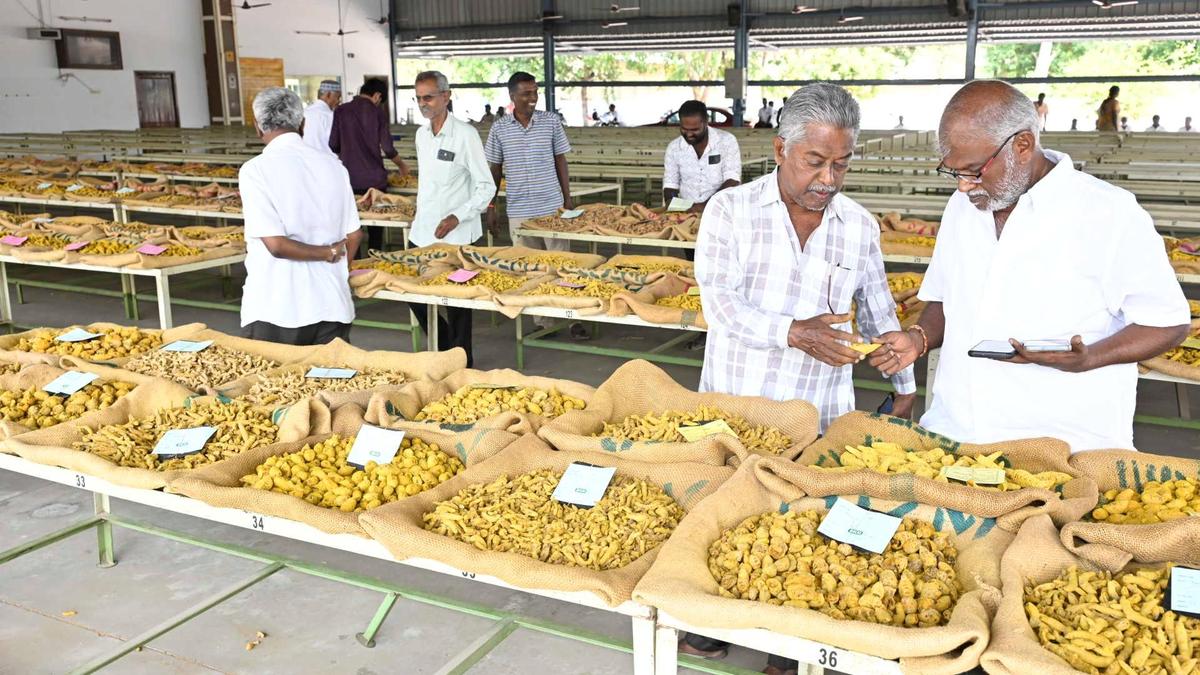
Turmeric prices at Erode markets have surged past ₹23,000 per quintal due to severe drought conditions in key production states. Supply constraints and crop uncertainty are expected to maintain upward price pressure in the near term.
Turmeric Price Surge: An Analysis of Market Volatility in Erode
The Current Market Landscape
On October 14, 2026, the agricultural markets in Erode, specifically the Perundurai Regulated Market, witnessed a significant milestone as turmeric prices breached the ₹23,000 per quintal mark. This price level represents a multi-year high, reflecting a period of intense volatility within the spice commodity sector. The pricing differential between finger turmeric, which reached up to ₹23,099, and bulb turmeric, which peaked at ₹19,626, highlights the premium commanded by high-quality varieties during periods of acute scarcity.
The Impact of Climatic Stress
The primary driver behind this price escalation is the widespread drought affecting India’s turmeric-producing heartlands. Major cultivation hubs such as Marathwada in Maharashtra, Nizamabad in Telangana, and specific pockets in Tamil Nadu have faced significant moisture deficits. These climatic challenges have severely curtailed yields, leading to lower arrivals at key trading centers like the Agricultural Producers’ Cooperative Marketing Societies in Karungalpalayam and Gobichettipalayam.
Regional Cultivation and Supply Chain Dynamics
Turmeric production in India is heavily concentrated in specific agro-climatic zones, including the Erode and Dharmapuri districts of Tamil Nadu and parts of neighboring Karnataka. When these regions experience synchronized environmental stress, the national supply chain becomes highly fragile. The regulated market structure in Erode serves as a critical price discovery mechanism, and the current low arrival volume has created a seller-dominated market, allowing for the rapid appreciation observed this week.
Uncertainty and Future Projections
The market is currently grappling with deep uncertainty regarding the upcoming crop cycle. As farmers deal with the after-effects of drought, the sowing and yield prospects for the next harvest remain speculative. This uncertainty is a major factor influencing the current price trajectory; traders and stakeholders are factoring in a potential supply deficit, which often leads to front-running and hoarding, further exacerbating the price surge.
Broader Economic Implications
For the agricultural economy, these price levels offer a mixed narrative. While farmers with harvestable stocks benefit from high returns, the broader implications include increased costs for consumers and the food processing industry. The reliance on specific regions for the majority of the nation's turmeric supply suggests that without diversified sourcing or better irrigation infrastructure, the volatility seen in Erode will likely persist as a recurring theme in the spice commodity market.
Conclusion
The situation in Erode is a microcosm of the risks faced by India's spice sector due to climate sensitivity. With prices firmly above the ₹23,000 threshold, the market will remain sensitive to any news regarding weather patterns or crop arrivals. Stakeholders should anticipate continued price fluctuation until there is more clarity on the next harvest's stability.
Verification Required?