Even at War, Ukrainian Society Keeps Presidential Power in Check
Source Entity
Latest News: Todays Latest News Headlines from India & World | Hindustan Times | Hindustan Times
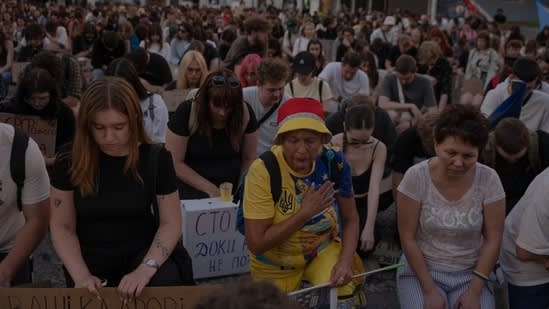
Despite the ongoing war, Ukrainian civil society continues to exert significant influence over government decisions through peaceful protests. President Zelensky's willingness to respond to public feedback highlights a democratic contrast to autocratic regimes like Russia.
The Resilience of Ukrainian Civil Society
Even in the shadow of an existential war, Ukrainian society has demonstrated a remarkable commitment to democratic values, proving that the state’s political architecture remains responsive to its citizens. Recent demonstrations following the dismissal of the defense minister highlight a unique cultural phenomenon where public dissent is not viewed as a threat to national security, but as an essential component of the country’s wartime governance. This environment stands in stark contrast to the rigid, centralized authority seen in neighboring Russia, where protests are routinely met with state-sanctioned suppression.
A Culture of Participatory Democracy
The recent protests, described by observers as having an atmosphere more akin to a community festival than a standard political rally, underscore the deep-seated nature of Ukrainian democratic engagement. Families attending with children and pets signify that the public does not view their dissent as a dangerous act of rebellion, but as a normalized exercise of their civic rights. This level of comfort in challenging the executive branch during a total war is evidence that the social contract in Ukraine remains firmly rooted in accountability.
The Executive Response: A Strategic Contrast
President Volodymyr Zelensky’s reaction to these protests serves as a definitive case study in democratic leadership. Rather than deploying security forces to disperse the crowds, the administration signaled a willingness to engage with the grievances of the populace. By publicly announcing that he would listen to public opinion, Zelensky effectively validated the role of the citizen-activist in the wartime decision-making process, a pivot that would be inconceivable under the one-man rule currently practiced by Vladimir Putin.
Impact on Military Governance
The ultimate outcome of these protests—the dismissal of high-level military leadership—highlights the tangible influence that civil society exerts over state policy. When the government yielded to these demands, it sent a powerful message that the military establishment is not shielded from public scrutiny. This synergy between the people and the state during a time of crisis provides a unique geopolitical advantage, as it reinforces the legitimacy of the government’s actions in the eyes of its own citizens and the international community.
Implications for Future Governance
As the conflict continues, the ability of the Ukrainian government to balance national security requirements with democratic transparency will remain a critical metric of its endurance. The trend of responsive leadership suggests that Ukraine is actively cultivating a post-Soviet model of governance that prioritizes institutional accountability. Should this pattern of dialogue continue, it will likely serve as a foundational pillar for Ukraine’s eventual post-war reconstruction and its integration into wider democratic alliances.
Conclusion: A Democracy Under Pressure
In summary, the events of this month reflect a robust, albeit stressed, democracy that refuses to sacrifice its core principles for the sake of wartime expediency. By maintaining a check on presidential power, the Ukrainian public is not only shaping the trajectory of their current leadership but is also fortifying the democratic identity of the nation. This dynamic interaction between the street and the state remains a definitive characteristic of Ukraine’s resistance against external authoritarianism.
Verification Required?