U.S. Targets Iranian Bridges in Bid to Choke Off Regime’s Supply Routes
Source Entity
Latest News: Today's Latest News Headlines from India & World | Hindustan Times | Hindustan Times
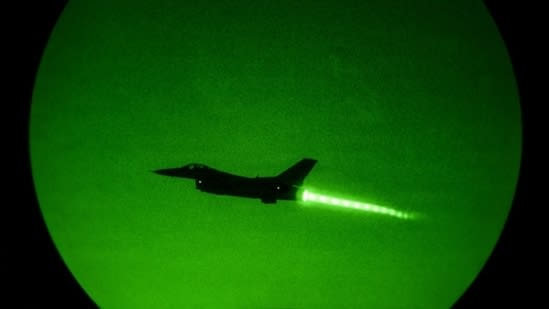
The U.S. has conducted six consecutive days of airstrikes targeting Iranian bridges and naval infrastructure in Bandar Abbas to secure the Strait of Hormuz. Iran has retaliated by expanding attacks to U.S. forces in Syria, Bahrain, and Iraq, as well as targeting allies like Qatar.
Escalation in the Persian Gulf: U.S. Strategic Strikes on Iranian Infrastructure
The geopolitical tension between the United States and Iran has reached a critical flashpoint, characterized by a series of intense military exchanges focused on the strategically vital Strait of Hormuz. Over a period of six consecutive days, the U.S. has executed a targeted aerial campaign aimed at degrading Iran's ability to project power and disrupt international maritime trade. The primary objective of these operations is to choke off the regime's supply routes, thereby neutralizing the threat posed to commercial shipping in one of the world's most essential oil transit corridors.
The Strategic Importance of Bandar Abbas
Central to the U.S. military strategy has been the targeting of the port city of Bandar Abbas. As a primary hub for the Islamic Revolutionary Guard Corps (IRGC) naval base, Bandar Abbas serves as the nerve center for Iranian maritime operations in the Persian Gulf. By utilizing F-16 Fighting Falcon aircraft to strike multiple bridges and highways connecting the city to nearby provinces, the U.S. is effectively attempting to isolate the naval base and disrupt the logistics required to launch attacks on commercial vessels. The precision strikes have extended beyond bridges to include critical submarine and ship facilities, signaling a concerted effort to dismantle Iran's maritime capabilities from the ground up.
Regional Spillover and Iranian Retaliation
In response to the U.S. campaign, Iran has significantly widened the scope of the conflict, transforming a bilateral standoff into a regional crisis. The Revolutionary Guards have expanded their offensive operations, launching missile attacks against U.S.-allied nations, including Qatar. Furthermore, the conflict has bled into neighboring territories, with Iranian forces targeting a U.S. special operations command center in Syria and conducting attacks in the Kurdish region of northern Iraq. The inclusion of Bahrain as a target further underscores Tehran's intent to pressure the U.S. across multiple fronts in the Middle East, utilizing a strategy of regional destabilization to counter U.S. air superiority.
Humanitarian Impact and Infrastructure Damage
The human cost of this six-day exchange has been severe. Iranian officials report that U.S. strikes have resulted in dozens of fatalities and hundreds of injuries. While U.S. Central Command maintains that its targets are military—specifically air defenses, logistics infrastructure, and maritime capabilities—Iranian state media (IRIB) alleges that the strikes have hit civilian infrastructure. Reports indicate that a train station, an airport, and several civilian bridges were damaged, leading to the closure of major highways. These conflicting narratives highlight the volatility of the situation and the potential for further escalation as civilian casualties mount.
The Collapse of the Fragile Truce
This surge in violence follows the rapid unraveling of a fragile truce signed just last month between Washington and Tehran. The interim agreement was designed with the specific goal of reopening the Strait of Hormuz and halting active hostilities to prevent a full-scale war. However, the current wave of airstrikes and missile launches suggests that the diplomatic framework was insufficient to address the underlying security concerns of either party. The failure of this truce indicates a profound lack of trust and a shift toward military solutions over diplomatic negotiations, leaving the region in a state of high instability.
Conclusion and Future Outlook
As the U.S. completes its latest major wave of strikes, the situation remains precarious. The strategic focus on choking supply routes in Bandar Abbas may temporarily diminish Iran's ability to harass shipping, but the expansion of the war into Syria, Iraq, and Bahrain suggests a long-term shift toward a broader regional conflict. With the truce now effectively dead and both nations engaged in an active exchange of fire, the immediate future likely holds continued volatility in the Strait of Hormuz, with the potential for further economic disruptions to global energy markets if the waterway remains a primary combat zone.
Multiple Citing Sources
Verification Required?