Declare ‘Vettri Payanam’ scheme unconstitutional, urges private bus operator before Madras High Court
Source Entity
India Latest News: Top National Headlines Today & Breaking News | The Hindu
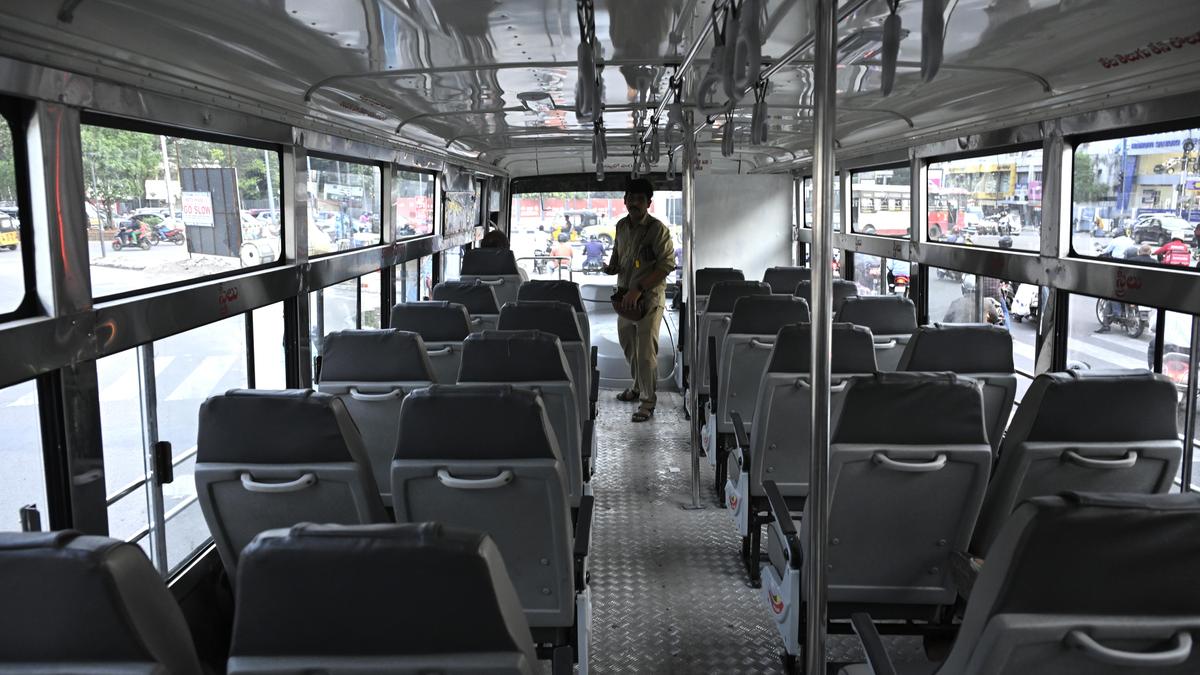
The Tamil Nadu government has launched the 'Vettri Payanam' scheme to provide free travel for women in government buses. A private bus operator has challenged the scheme in the Madras High Court, citing potential business losses and unfair competition.
The 'Vettri Payanam' Scheme: A Clash of Public Welfare and Private Enterprise
On October 2, 2026, the Tamil Nadu government officially expanded its 'Vettri Payanam' (Victorious Travel) initiative, a welfare-oriented transport policy designed to provide free travel for women and transwomen. The launch, presided over by Tirunelveli District Collector Anand Mohan, represents a significant extension of existing public transport subsidies, moving beyond city limits to include 67 mofussil bus services in Tirunelveli. This expansion underscores the state's commitment to social equity, aiming to reduce financial barriers for women commuting to workplaces.
The Legal Challenge: Allegations of Unconstitutionality
The policy has met with immediate legal resistance. N. Kalamani, a private bus operator based in Erode district’s Bhavani Taluk, has filed a writ petition before the Madras High Court. The petitioner argues that the state-sponsored free travel scheme is unconstitutional, asserting that it creates an uneven playing field that threatens the viability of the private transport sector. By subsidizing only government-run buses, the petitioner contends that the state is inadvertently forcing private operators toward insolvency.
Economic Implications for Private Operators
At the heart of the petitioner's grievance is the fear of structural market displacement. Kalamani argues that the impact extends beyond the loss of female passengers; it creates a cascade effect where families, seeking to travel together, will naturally prioritize government buses to leverage the fare exemption. This, the petitioner claims, will lead to a drastic reduction in total ridership, making it impossible for private entities to compete with state-funded services that are not subject to the same profit-driven constraints.
Socio-Economic Objectives vs. Market Competition
From the government's perspective, the 'Vettri Payanam' scheme is a tool for economic empowerment. By facilitating free travel, the state aims to increase female labor force participation by lowering the cost of commuting. The expansion into mofussil routes is specifically targeted at women who travel to neighboring towns for employment, suggesting that the government views the social benefits of increased mobility as outweighing the market concerns of private transporters.
Broader Context and Future Trends
This dispute highlights a growing tension between state-led welfare initiatives and the private sector's role in public utility services. As governments increasingly utilize public transport as a vehicle for social policy, the traditional business models of private bus operators face existential threats. Future rulings from the Madras High Court will likely set a significant legal precedent, determining whether a state government can prioritize social welfare objectives even when those policies disproportionately disadvantage private business competitors. The outcome will be closely watched by stakeholders across India as a bellwether for the future of public-private cooperation in transport infrastructure.
Verification Required?