‘Walk for books’: Hundreds march in Kolkata against attack on bookstalls
Source Entity
India Latest News: Top National Headlines Today & Breaking News | The Hindu
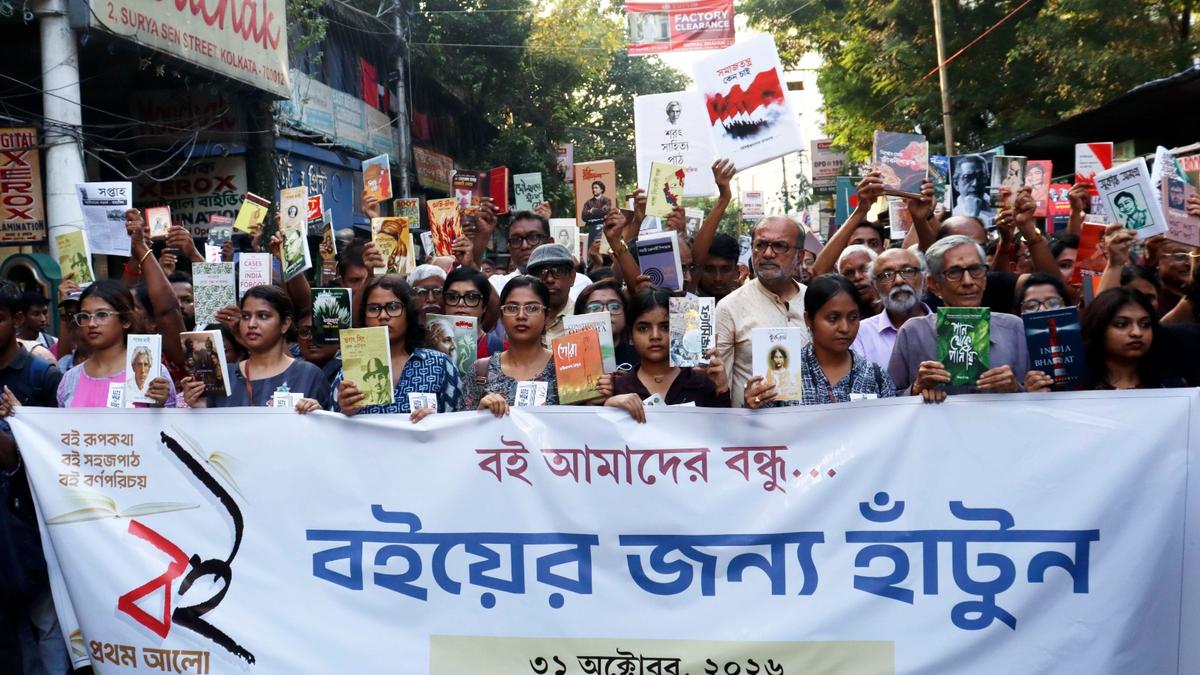
Hundreds of citizens and activists marched in Kolkata's College Street to protest recent attacks on bookstalls during Durga Puja. The 'Walk for books' rally, held without political banners, condemned the violence allegedly committed by right-wing groups.
The 'Walk for Books': A Stand Against Cultural Intolerance in Kolkata
On October 31, the historic College Street in Kolkata, famously known as 'Boipara' or the books neighborhood, became the site of a poignant demonstration. Hundreds of citizens, ranging from professors and activists to local politicians, gathered to participate in the 'Walk for books' march. This peaceful protest was a direct response to recent acts of vandalism targeting bookstalls during the Durga Puja festival, an event that has sparked significant concern regarding the protection of intellectual and cultural spaces in the region.
The Significance of Boipara
College Street is not merely a commercial hub for literature; it is a cultural landmark of West Bengal, representing a long history of intellectual discourse and academic freedom. By choosing this specific location, the organizers emphasized the gravity of the attacks. The act of carrying books while marching served as a symbolic defense of knowledge against the backdrop of rising tensions. The slogan, “Boi amader bondhu, boi-er jonno hathun” (Books are our friends, walk for books), echoed the community's commitment to preserving the sanctity of their literary heritage.
A Non-Partisan Collective Response
One of the most notable aspects of the march was its conscious decision to remain free of specific political banners. Despite the presence of senior leaders from the Communist Party of India (Marxist), including Mohammad Salim, Sujan Chakraborty, and Biman Bose, the march was framed as a civil society initiative. This approach allowed for a broad coalition of common citizens and academics to unite against the violence without the friction often associated with partisan political agendas, highlighting the universal appeal of protecting intellectual freedom.
Contextualizing the Allegations
The protest specifically targeted the reported destruction of bookstalls during the Durga Puja festivities. Participants and organizers have pinned the blame on right-wing groups and the Bharatiya Janata Party (BJP), alleging that these entities are responsible for the intimidation and destruction of these cultural assets. This incident highlights a growing friction between local cultural practices and the ideological influence of right-wing groups, which has become a focal point of public discourse in West Bengal.
Broader Implications and Future Trends
This event signals a potential shift in how civil society in Kolkata intends to respond to perceived threats against cultural expression. By organizing a march that prioritizes the defense of books and intellectual spaces, the participants have set a precedent for non-violent, symbolic resistance. As political tensions continue to simmer in the state, it is likely that intellectual and academic circles will remain at the forefront of monitoring and challenging actions that they view as an overreach of ideological influence. The success of this march may encourage similar grassroots movements across India to defend local cultural institutions in the face of ongoing political polarization.
Verification Required?