9,000-year-old arrowheads covered in strange markings leave archaeologists puzzled
Source Entity
TOI WORLD DESK
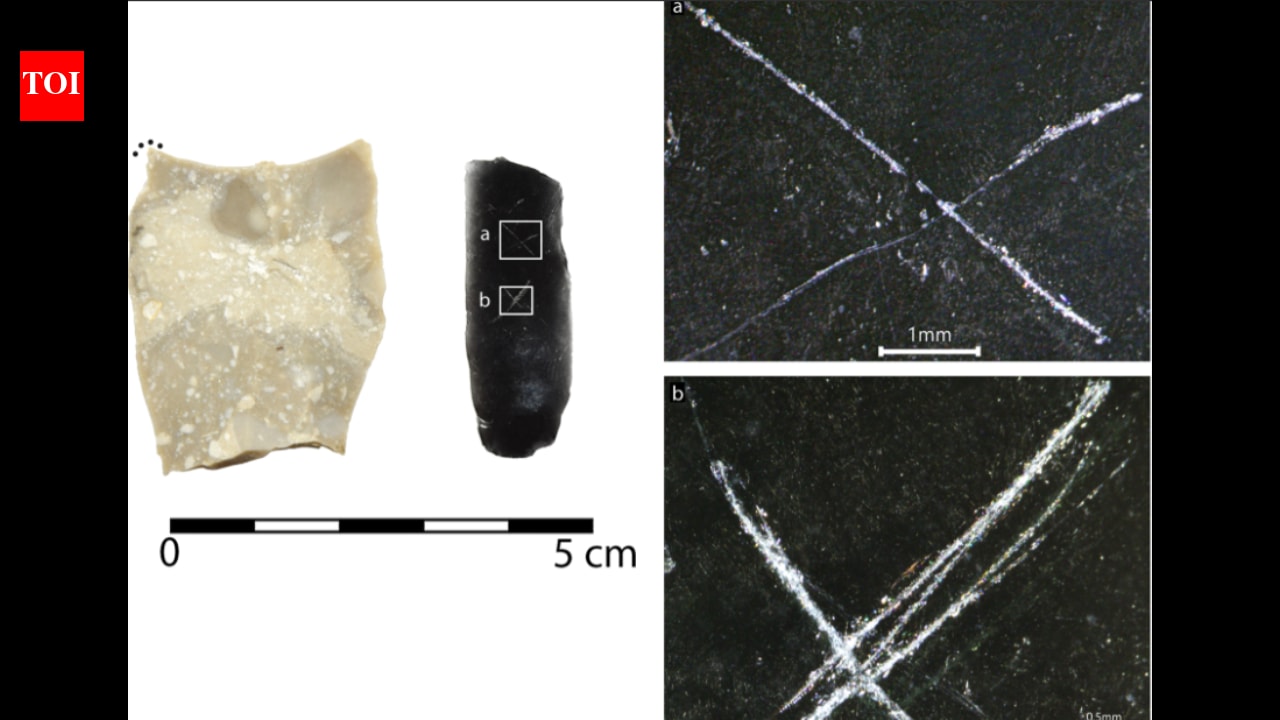
Archaeologists in Turkey have discovered 9,000-year-old obsidian arrowheads featuring intentional, mysterious incisions. These unique artifacts suggest complex social or symbolic behaviors in Neolithic communities that remain currently unidentified.
The Enigma of Neolithic Obsidian Markings
Recent archaeological findings in Central Anatolia have unveiled a collection of 9,000-year-old obsidian arrowheads that challenge our current understanding of Neolithic craftsmanship. These artifacts, recovered from deep strata, are distinguished by intentional, hand-carved incisions rather than the typical wear patterns associated with projectile use. The presence of these markings suggests a level of symbolic expression that goes beyond mere utility, placing these tools at the intersection of functional weaponry and cultural communication.
Techno-Functional vs. Symbolic Intent
The primary focus of the research, as detailed in the study 'Intentional incisions on Neolithic Obsidian arrowheads from Central Anatolia,' centers on the distinction between accidental damage and deliberate iconography. Using advanced imaging, researchers have confirmed that the carvings were executed with flint tools, indicating a purposeful, time-consuming process. This intentionality implies that the arrowheads held a significance—perhaps ritualistic, territorial, or social—that surpassed their practical role as hunting implements.
The Mystery of Restricted Practice
One of the most compelling aspects of this discovery is that the practice of carving these symbols was not universal across all Neolithic groups in the region. Instead, it was limited to select communities. This exclusivity suggests that these markings could have functioned as markers of group identity, status, or perhaps a form of proto-writing or symbolic language understood only by a specific segment of the population. The limitation of this practice provides a unique window into the social stratification of early Anatolian societies.
Historical Context and Archaeological Implications
Obsidian was a highly valued commodity in the Neolithic period, often traded over long distances. The fact that these specific arrowheads were chosen for such elaborate modifications suggests that the obsidian itself—or the act of marking it—was imbued with high cultural value. By examining these artifacts, archaeologists are forced to reconsider the cognitive complexity of Neolithic peoples, who were clearly capable of integrating abstract symbolism into their daily survival tools.
Future Trends in Archaeological Analysis
As researchers continue to study these enigmatic symbols, the focus will likely shift toward comparative analysis with other Neolithic sites. Future investigations will aim to determine if these incisions correlate with specific geographic territories or if they represent a shared cultural lexicon that has been largely lost to time. The ongoing study of these arrowheads serves as a reminder that even the smallest physical evidence can fundamentally shift our narrative regarding the intellectual and social evolution of early human civilizations.
Conclusion
The 9,000-year-old arrowheads of Turkey remain a profound mystery, yet they provide undeniable evidence of human ingenuity. While the exact purpose of the markings remains unknown, their existence highlights the deep-seated human drive to impose meaning on the physical world. As investigations proceed, these artifacts will undoubtedly remain central to our understanding of the complex social tapestry that defined the Neolithic era.