15,000 years of solar wind in four hours? A Seattle company gives it a go.
Source Entity
Eric Berger
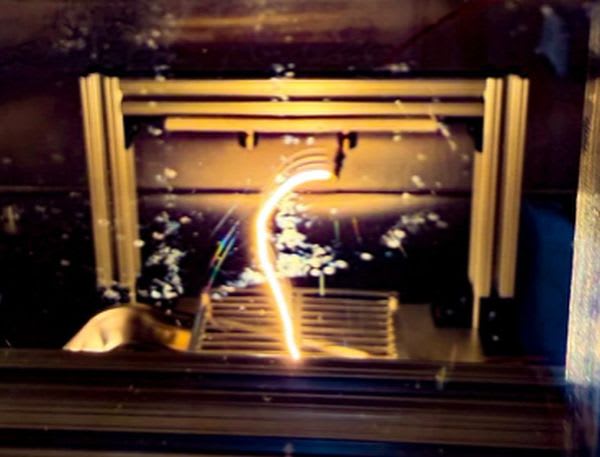
A Seattle-based company is exploring methods to extract helium-3 from lunar soil, a rare isotope deposited by solar winds over billions of years. This initiative aims to address resource scarcity by leveraging the Moon as a potential fuel source for future nuclear fusion energy.
Harvesting the Solar Wind: The New Lunar Frontier
Recent reports indicate that a Seattle-based company is pioneering efforts to extract helium-3 from the Moon’s surface, a project that seeks to transform how we perceive lunar resources. For billions of years, the Sun has acted as a nuclear fusion engine, casting off a stream of charged particles known as solar wind. Among these particles is helium-3, a rare isotope that has accumulated within the lunar regolith due to the Moon’s lack of a protective atmosphere or magnetic field.
The Mechanics of Lunar Deposition
Unlike Earth, which is shielded by a robust magnetosphere and a thick atmosphere, the Moon remains exposed to the constant bombardment of solar radiation. As helium-3 ions strike the lunar soil, they become embedded in the upper grains of the regolith. Over vast geological timescales, meteorite impacts have continuously churned this soil, effectively burying and mixing these deposits, creating a potential reservoir of fuel that researchers are now looking to tap into.
Addressing the Scarcity Paradigm
Industry experts involved in this initiative have noted that humanity is currently operating within a framework of resource scarcity regarding lunar exploration. By identifying helium-3—a highly sought-after isotope for potential clean fusion energy—as a viable commodity, companies are shifting the narrative from simple exploration to active resource utilization. This transition marks a critical step in the commercialization of space.
Technological Challenges and Future Implications
Extracting these isotopes is no small feat; it requires advanced mechanical processes to sift through vast quantities of lunar soil to capture minute amounts of gas. If successful, the ability to harvest fuel from the Moon could fundamentally alter the economics of space travel and terrestrial energy production. It provides a blueprint for how future colonies might sustain themselves by utilizing in-situ resources rather than relying on expensive, Earth-bound supply chains.
Historical Context and Long-term Vision
This endeavor is the culmination of decades of solar physics research and lunar study. By attempting to compress the equivalent of 15,000 years of solar wind accumulation into a short operational timeframe, the company is testing the limits of modern extraction technology. While the project is in its early stages, it represents a significant shift toward viewing the Moon not just as a destination for discovery, but as a cornerstone for future energy infrastructure.