On safeguards against ‘bulldozer justice’, why Allahabad HC delivered a split verdict
Source Entity
Amaal Sheikh
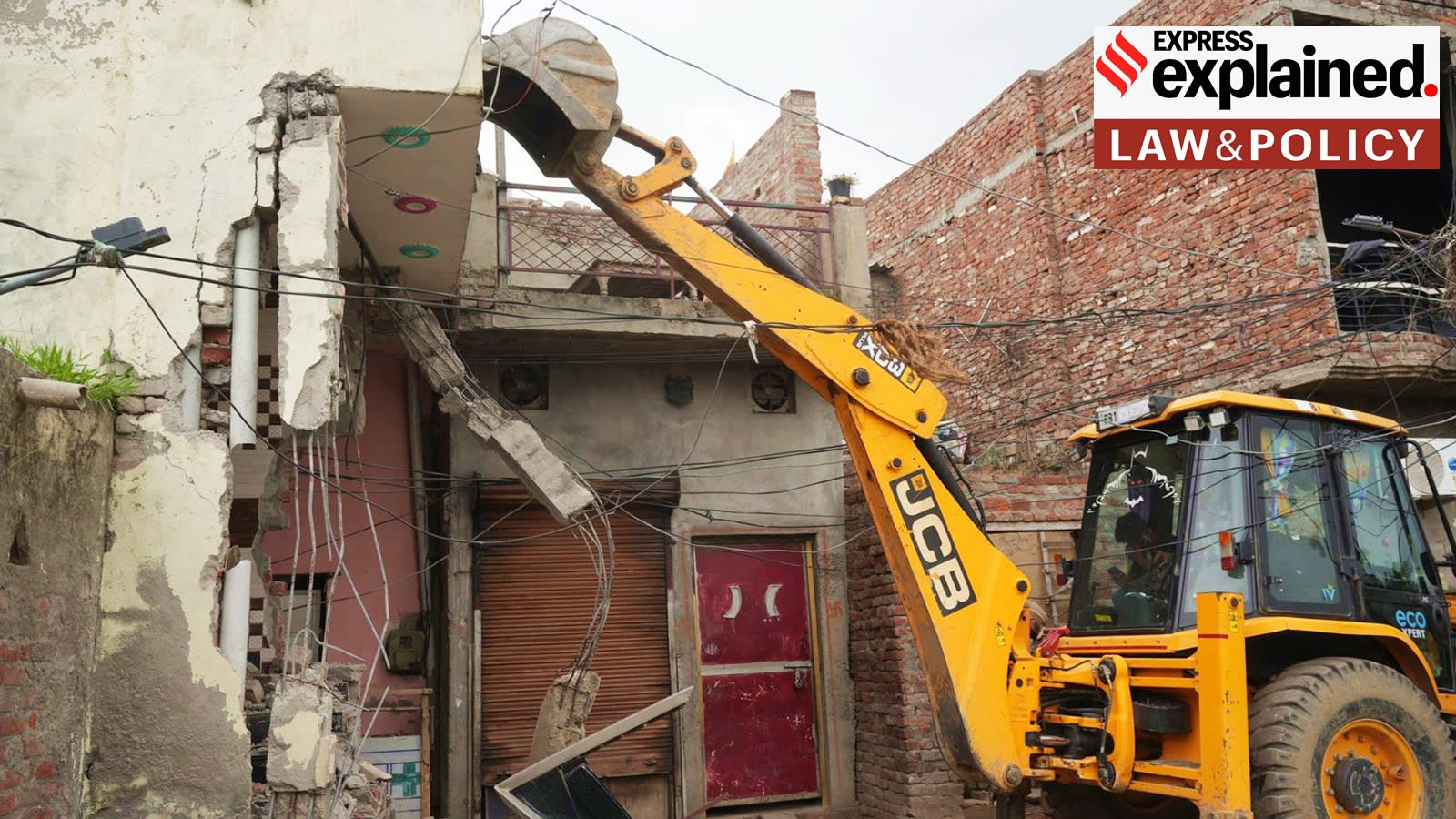
The Allahabad High Court delivered a split verdict regarding the implementation of safeguards against 'bulldozer justice.' While the bench agreed that property demolition cannot be used as punitive action, they disagreed on the court's authority to impose additional restrictions beyond Supreme Court directives.
The Constitutional Conflict of 'Bulldozer Justice'
The recent split verdict by the Allahabad High Court, featuring Justices Atul Sreedharan and Siddharth Nandan, brings to the forefront a critical constitutional debate regarding the limits of executive power in India. At the center of this legal discourse is the phenomenon colloquially termed 'bulldozer justice,' where state authorities utilize the immediate demolition of property as a response to alleged criminal activities. Justice Sreedharan’s poignant observation that "selective outrage results in selective injustice" underscores the judiciary's struggle to maintain the rule of law when executive actions appear to bypass the due process guaranteed to all citizens.
Defining the Scope of Judicial Intervention
The core of the division within the bench lies in the interpretation of the Supreme Court’s 2024 ruling. While both justices concurred on the fundamental principle that the state lacks the legal authority to demolish a residence as a punitive measure against an individual or their family for an alleged offense, the disagreement arises regarding the extent of judicial oversight. The bench was divided on whether the High Court possesses the mandate to craft additional safeguards that go beyond the existing directives established by the Supreme Court, effectively questioning the boundary between judicial restraint and proactive intervention.
The Impact on Due Process and Property Rights
This legal impasse highlights the broader implications of administrative actions on the fundamental right to shelter and property. By utilizing demolitions as a form of summary punishment, the state effectively circumvents the criminal justice system, which requires a trial, evidence, and conviction before penalties are applied. The Allahabad High Court’s deliberation seeks to address how the judiciary can act as a check on executive overreach without infringing upon the separation of powers. This tension is emblematic of a larger struggle to protect the constitutional guarantee of due process against the backdrop of rapid, state-led urban enforcement measures.
Historical Context and Legal Precedent
The practice of 'bulldozer justice' has faced increasing scrutiny as it challenges the standard procedures of civic administration. Historically, municipal and urban development laws were designed to address illegal construction or zoning violations. However, the contemporary application of these laws has shifted toward a tool for immediate, extra-judicial punishment. The Allahabad High Court’s attempt to reconcile these practices with the 2024 Supreme Court ruling signifies a pivotal moment in ensuring that municipal regulations are not weaponized to bypass the judiciary’s role in criminal sentencing.
Future Trends and the Path Forward
Given the split verdict, the matter is set for further adjudication, which will likely result in a more definitive interpretation of the High Court's powers to regulate state conduct. This case will serve as a critical precedent for future litigation concerning executive accountability. As the legal system continues to refine these safeguards, the outcome will dictate whether the judiciary will adopt a more interventionist approach to prevent the normalization of punitive demolition. The final ruling will be a landmark indicator of how the Indian legal system intends to uphold the sanctity of the home against administrative overreach.