'Won't move forward without public': Arunachal CM amid protests over Siang project
Source Entity
ABHISHEK MISHRA
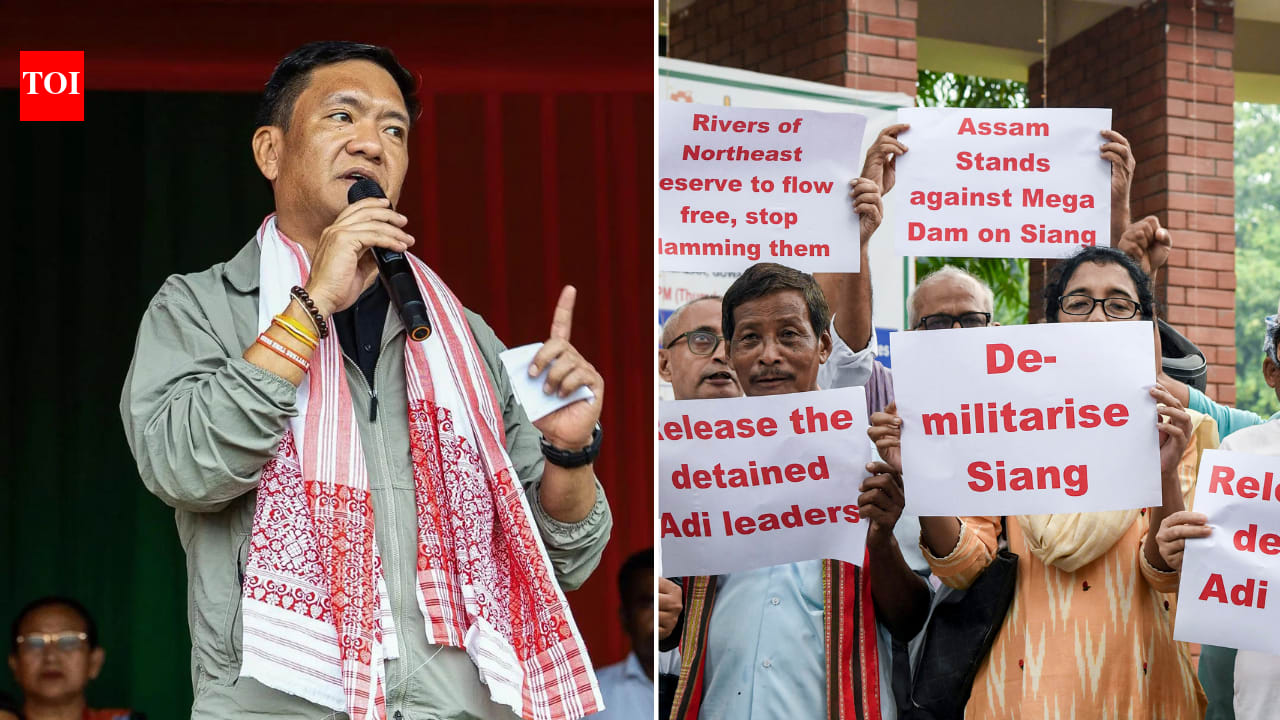
Arunachal Pradesh CM Pema Khandu has assured local residents that the 11,200-MW Siang hydropower project will not proceed without public consent. The project, intended to counter Chinese dam development, faces significant opposition from the Adi community due to displacement and environmental fears.
The Siang Hydropower Project: Balancing Development and Public Sentiment
Arunachal Pradesh Chief Minister Pema Khandu has issued a significant assurance to the residents of the Siang valley, stating that the proposed 11,200-MW Siang hydropower project will not be imposed upon the local population. This statement comes in the wake of intensifying protests from indigenous Adi communities, who have expressed grave concerns regarding the potential for large-scale displacement, the submergence of ancestral villages, and long-term environmental degradation. By emphasizing that no final decisions will be made until a comprehensive feasibility report is completed, the state government is attempting to navigate the precarious balance between national infrastructure needs and local socio-cultural preservation.
Strategic Geopolitics and the China Factor
The Siang project is widely perceived as a critical strategic counter-measure to China’s aggressive expansion of mega-dams in the upper reaches of the Brahmaputra River (known as the Yarlung Tsangpo in Tibet). India’s push for high-capacity hydropower in Arunachal Pradesh is not merely for energy generation; it is a vital component of its border security strategy. By establishing a massive dam presence, India aims to maintain water rights and establish a strategic footprint in a region that has historically been the subject of territorial disputes. The project serves as an essential buffer to ensure that upstream diversions by China do not compromise India’s downstream water security.
The Human Cost: Displacement and Indigenous Concerns
Despite the strategic necessity, the project faces fierce resistance from the Adi people, whose livelihoods are inextricably linked to the Siang River ecosystem. The fear of losing vast swaths of land to submergence is not just a logistical concern but an existential one, as these villages represent centuries of cultural heritage and traditional governance. The opposition highlights a recurring tension in modern development: the clash between centralized national interests and the rights of indigenous communities to self-determination and environmental stewardship. The government's recent pledge to prioritize public consultation reflects an awareness that project success is impossible without local social license.
The Role of Feasibility and Transparency
The Chief Minister’s insistence on waiting for the feasibility report suggests a move toward evidence-based decision-making. However, for the local populace, the "feasibility" of a project is often measured not by its technical output, but by its social and ecological impact. The challenge for the administration lies in ensuring that the upcoming report is not only technically rigorous but also transparent and inclusive. If the government fails to address the specific grievances regarding displacement and environmental safety, the current protests are likely to escalate, potentially stalling one of India's most ambitious infrastructure endeavors.
Future Trends and Outlook
Moving forward, the Siang project will serve as a bellwether for how India manages large-scale infrastructure in sensitive border regions. The outcome of the dialogue between the state government and the Adi communities will likely set a precedent for future hydropower developments in the Northeast. If a consensus can be reached—perhaps through revised designs that minimize submergence or enhanced compensation and rehabilitation packages—it could provide a roadmap for sustainable development. Conversely, if the impasse continues, the project may face significant delays, forcing a reassessment of India’s energy and security strategy in the region. Ultimately, the Siang project represents a microcosm of the broader struggle to harmonize national security goals with the rights and welfare of local communities.