Canada fires prompt US air quality alerts as smoke blankets major cities
Source Entity
BBC News
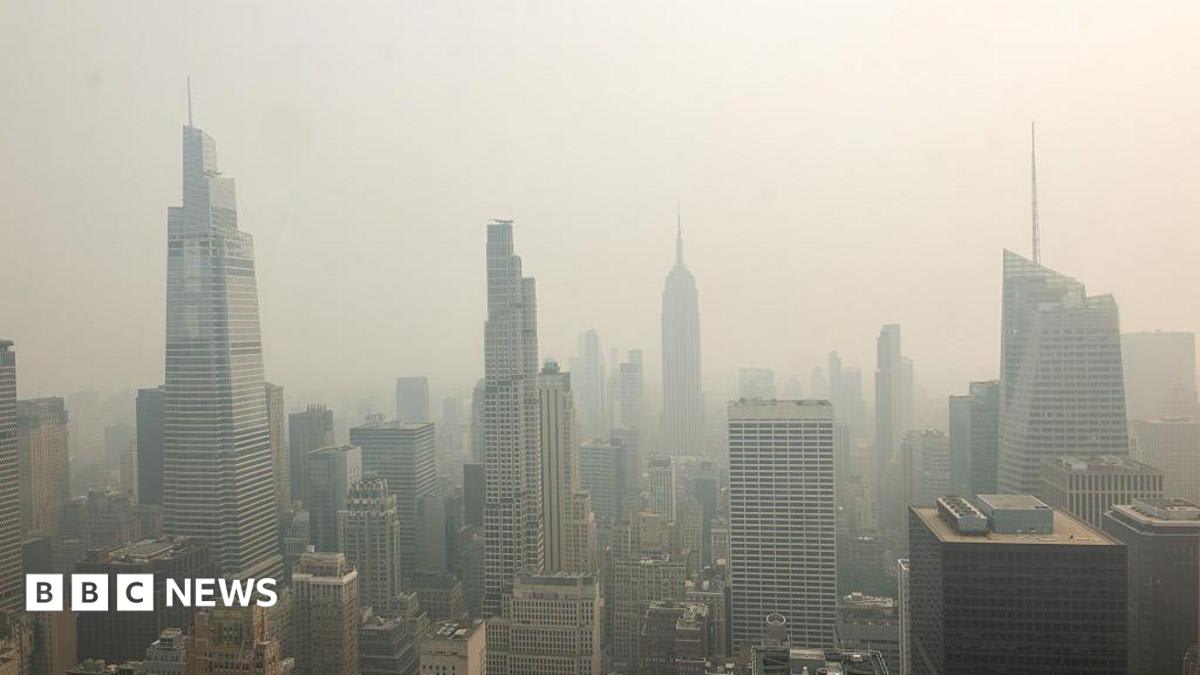
Massive wildfires in Canada, particularly in northwestern Ontario, have triggered hazardous air quality alerts across several US cities. Major metropolitan areas including New York and Chicago are facing unhealthy air, leading to cancelled events and the activation of emergency health protocols.
Transboundary Environmental Crisis: Canadian Wildfires Impact US Air Quality
The current environmental situation represents a significant transboundary crisis, as massive wildfires raging across Canada have sent hazardous plumes of smoke deep into the United States. This event underscores the interconnectedness of North American atmospheric patterns, where domestic disasters in one nation rapidly evolve into public health emergencies in another. The scale of the devastation is evident in the sheer volume of active fires and the subsequent 'blanketing' effect observed across multiple US states, transforming the sky and compromising the air quality for millions of residents.
The Scale of the Canadian Fire Crisis
According to the Canadian Wildland Fire Information System, the crisis is driven by a staggering 858 active fires, with 30 new ignitions reported on Thursday alone. A critical detail is that the vast majority of these blazes are burning out of control, indicating a high intensity of combustion and a lack of containment. Specifically, a large cluster of fires in northwestern Ontario has been identified as the primary source of the thick smoke plumes. The inability to contain these fires suggests a combination of dry fuel loads and weather conditions that facilitate rapid spread, turning the region into a massive source of particulate matter that is then carried southward by prevailing winds.
Widespread Disruptions Across US Urban Centers
The impact on the United States has been widespread, triggering hazardous air quality alerts across a broad geographical corridor. The US Air Quality Index program has flagged severe conditions in cities such as Chicago, Grand Rapids in Michigan, Pittsburgh in Pennsylvania, and Toledo in Ohio. These alerts are not merely advisory but have led to tangible disruptions in daily life and commerce. For instance, in Chicago, the dangerous air quality forced the rescheduling of an outdoor concert for the rock group The Black Keys. Beyond entertainment, the impact hit the most vulnerable populations, as children's summer camps were forced to cancel events and popular beaches were shuttered, highlighting the immediate risk posed to outdoor activities.
Emergency Response and Public Health in New York
New York state has emerged as a focal point of the crisis, with air quality ratings ranging from "unhealthy" in the metro area to "very unhealthy" in western regions. The response from New York officials has been comprehensive, reflecting the severity of the atmospheric conditions. By activating air quality emergency protocols and extending heat emergency plans, the city has implemented a multi-pronged strategy to protect its citizens. The deployment of hundreds of cooling centers and the distribution of KN95 masks citywide demonstrate a critical shift toward treating smoke inhalation as an acute public health emergency, similar to how cities manage extreme heatwaves.
Analyzing the Public Health Implications
The transition of air quality to "hazardous" levels implies a dangerous increase in fine particulate matter (PM2.5), which can penetrate deep into the lungs and enter the bloodstream. The mention of KN95 masks is particularly significant, as these are designed to filter out the small particles found in wildfire smoke that standard surgical masks cannot. The "blanketing" effect described in the reports suggests a stagnant air mass that traps pollutants near the ground, prolonging exposure for residents. This creates a compounding health risk when combined with heat emergencies, as the body struggles to regulate temperature while simultaneously fighting respiratory distress.
Future Trends and Atmospheric Resilience
Looking forward, this event signals a growing trend of "smoke seasons" that may become a recurring feature of North American summers. The fact that hundreds of fires are burning out of control suggests that traditional firefighting methods are being overwhelmed by the scale of these events. Future urban planning in the US will likely need to incorporate permanent air quality emergency protocols, including the permanent availability of high-grade filtration masks and the expansion of indoor "clean air shelters." There is an urgent need for enhanced cross-border monitoring and communication between Canadian fire services and US health agencies to provide more accurate lead times for air quality alerts.
Conclusion
In summary, the current wildfire crisis in Canada, centered heavily in northwestern Ontario, has evolved into a significant US public health event. From the cancellation of cultural events in Chicago to the emergency mask distribution in New York City, the societal disruption is profound. As the number of uncontrolled fires remains high, the focus must remain on immediate health mitigation while acknowledging the long-term necessity for atmospheric resilience in the face of increasingly volatile wildfire seasons.