China's top-secret spaceplane can't hide in low-Earth orbit
Source Entity
Stephen Clark
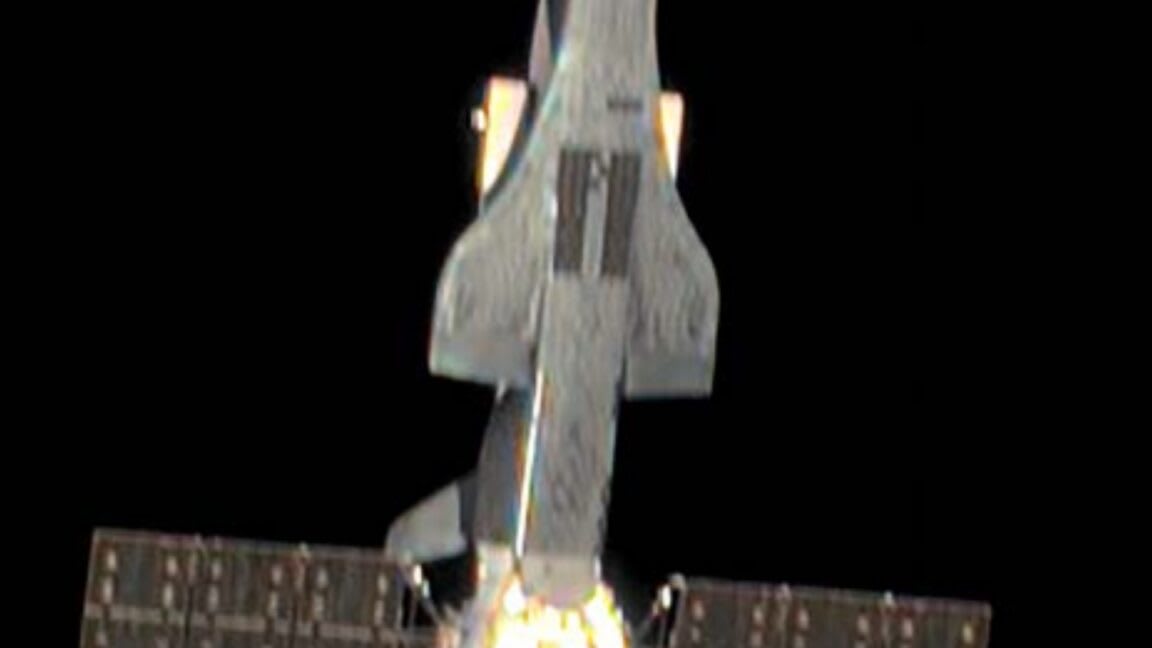
A commercial satellite has captured the first clear images of China's secretive, X-37B-like spaceplane in orbit. This development highlights growing concerns over China's orbital capabilities and potential integration of directed energy weapons.
The Orbital Surveillance Breakthrough
The recent capture of high-resolution imagery depicting China’s secretive spaceplane marks a significant milestone in space situational awareness. By utilizing commercial imaging satellites, specifically those operated by Vantor (formerly Maxar), intelligence entities have effectively stripped away the veil of secrecy surrounding this winged spacecraft. This event underscores the democratizing power of commercial space technology, where private assets are now capable of performing reconnaissance tasks that were once the exclusive domain of state-sponsored intelligence agencies.
Design Parallels and Strategic Intent
The visual evidence reveals a striking resemblance between the Chinese craft and the US Space Force’s X-37B. Featuring delta wings, a distinct payload bay, and a dark heat shield, the design suggests a focus on reusability and maneuverability. The presence of a rear-mounted service module with solar arrays indicates that the craft is built for long-duration missions. The architectural similarity to the X-37B is not merely aesthetic; it implies a shared strategic requirement for a platform that can deploy, retrieve, and potentially manipulate payloads in low-Earth orbit (LEO).
The DIA Threat Assessment
Beyond the physical design, the Defense Intelligence Agency (DIA) has issued a sobering assessment regarding the potential utility of these platforms. There is a growing concern that China may be preparing to integrate directed energy weapons into its space architecture. Such capabilities would fundamentally alter the security landscape of LEO, turning what was once a domain of peaceful scientific and commercial cooperation into a potential theater of active conflict where orbital assets could be neutralized or disabled.
Implications for Global Space Security
The ability of commercial satellites to track and image these secret craft suggests that no nation can truly 'hide' in LEO anymore. This transparency creates a new geopolitical dynamic. While secrecy was once a tool for strategic advantage, the proliferation of orbital imaging means that clandestine testing and deployment are now subject to immediate scrutiny by global observers. This shift forces nations to weigh the benefits of covert operations against the risks of being exposed by commercial third parties.
Future Trends and Orbital Competition
Looking forward, we can expect an intensification of the 'cat and mouse' game in space. As China continues to refine its spaceplane, other nations will likely accelerate their own programs to monitor and counter these developments. The fusion of commercial reconnaissance data with government intelligence will become a standard operating procedure for monitoring orbital threats. This trend points toward a future where the militarization of space is not only expected but constantly monitored through an increasingly crowded and transparent orbital environment.
Conclusion
The emergence of clear photographic evidence of China's spaceplane represents a pivotal moment in modern aerospace history. It confirms the reality of a competitive orbital environment where technological parity is being aggressively pursued. As the international community grapples with these developments, the integration of commercial surveillance will remain the primary lens through which we view the evolution of space-based military capabilities.