Develop affordable, sustainable food packaging technologies: DRDO scientist
Source Entity
India Latest News: Top National Headlines Today & Breaking News | The Hindu
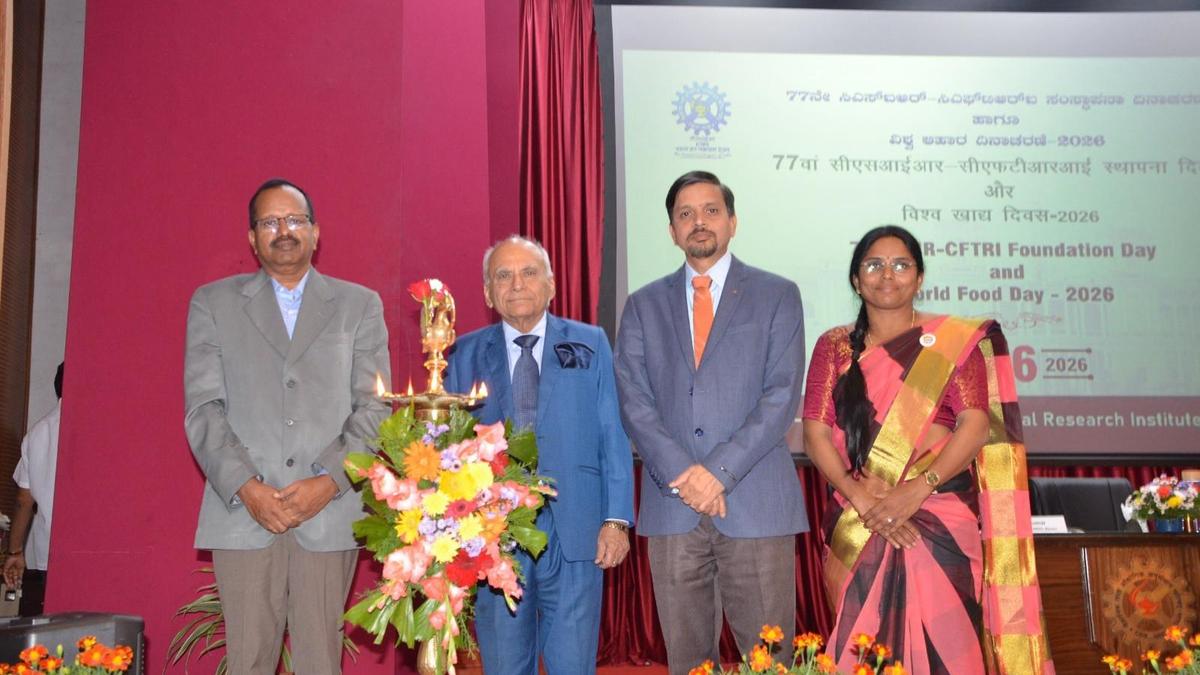
At the 77th Foundation Day of CSIR-CFTRI, experts urged the development of indigenous, sustainable food packaging to bolster national food security. DRDO scientists emphasized reducing post-harvest losses and minimizing reliance on imported technologies.
Strengthening Food Security Through Indigenous Innovation
During the 77th Foundation Day celebrations of the CSIR-Central Food Technological Research Institute (CFTRI) in Mysuru, a pivotal call was made to revolutionize India’s food supply chain. Experts and scientific leaders converged to address the dual challenges of food wastage and the reliance on foreign packaging technologies, framing these as essential pillars for national food security.
The Strategic Role of Sustainable Packaging
R. Kumar, Centre Head of the Defence Institute of Bio-Energy Research (DIBER) under the DRDO, served as the guest of honor. He highlighted that the development of affordable and sustainable packaging is not merely an industrial requirement but a strategic necessity. By fostering indigenous innovation, India can reduce its dependence on imported packaging solutions, thereby conserving precious foreign exchange and building a more self-reliant technological ecosystem.
Addressing the Crisis of Post-Harvest Loss
A central theme of the discussion was the alarming rate of food loss occurring between the farm gate and the consumer's plate. Significant quantities of agricultural produce are compromised due to inadequate storage and inefficient packaging technologies. Experts argued that implementing advanced, localized solutions is the only viable path to mitigating these losses, which currently threaten the economic stability of farmers and the availability of food for the growing population.
Integrating Research with Societal Impact
The Director of CSIR-CFTRI reinforced the institute's commitment to research that yields tangible societal benefits. By aligning scientific inquiry with the practical needs of the food industry, the institute aims to bridge the gap between laboratory-scale breakthroughs and large-scale industrial application. This approach ensures that technological advancements directly translate into lower costs for consumers and higher retention of produce quality.
Future Trends and Economic Implications
Looking ahead, the shift toward sustainable and indigenous food packaging is expected to become a cornerstone of India’s food technology sector. As global supply chains face increasing scrutiny over plastic waste and environmental impact, India’s focus on biodegradable and cost-effective alternatives could position it as a leader in sustainable food logistics. This transition is expected to foster new startups and manufacturing hubs, driving both environmental sustainability and industrial growth.
Conclusion: A Path Toward Self-Reliance
The 77th Foundation Day of CSIR-CFTRI serves as a clarion call for the scientific community to prioritize local solutions to global problems. By focusing on indigenous packaging technologies and systematic reduction of food waste, India is well-positioned to strengthen its food security apparatus, ensuring that agricultural output is preserved from the field to the consumer with minimal loss.
Verification Required?