Fossils found in Egypt’s Great Sphinx rocks reveal an extinct crocodile resembling India’s gharial
Source Entity
The Indian Express
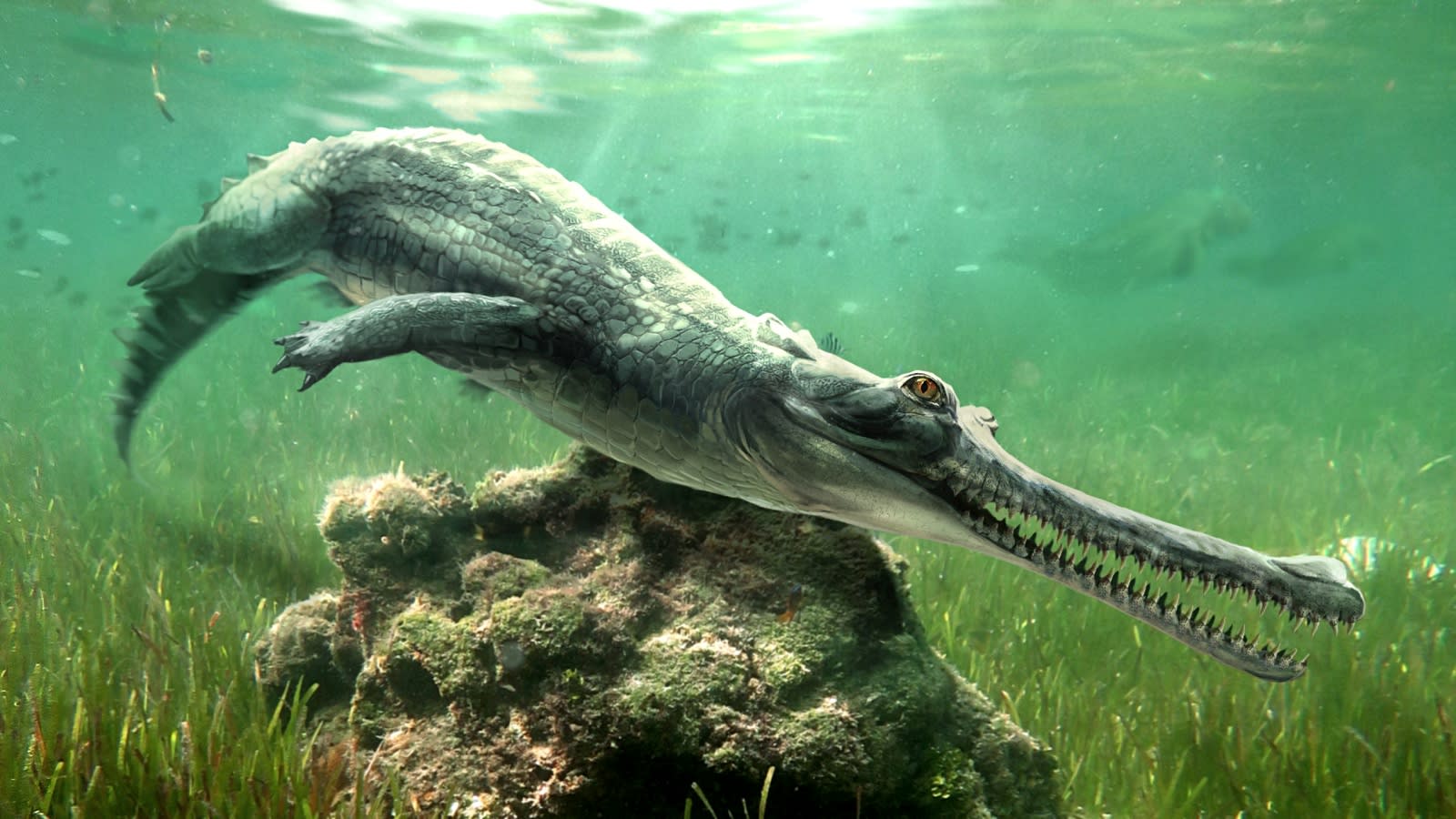
Scientists have identified a new extinct crocodile species, Herugavialis cairensis, preserved within the limestone rocks used to build Egypt's Great Sphinx. This discovery bridges prehistoric paleontology with ancient architectural history, revealing that these stones contain 45-million-year-old reptilian remains.
A Prehistoric Discovery in the Heart of Giza
The monumental limestone blocks that constitute the Great Sphinx of Giza have long been studied for their architectural significance, but recent scientific re-evaluations have uncovered a biological treasure trove hidden within the stone itself. Researchers have identified a previously unknown genus of extinct crocodile, Herugavialis cairensis, embedded directly within the sedimentary layers of the Mokattam Formation, the very rock source utilized by ancient Egyptian engineers to construct the Sphinx and the surrounding pyramid complexes.
Unearthing Herugavialis cairensis
This ancient reptile, which roamed the Earth approximately 45 million years ago during the Middle Eocene, represents a significant addition to the fossil record of gavialoid crocodylians. The identification process involved a meticulous re-examination of fossils that had been sitting in museum collections for nearly a century. Among these specimens, a well-preserved skull provided the morphological evidence necessary to distinguish this species as a unique genus, highlighting the importance of revisiting historical findings with modern analytical techniques.
The Morphology of a Lost Predator
Herugavialis cairensis is noted for its striking resemblance to the modern-day gharial (Gavialis gangeticus) found in India, characterized by its distinct, elongated snout. The evolutionary lineage of gavialoids is complex, and the discovery of H. cairensis in Egypt provides critical data points regarding the geographical distribution and diversity of these creatures during the Eocene epoch, a period marked by significant climatic and geological shifts.
An Ironic Parallel in Preservation
Beyond its biological importance, the discovery carries a poetic irony that has captured the attention of the scientific community. The fossilized skull of the Herugavialis was recovered with a missing snout tip, a physical condition that mirrors the iconic, missing nose of the Great Sphinx itself. This uncanny coincidence serves as a bridge between the deep time of the Eocene and the human history of the Old Kingdom, reminding us that the materials used to build our greatest monuments are often archives of the planet's much older history.
Broader Implications for Paleontology
This finding underscores the necessity of interdisciplinary research, where geology, paleontology, and archaeology intersect. By analyzing the composition of building materials from historical sites, scientists can gain insights into ancient environments that are otherwise inaccessible. The Mokattam Formation serves as a silent witness to a time when North Africa was a vastly different landscape, teeming with aquatic predators now long extinct, yet physically integrated into the bedrock of one of the world's most famous landmarks.
Future Trends and Research
As technology advances, we can expect further discoveries within existing museum archives and architectural stone surveys. The study of Herugavialis cairensis demonstrates that even heavily studied sites like the Giza Plateau still hold secrets. Future research will likely focus on mapping the distribution of these fossils within the wider Egyptian limestone formations, potentially uncovering more about the ecosystems that existed in the region long before the pharaohs rose to power.