CJP Parliament march violence: Delhi Police register 4 cases, 2 more to be filed
Source Entity
Latest News: Today's Latest News Headlines from India & World | Hindustan Times | Hindustan Times
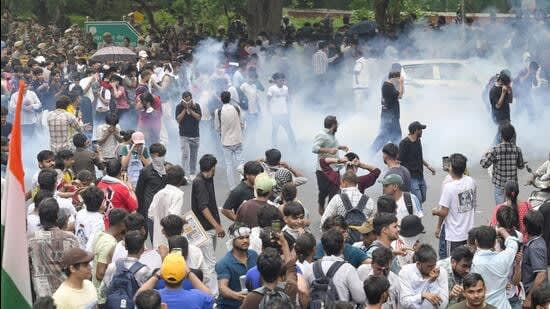
A protest march led by the CJP in Delhi demanding the resignation of Education Minister Dharmendra Pradhan turned violent, resulting in injuries to over 118 police personnel and 60 protesters. The situation escalated into a lathi-charge, leading to the detention of 70 individuals and the hospitalisation of activist Sonam Wangchuk.
Turmoil on Parliament Street: A Crisis of Public Order
The recent protest march in the heart of Delhi, spearheaded by the CJP, has culminated in a significant breakdown of public order. What began as a demonstration demanding the resignation of Education Minister Dharmendra Pradhan rapidly devolved into a volatile confrontation between protesters and security forces. By late afternoon, the scene on Parliament Street was defined by the sounds of sirens, the discharge of teargas, and the desperate efforts of demonstrators to find sanctuary in nearby landmarks like Gurdwara Bangla Sahib.
The Anatomy of the Conflict
According to reports from the Delhi Police, the situation reached a breaking point as protesters allegedly engaged in large-scale violence. The police statement highlights that over 118 personnel, including senior officers, sustained injuries after being targeted with stones and other objects. The authorities further reported that demonstrators attempted to breach barricades, vandalized public property, and ignored repeated warnings to disperse, leading to the enforcement of prohibitory orders and subsequent detentions.
Humanitarian Concerns and Civil Unrest
As the chaos unfolded, the human cost of the protest became increasingly visible. Protesters were seen seeking refuge while suffering from the effects of teargas, with many expressing deep distress over the treatment of participants. The emotional toll was underscored by accounts of mothers witnessing their children injured in the melee, framing the event as a broader attack on the safety of the citizenry. The use of lathi-charges and the subsequent detention of 70 protesters reflect a hardening stance from law enforcement in the face of what they termed "unruly and aggressive behaviour."
The Role of Activism and Institutional Response
The protest, which saw widespread support for activist Sonam Wangchuk, highlights the growing friction between civil society groups and the central government. The specific demand for the Education Minister’s resignation suggests deep-seated grievances regarding current policy frameworks. The involvement of high-profile figures like Wangchuk, who was eventually shifted to Safdarjung Hospital by the police, elevates the incident from a local public order issue to a matter of significant national political discourse.
Future Implications and Policy Stability
Looking ahead, this incident poses serious questions regarding the management of public dissent in the national capital. The scale of the injuries on both sides indicates a failure of communication and de-escalation strategies. As the government faces increased scrutiny, the handling of these detentions and the medical status of those hospitalised will likely dictate the intensity of future demonstrations. The incident serves as a stark reminder of the fragile balance between the right to protest and the state's responsibility to maintain public safety, a tension that will likely continue to influence India’s political landscape in the coming months.
Multiple Citing Sources
Verification Required?