As Wangchuk’s health worsens, Delhi High Court orders regular monitoring
Source Entity
India Latest News: Top National Headlines Today & Breaking News | The Hindu
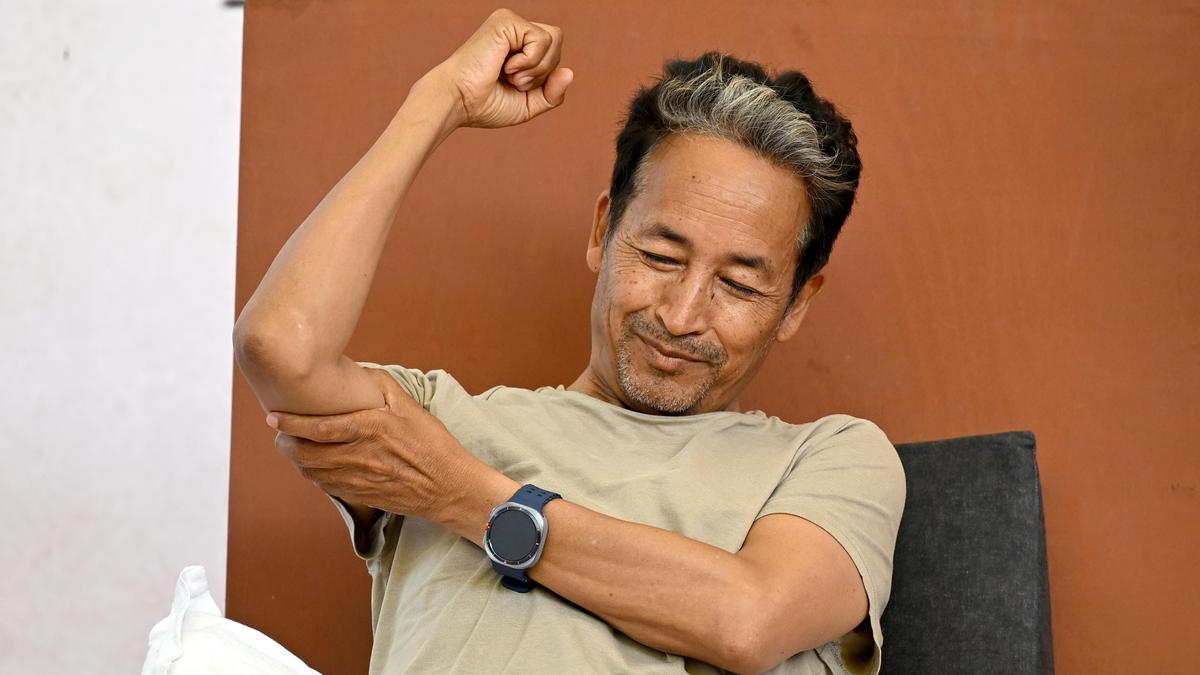
The Delhi High Court has ordered the Union and Delhi governments to ensure the regular health monitoring of activist Sonam Wangchuk. Wangchuk is currently on the 19th day of an indefinite hunger strike, with doctors warning that his condition has reached a critical stage.
Legal Intervention Amidst Health Crisis: The Hunger Strike of Sonam Wangchuk
The situation at Jantar Mantar has reached a critical juncture as activist Sonam Wangchuk enters the 19th day of his indefinite hunger strike. The gravity of his deteriorating physical state has prompted the Delhi High Court to intervene, issuing a formal directive to both the Union and Delhi governments to ensure the rigorous and regular monitoring of his health. This judicial step highlights the escalating tension between the activist's resolve to protest and the state's legal obligation to prevent the loss of life during public demonstrations.
Medical Deterioration and Critical Warnings
According to medical bulletins released on July 16, 2026, the physiological toll of the fast has become severe. Dr. Satish Lamba, who has been providing consistent medical oversight, reported that Mr. Wangchuk has already lost over 9 kg. While the activist remains "mentally alert," his clinical markers indicate a precarious state. Specifically, his blood sugar was recorded at 80 mg/dl with a pulse of 72 bpm. However, the most alarming warning came later in the evening, when Dr. Lamba cautioned that the body has likely transitioned to consuming its own muscle mass for energy, suggesting that vital organ failure could be the next imminent stage of deterioration.
Judicial Oversight and the PIL
The court's involvement was triggered by a Public Interest Litigation (PIL) filed by advocate and social activist Rakesh Kumar Saini. The petition sought urgent judicial intervention to safeguard Mr. Wangchuk’s life, arguing that the severity of the hunger strike required more than just routine observation. The Delhi High Court's subsequent order transforms the health monitoring from a voluntary medical process into a government mandate, placing the responsibility for the activist's survival squarely on the shoulders of the Union and Delhi administrations.
Government Response and Administrative Duties
In response to the court's queries, government representative Mr. Mehta submitted that Mr. Wangchuk is already undergoing daily health check-ups. Despite these assurances, the court felt it necessary to pass a formal direction for regular monitoring. This indicates a judicial skepticism toward the sufficiency of existing measures, emphasizing the need for "extra vigilance" as the strike enters a phase where medical stability can collapse rapidly. The government now faces the challenge of balancing the activist's right to protest with the mandate to prevent a medical catastrophe.
The Broader Context of Hunger Strikes in India
Historically, hunger strikes have been a potent tool of political and social resistance in India, used to draw national attention to systemic grievances. However, they always create a high-stakes dilemma for the state: allowing the strike to continue risks a public tragedy, while forced feeding or premature intervention can be viewed as a violation of civil liberties. In the case of Sonam Wangchuk, the intersection of medical criticality and judicial oversight underscores the fragility of this balance, especially when the protest occurs in the symbolic heart of the capital at Jantar Mantar.
Conclusion and Future Outlook
As Sonam Wangchuk continues his fast, the focus shifts from the political motivations of the strike to the biological limits of the human body. With organs potentially at risk, the window for a peaceful resolution is narrowing. The Delhi High Court's intervention serves as a critical safety valve, ensuring that while the activist's voice is heard, his life is not sacrificed. The coming days will likely see increased medical surveillance and potential government outreach to resolve the impasse before the health warnings provided by Dr. Lamba become an irreversible reality.
Verification Required?