Sonam Wangchuk to continue fast, cites police action against protesters
Source Entity
India Latest News: Top National Headlines Today & Breaking News | The Hindu
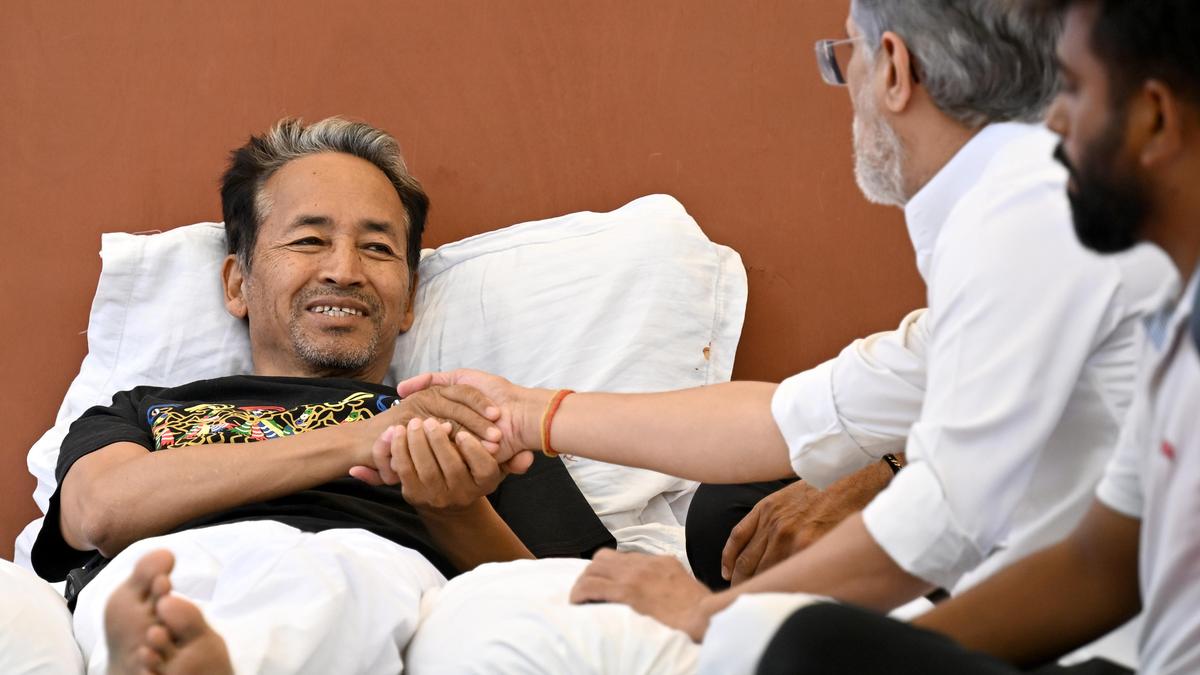
A CJP-led protest march in Delhi demanding the resignation of Education Minister Dharmendra Pradhan turned violent, resulting in significant injuries to both police and protesters. The situation escalated into clashes near Parliament Street, leading to mass detentions and the hospitalization of activist Sonam Wangchuk.
The Delhi Turmoil: Parliament March Escalation
The recent protest march organized by the CJP (Climate Justice/Civil Society group) in the heart of Delhi has culminated in a severe confrontation between demonstrators and law enforcement. What began as a collective demand for the resignation of Education Minister Dharmendra Pradhan descended into a chaotic scene defined by teargas, lathi-charges, and physical violence near Parliament Street.
The Human Cost and Refuge
As the situation deteriorated around 4 pm, the iconic Gurdwara Bangla Sahib became a sanctuary for hundreds of protesters fleeing the police crackdown. Eyewitness accounts describe a scene of desperation, with individuals using damp handkerchiefs to mitigate the effects of teargas. The emotional toll was palpable, particularly for parents who found their children injured amidst the fray, framing the clash not just as a political protest, but as a crisis impacting the safety of the younger generation.
Conflicting Narratives of Violence
Delhi Police have reported that the scale of the violence was significant, citing injuries to over 118 personnel, including senior officers. The police statement explicitly accuses the protesters of initiating the conflict by utilizing stones and other objects, vandalizing government vehicles, and damaging public property. Conversely, the protesters have highlighted the police lathi-charge as the primary catalyst for the chaos, leading to a breakdown in order that resulted in roughly 60 injuries among the demonstrators and the eventual detention of 70 individuals.
The Arrest of Sonam Wangchuk
Central to the protest's momentum was the presence of activist Sonam Wangchuk. His role in the movement appears to have been a focal point for the demonstrators, as evidenced by placards supporting him. The subsequent decision by Delhi Police to shift him to Safdarjung Hospital marks a critical turn in the event, raising questions about his health status and the legal implications of his detention following the day's events.
Broader Political Implications
This event underscores a growing friction between civil society movements and the current administration. The demand for Minister Dharmendra Pradhan’s resignation suggests deep-seated grievances within the education sector or related policy areas that have failed to find resolution through standard dialogue. The use of prohibitory orders and the forceful dispersal of crowds indicate that the state is maintaining a rigid stance against unauthorized demonstrations in the capital's high-security zone.
Future Trends and Outlook
Looking ahead, the fallout from this march is likely to intensify the debate over the right to peaceful protest versus the maintenance of public order. If the demands of the CJP are not addressed, or if the legal repercussions for the 70 detained protesters are perceived as overly harsh, it could trigger a secondary wave of demonstrations. The government now faces the dual challenge of managing the public perception of the Education Ministry and navigating the potential legal and human rights scrutiny resulting from the violent clashes.
Multiple Citing Sources
Verification Required?