'Rahul wanted confrontation': Jitendra Singh details fallout of talks with Cong leader
Source Entity
TOI NEWS DESK
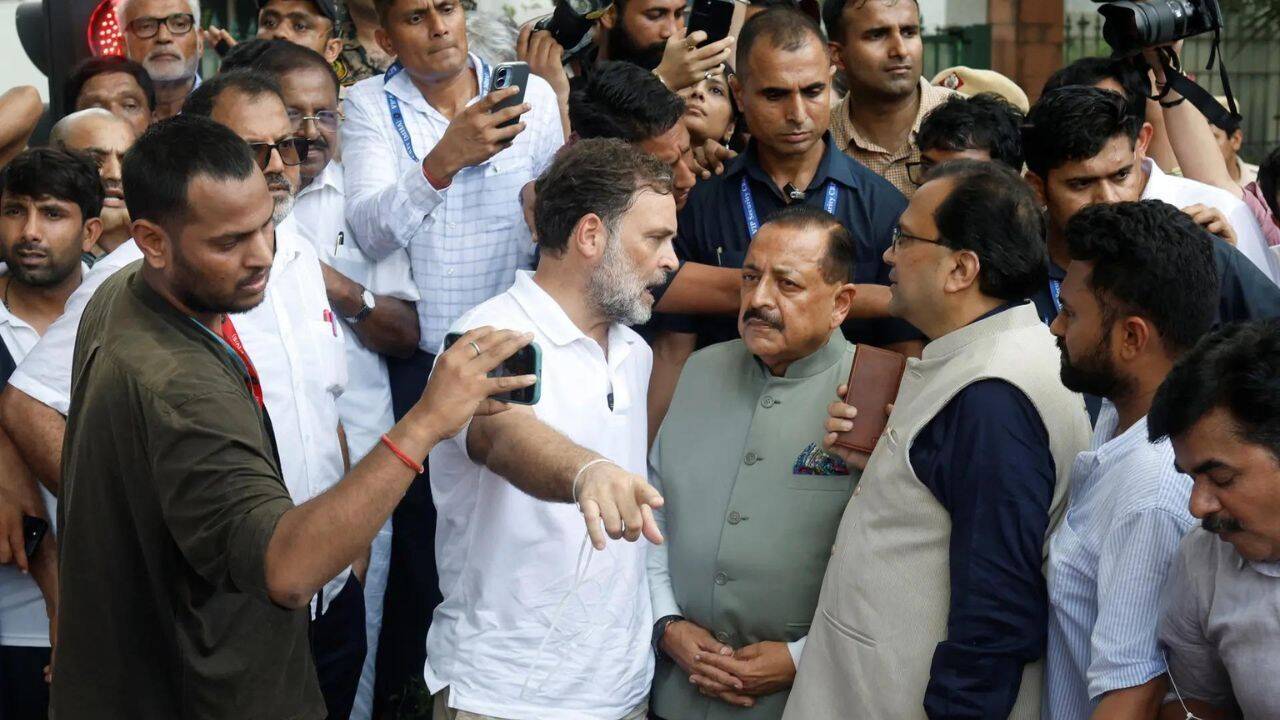
The Monsoon Session of Parliament faced immediate disruption as Opposition parties protested issues including the NEET paper leak and Ram temple donation theft. Simultaneously, political tensions escalated outside Parliament with a Congress sit-in at the Prime Minister's residence and claims of strategic friction between opposition factions.
Parliamentary Standoff: The Monsoon Session Begins in Chaos
The Monsoon Session of the Indian Parliament commenced on July 20, 2026, with immediate and significant disruptions, signaling a volatile legislative period ahead. The Lok Sabha was adjourned six times throughout the day before ultimately closing proceedings by 3 p.m. This gridlock was primarily driven by a united Opposition front—including members from the Congress, Samajwadi Party, and Trinamool Congress—who stormed the Well of the House to register their grievances against the government.
Core Issues Driving the Protest
At the heart of the legislative paralysis are two explosive issues: the alleged NEET paper leak and reports regarding the theft of donations at the Ram Temple. These topics have become focal points for the Opposition, which is leveraging the parliamentary floor to demand accountability from the ruling administration. Specifically, the protests are linked to wider public unrest, evidenced by the Cockroach Janta Party (CJP) attempting to breach police barricades to demand the resignation of Union Education Minister Dharmendra Pradhan over alleged exam irregularities.
The Breakdown of Dialogue
Parallel to the chaos inside the House, a breakdown in communication occurred between the government and the Opposition leadership. Union Minister Jitendra Singh publicly accused Rahul Gandhi of prioritizing political confrontation over constructive dialogue. According to Singh, he and the Union Home Secretary were dispatched to negotiate with Congress leaders staging a sit-in outside the Prime Minister’s residence—a location reportedly not designated for protests. Singh alleged that the goalposts for the protest were constantly shifted, suggesting a deliberate attempt by the Congress to escalate tensions rather than seek a resolution.
Intra-Opposition Frictions
Adding a layer of complexity to the political landscape, the Aam Aadmi Party (AAP) has accused Rahul Gandhi and the Congress of staging their protest at the Prime Minister’s residence as a strategic maneuver to undermine the ongoing agitations led by the CJP. This public critique reveals deep-seated fractures within the Opposition coalition, suggesting that while they may share a common adversary in the government, their tactical approaches and political objectives often conflict.
Legislative Impact and Outlook
The only substantive business conducted during this opening day was the introduction of a Bill by Union Law Minister Arjun Ram Meghwal. This legislation, intended to replace an existing Ordinance, seeks to increase the number of Supreme Court judges. However, the inability to move past the initial protests suggests that the government will face an uphill battle in passing its legislative agenda.
Future Trends in Parliamentary Conduct
Looking ahead, the trend of using the Monsoon Session as a stage for high-stakes confrontation rather than policy debate appears set to continue. As the Opposition remains emboldened by public-facing issues like exam integrity and local controversies—such as the DMK’s focus on the Mekedatu project—the government will likely need to balance its legislative goals with the increasing pressure of national protests. The current state of affairs points to a session defined by institutional friction, where the divide between the treasury and opposition benches is wider than ever.
Multiple Citing Sources