I'm 38 and I Can't Support Myself Anymore
Source Entity
Hacker News
A 38-year-old individual reflects on the profound grief and financial instability caused by a chronic disability that has rendered them unable to work. The essay explores the intersection of economic worth and personal health, highlighting the systemic challenges faced by those living with long-term illness.
The Intersection of Disability and Financial Precarity
The personal narrative of a 38-year-old individual struggling to maintain financial independence due to disability highlights a pervasive, yet often hidden, crisis in modern society. At its core, this account exposes the deep emotional toll of transitioning from a productive member of the workforce to someone relying on familial support, a shift that is frequently accompanied by intense shame and anxiety. By detailing the experience of having to borrow money from a parent at this stage of life, the author underscores the fragility of financial safety nets for those whose health prevents consistent labor.
The 'Kingdom of the Sick'
Drawing upon Susan Sontag’s seminal work, Illness as Metaphor, the author invokes the concept of dual citizenship between the "kingdom of the well" and the "kingdom of the sick." This philosophical framework is essential for understanding the alienation felt by those with chronic conditions. For the author, the diagnosis and subsequent physical decline five years ago served as a boundary marker, permanently altering their relationship with economic productivity and social participation. This shift is not merely physical; it is a fundamental reconfiguration of one's identity in a world that equates human value with economic output.
The Grief of Economic Uselessness
There is a profound, specific grief associated with the loss of the ability to work. In our current economic landscape, where self-worth is deeply tethered to one's professional utility, losing the capacity to work consistently is often treated as a personal failure rather than a systemic issue. The author's admission of a 'sobbing panic spiral' regarding the next 50 years reflects the terrifying reality of long-term poverty. Without reliable income, the future becomes a source of existential dread rather than a canvas for potential, emphasizing the psychological burden of disability.
Historical and Cultural Context
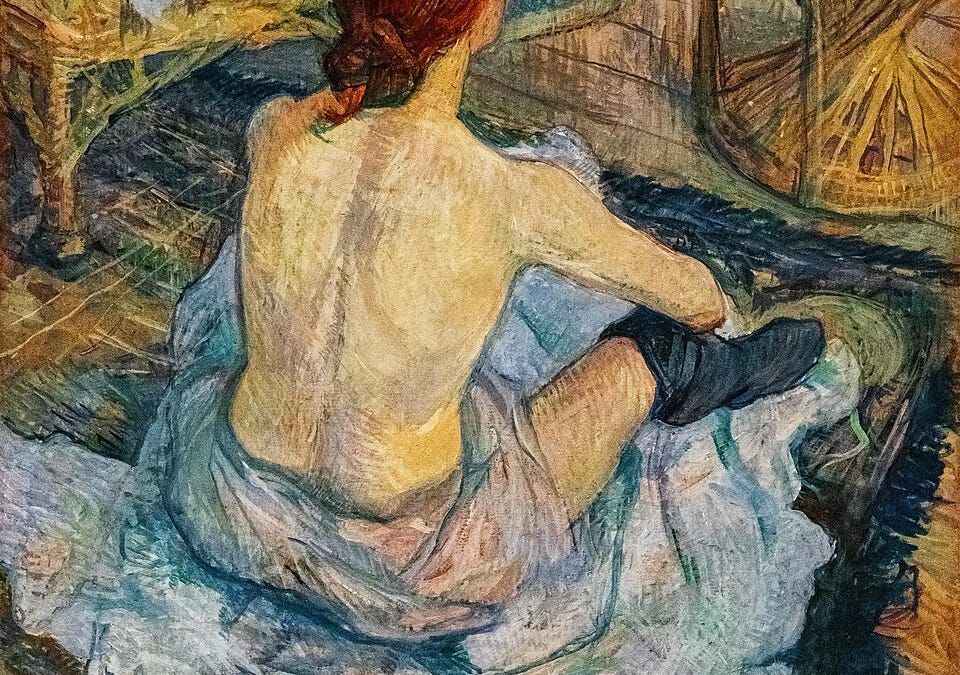
Artistic references, such as Henri de Toulouse-Lautrec’s Rousse (La Toilette), suggest a historical lineage for the exploration of isolation and the human condition. Just as the artist captured moments of private, quiet existence, this essay captures the solitary struggle of living with a disability in a society that lacks adequate support structures. The historical tendency to marginalize those unable to perform traditional labor continues to influence modern policy and interpersonal relationships, often leaving individuals to navigate their hardships in isolation.
Future Trends and Systemic Implications
The author's struggle is emblematic of a broader, growing trend of financial precarity among the disabled population. As the cost of living rises and social welfare systems face increasing strain, individuals with chronic health issues are finding it harder than ever to bridge the gap between their needs and their resources. This narrative serves as a critical reminder that disability is not just a medical issue, but a socio-economic one. Addressing these challenges will require a systemic shift in how society values individuals who cannot contribute to the traditional economy, moving toward a model of support that emphasizes dignity over productivity.
Conclusion
Ultimately, the author's story is a harrowing look at the intersection of health, money, and identity. By bringing the quiet, private grief of the disabled experience into the public sphere, they highlight the urgent need for a more compassionate approach to financial stability for those living in the 'kingdom of the sick.' The journey from independence to reliance is a complex, painful process that demands our collective empathy and a re-evaluation of how we define success in the face of physical limitation.