Flávio Bolsonaro's passports cancelled after he fails to surrender them
Source Entity
BBC News
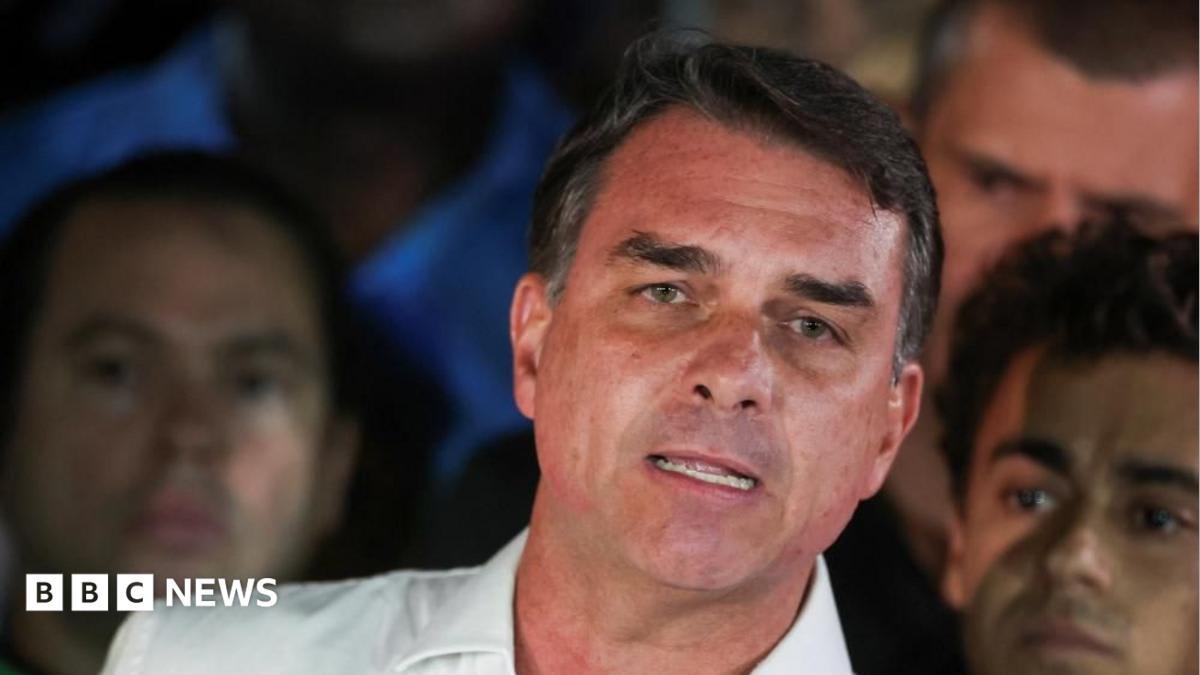
Brazilian Senator Flávio Bolsonaro has had his passports cancelled after failing to surrender them following a court order amid a money-laundering investigation. Reports indicate he has fled to the United States, mirroring his father's previous actions, as legal pressure mounts following his election defeat.
The Legal and Political Fallout of the Bolsonaro Passport Crisis
Escalating Legal Challenges
The recent cancellation of Flávio Bolsonaro's passports by Brazilian authorities marks a significant escalation in the ongoing legal scrutiny surrounding the Bolsonaro family. Following his defeat in the presidential runoff against Luiz Inácio Lula da Silva, the Senator found himself at the center of an investigation into alleged money laundering. The Supreme Court's decision to mandate the surrender of his travel documents within 24 hours was a direct measure to ensure he remained in the country to face these allegations, which he continues to deny.
Disregard for Judicial Authority
The failure of the Senator to comply with the court-imposed deadline has effectively transformed a legal investigation into a high-stakes standoff between the judiciary and a prominent political figure. By missing the noon Tuesday deadline, Bolsonaro has not only invited the immediate administrative penalty of passport cancellation but has also signaled a confrontational stance toward the Brazilian Supreme Court. This defiance has created a vacuum of information regarding his actual whereabouts, prompting federal officers to intensify monitoring at border crossings.
The Shadow of Precedent
This episode draws immediate and unavoidable comparisons to the actions of his father, former president Jair Bolsonaro, who famously departed for the United States following his 2022 election loss to Lula. The pattern of right-wing political figures fleeing to the U.S. when facing domestic legal pressure has become a defining characteristic of recent Brazilian political history. Such movements serve to complicate international legal cooperation and underscore the deep polarization within the nation's political landscape.
Political Instability and the Opposition
Despite the mounting legal pressure and the Liberal Party's formal acknowledgment of Lula’s victory, Flávio Bolsonaro has maintained a rhetoric of resistance. He has publicly vowed to challenge the election results, citing alleged voter irregularities, despite Lula securing a decisive lead of nearly 4.4 million votes. His departure, if confirmed, severely undermines his stated intention to remain in Brazil to lead the political opposition against the incoming administration, which is scheduled to take office on January 5, 2027.
Future Implications for Brazilian Democracy
The situation raises critical questions about the rule of law and the accountability of high-ranking officials. As Brazil prepares for a new presidential term, the flight of a key opposition figure creates significant political uncertainty. If he has indeed reached the United States, it may lead to complex extradition efforts or prolonged legal battles that will likely dominate the domestic discourse for months to come. The incident serves as a stark reminder of the fragile balance between political dissent and the integrity of the judicial process in contemporary Brazil.