Once there is roster, CJI has no right to interfere in it: Former SC judge Oka
Source Entity
The Indian Express
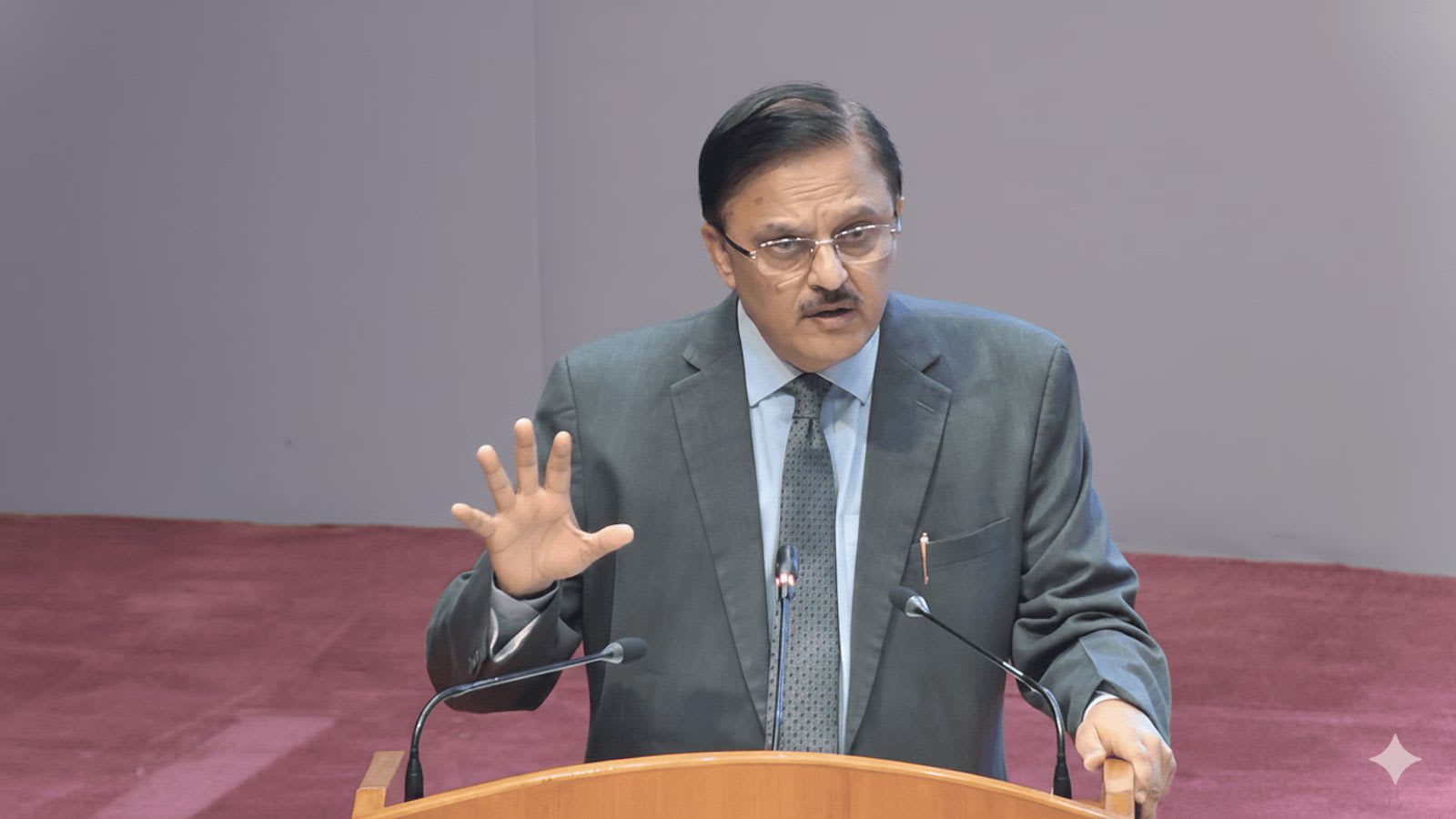
Former Supreme Court judge Abhay S. Oka has publicly criticized the current roster system, calling for greater transparency in case allocation. He argues that the existing process allows for potential manual intervention, contrasting this with a recent roster reshuffle by CJI Surya Kant.
The Debate Over Judicial Transparency in India
The Roster System Under Scrutiny
Former Supreme Court Judge Abhay S. Oka has ignited a significant conversation regarding the administrative mechanisms of India's highest court. Speaking at an event organized by the Campaign for Judicial Accountability and Reforms (CJAR) in New Delhi, Justice Oka questioned the inherent transparency of the Supreme Court's roster system. His central critique rests on the lack of clarity regarding how specific cases are assigned to benches, positing that the current framework potentially permits manual intervention in the listing process.
The Mechanics of Allocation
At the heart of Justice Oka’s concerns is the functional ambiguity of the roster. He emphasized that when multiple benches are assigned the same categories of cases, litigants and the public are left in the dark about which bench will ultimately hear a newly instituted matter. According to Oka, the fundamental purpose of a roster should be to eliminate human discretion; however, he suggests that the current implementation fails to rule out the possibility of a case being directed to a specific bench through non-transparent means.
Challenging the Authority of the CJI
One of the most provocative aspects of Justice Oka's address was his direct challenge to the administrative power wielded by the Chief Justice of India (CJI). He explicitly stated that once a roster is established, the CJI should not have the authority to interfere in its application. This assertion targets the 'Master of the Roster' convention, arguing that judicial accountability must extend beyond the courtroom and into the administrative functions of the Registry and the office of the CJI.
Recent Administrative Shifts
Coinciding with this criticism is the recent implementation of a new roster by CJI Surya Kant, which took effect on October 26, 2026. This reshuffle, which expands the range of subject categories assigned to various benches, is designed to distribute a broader cross-section of legal disputes—including commercial, taxation, and environmental matters—across the court. While the administration frames this as a broadening of judicial duties, critics like Justice Oka argue that such reshuffles do not address the systemic need for an automated, intervention-proof allocation process.
Broader Implications for Judicial Accountability
Justice Oka’s lecture on the accountability of Supreme Court and High Court judges underscores a growing demand for procedural integrity within the Indian judiciary. By highlighting that the object of a roster is to remove human agency from listing, he is advocating for a system that is predictable and verifiable. As the court continues to balance administrative efficiency with public trust, the tension between the CJI's discretionary powers and the need for a transparent, rules-based allocation system remains a critical point of debate for legal scholars and civil society.
Conclusion
The discourse initiated by Justice Oka highlights the friction between traditional administrative hierarchies and modern demands for transparency. Whether the Supreme Court will move toward a more rigid, automated, and publicly auditable system of case assignment remains to be seen. However, the call for reform signals that the administrative 'black box' of judicial case allocation is becoming a central issue in the quest for institutional accountability.
Multiple Citing Sources