Two youths detained in Panaji over support for jailed activist Umar Khalid
Source Entity
India Latest News: Top National Headlines Today & Breaking News | The Hindu
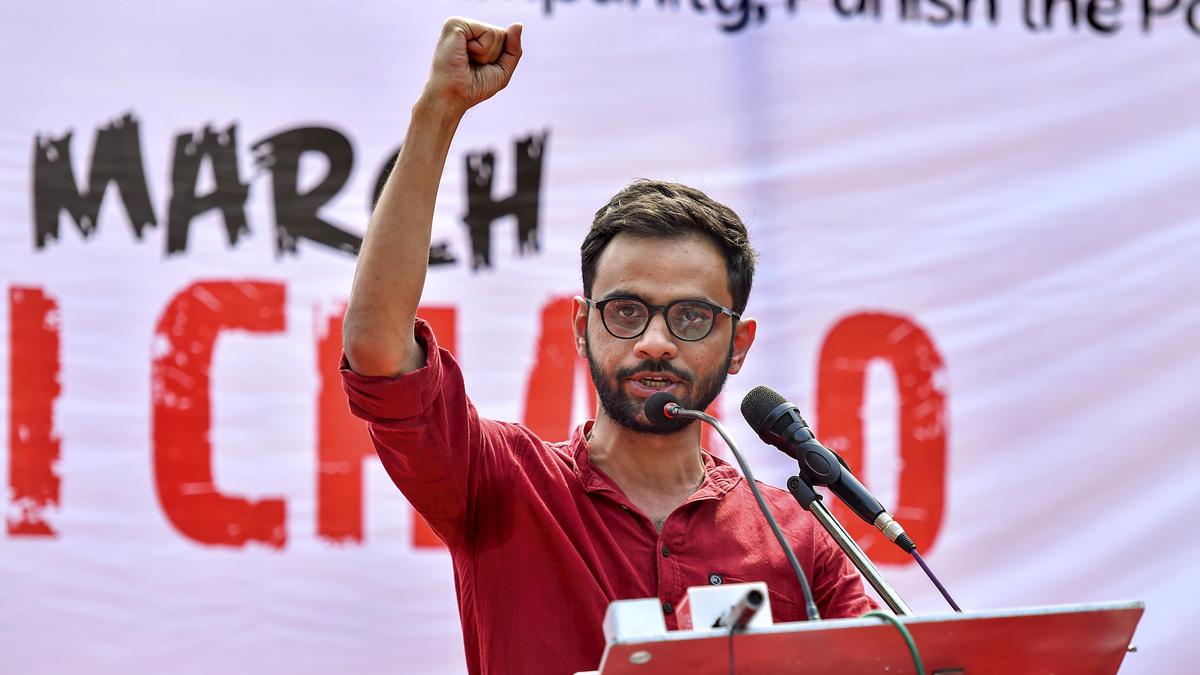
Goa Police have detained two individuals following a protest in Panaji where participants displayed placards demanding the release of activist Umar Khalid. The incident occurred during a gathering centered on the resignation of former Education Minister Dharmendra Pradhan.
Tensions Erupt at Panaji Protest Over Activist Detention
The Incident at Azad Maidan
On Saturday, July 25, a gathering at Azad Maidan in Panaji, Goa, intended to celebrate the resignation of former Education Minister Dharmendra Pradhan, turned into a scene of legal confrontation. The demonstration, which was initially organized to express solidarity with nationwide protests regarding the NEET paper leak—spearheaded by the Cockroach Janta Party (CJP)—saw a shift in focus when participants displayed placards demanding the release of jailed activist Umar Khalid, as well as Sharjeel Imam and the 'Bhima Koregaon 16'.
Police Intervention and Legal Escalation
The Goa Police intervened when a youth, identified as Danish, refused to lower a placard referencing the incarcerated activists. Following his initial detention, the situation escalated as other protesters marched to the Police Headquarters to demand his release. By Tuesday night, the police had lodged a formal FIR against “unknown supporters” of the CJP and the protesters involved, citing unlawful assembly and the failure to obtain mandatory prior permissions from state authorities for the gathering.
Contextualizing the Activist's Legal Status
Umar Khalid, a central figure in the referenced protest placards, remains a high-profile detainee in connection with the 2020 northeast Delhi riots. His ongoing incarceration has become a focal point for various civil rights groups and student movements. The mention of his name alongside other figures involved in the Bhima Koregaon case underscores the broader intersectional nature of these protests, where local grievances over educational policy are frequently linked to national debates on civil liberties and judicial processes.
Political Implications and Public Assembly
The state's decision to file an FIR against the protesters highlights the tension between public demonstration and administrative regulations. In Goa, as in many other regions, the requirement for prior police authorization for public gatherings is strictly enforced. The police’s swift reaction to the display of specific placards suggests a low tolerance for political messaging that deviates from the primary stated purpose of an assembly, especially when it involves individuals currently facing serious charges under national security or riot-related laws.
Future Trends in Civil Protest
This incident in Panaji reflects a growing trend where localized protests are increasingly utilized as platforms for broader national political agendas. As political parties and grassroots organizations like the CJP continue to mobilize against government policies—such as the NEET paper leak controversy—the likelihood of friction between law enforcement and protesters increases. The state’s move to criminalize the assembly through an FIR indicates a tightening approach to public dissent, which may influence how future political gatherings are managed and monitored by authorities in the region.
Multiple Citing Sources
Verification Required?