His party mum over ghuspaithiya row, Congress’ Harish Rawat calls Akhilesh’s remark ‘unfortunate, absolutely unwanted’
Source Entity
Lalmani Verma
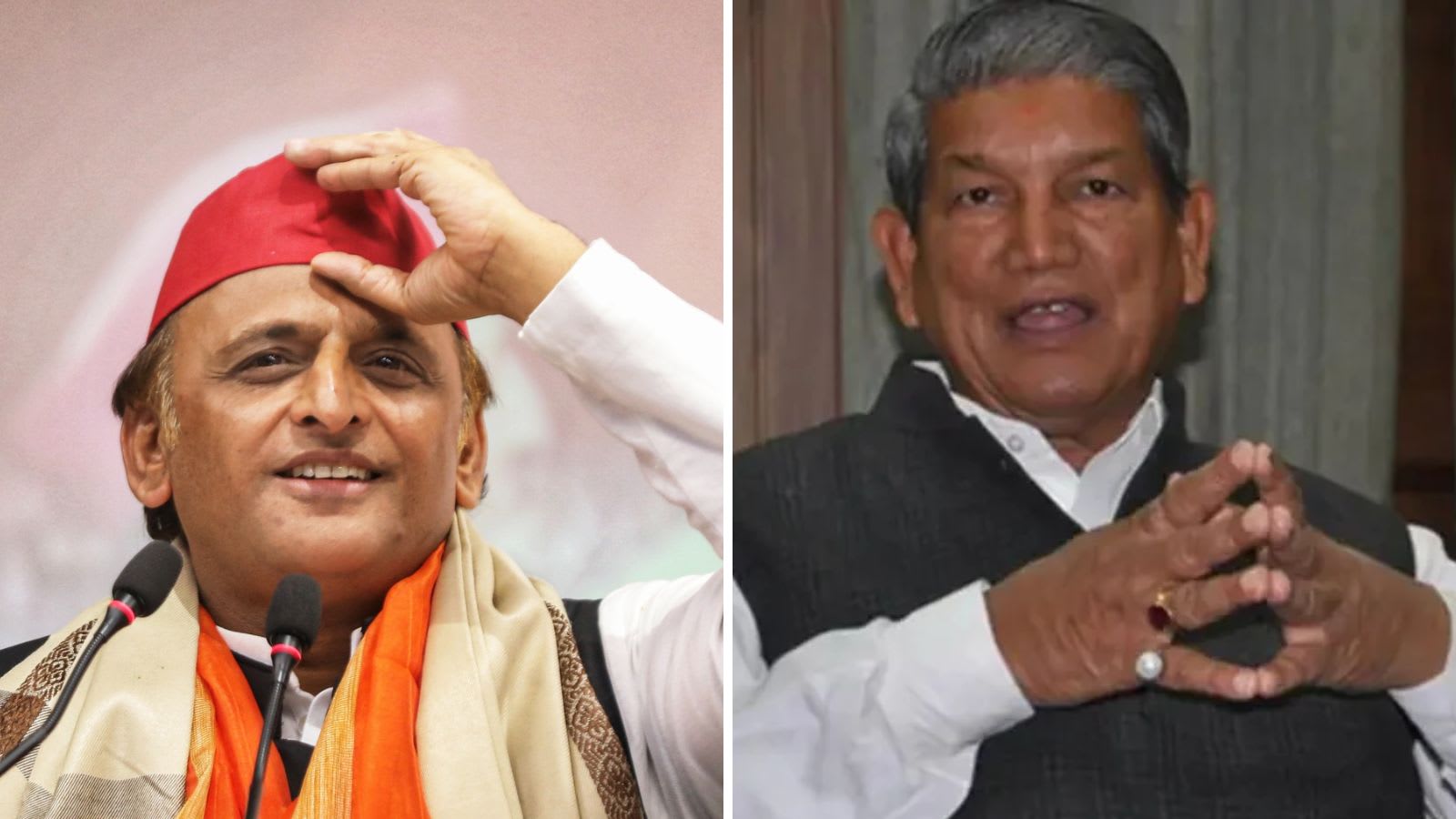
Congress leader Harish Rawat has condemned SP chief Akhilesh Yadav's 'infiltrator' remark regarding Uttarakhand citizens. The controversy highlights internal friction within the INDIA alliance and the political weaponization of migration rhetoric.
The Uttarakhand Infiltration Controversy: A Political Rift
Recent political discourse has been ignited by Samajwadi Party (SP) chief Akhilesh Yadav, who characterized citizens from Uttarakhand as the "biggest infiltrators." This provocative statement has placed his alliance partner, the Indian National Congress, in a precarious position, forcing senior leader and former Uttarakhand Chief Minister Harish Rawat to publicly distance his party from the remark. Rawat has labeled the comment as "highly unfortunate and absolutely unwanted," marking a rare moment of overt friction within the opposition coalition.
Historical Context of the Uttarakhand-UP Divide
To understand the gravity of the offense taken by Rawat, one must consider the historical relationship between the two regions. Uttarakhand was carved out of Uttar Pradesh in November 2000 following a long-standing movement for statehood. Despite the administrative separation, the two states remain deeply intertwined through shared culture, familial ties, and economic migration. Rawat’s defense emphasizes that citizens moving between these regions are not 'infiltrators' but rather residents of the same nation exercising their constitutional right to mobility.
The Weaponization of the 'Ghuspaithiya' Rhetoric
Rawat’s response also serves as a critique of how language is manipulated in modern Indian politics. By accusing the BJP of misusing the term 'ghuspaithiya' (infiltrator) for political gain, Rawat attempts to reframe the debate. He argues that the use of such divisive terminology is a strategic attempt to polarize the electorate. By calling out Akhilesh Yadav, Rawat is likely trying to mitigate potential damage to the Congress party’s electoral prospects in Uttarakhand, where regional identity remains a potent political force.
Internal Alliance Pressures and Party Silence
While Harish Rawat has been vocal, the broader Uttarakhand unit of the Congress party has remained conspicuously silent. This silence suggests a calculated effort to avoid inflaming tensions within the INDIA alliance, yet the BJP has seized the opportunity to demand an apology from the SP leadership. The incident underscores the difficulty of maintaining a unified national narrative when local alliance partners hold divergent views on sensitive issues like regionalism and migration.
Broader Implications for Future Alliances
The incident serves as a bellwether for the challenges coalition politics face in India. When national alliance partners make statements that alienate regional voters, the local party units often bear the brunt of the backlash. As the political landscape grows increasingly polarized, the ability of parties like the Congress to manage the rhetoric of their allies will be crucial. If such friction continues, it could undermine the credibility of the opposition's collaborative efforts in future state and national elections.
Conclusion
Ultimately, the controversy highlights the thin line between political campaigning and regional alienation. Harish Rawat’s intervention represents an attempt to reclaim the narrative of national unity against the backdrop of divisive labels. Whether this will suffice to quell the BJP's demands for an apology or repair the image of the INDIA alliance in the hill state remains to be seen, but the event serves as a stark reminder of the volatile intersection of regional identity and national politics.