US midterms: Is Trump about to lose control of Congress? What betting markets say
Source Entity
PRIYANKA MUKHERJEE
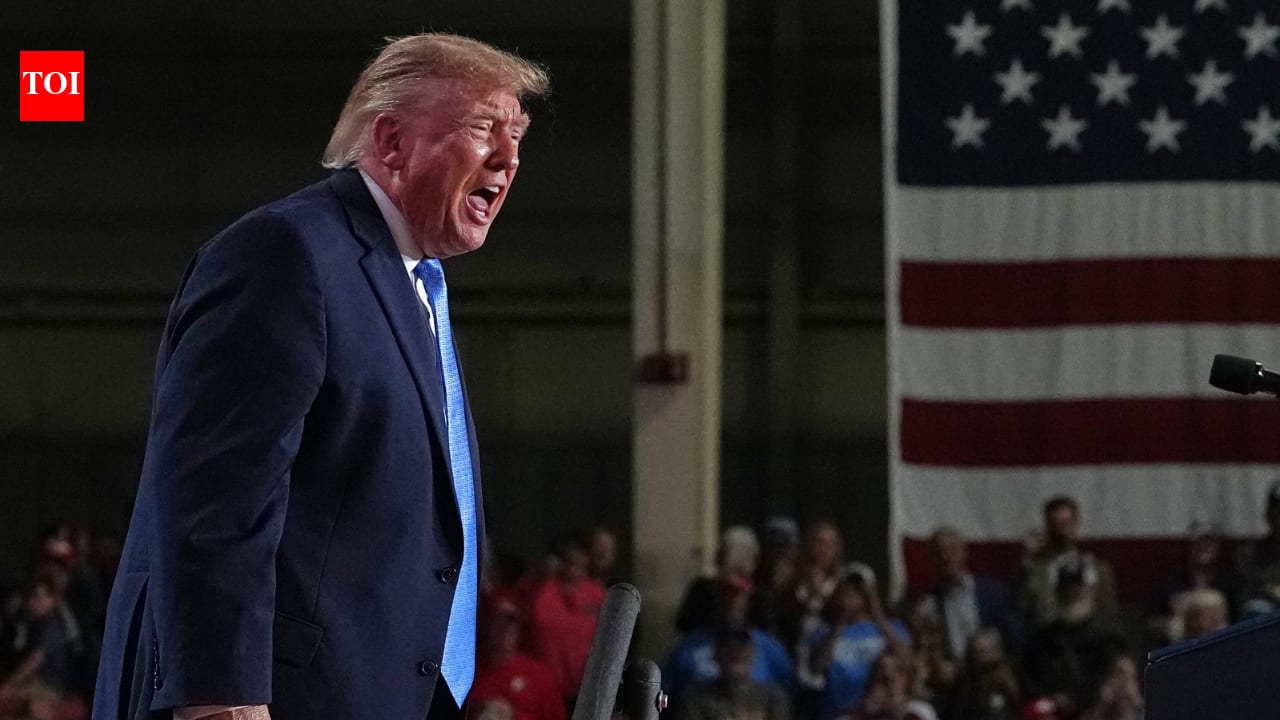
As the 2026 U.S. midterms approach, prediction markets indicate a strong likelihood of a Democratic sweep of Congress. Betting platforms suggest Republicans face significant hurdles in maintaining their current majorities.
The Shifting Landscape of the 2026 U.S. Midterms
As the United States approaches the 2026 midterm elections, the political climate appears increasingly volatile for the incumbent Republican Party. Recent data from prominent event contract exchanges, such as Kalshi and Polymarket, indicates a significant shift in expectations regarding the legislative balance of power. With only one week remaining until the polls open, the consensus among speculators suggests that the Democratic Party is currently favored to flip both the House and the Senate, signaling a potential major change in the federal government's composition.
The Role of Prediction Markets in Political Forecasting
Unlike traditional polling, which relies on representative samples of the electorate, prediction markets allow participants to bet on outcomes, theoretically aggregating diverse information into a single probability metric. Current data shows a roughly two-in-three chance that Democrats will secure control of both chambers. Notably, these odds have remained remarkably stable throughout October, suggesting that market participants are not viewing this as a temporary swing but as a hardened expectation of electoral behavior.
Republican Challenges and the 'Trump Factor'
Central to this narrative is the influence of Donald Trump and the Republican Party's struggle to maintain its legislative grip. The betting markets are currently projecting a bleak outlook for a Republican sweep, with probabilities hovering between 8% and 9.3%. This suggests that the market has largely discounted the possibility of a GOP-led status quo. Furthermore, the data highlights localized difficulties for candidates associated with the party's current trajectory, such as Vivek Ramaswamy’s challenging race in Ohio.
Analyzing the Potential Outcomes
Market participants are currently pricing in several distinct scenarios. While a Democratic sweep is the leading projection, there remains a roughly 29% chance of a split government, where Democrats secure the House while the GOP manages to hold onto a slim majority in the Senate. This level of granularity illustrates how speculative platforms are dissecting the nuances of individual congressional races to derive a broader national picture.
Institutional Integrity and Market Resolution
It is important to note that these prediction contracts are anchored to official, verified data from the U.S. Congress. By tying financial stakes to the outcome of real-world legislative counts, these platforms attempt to filter out partisan noise in favor of data-driven forecasting. While betting markets are not infallible, their current positioning reflects a widespread belief that the Republican Party’s defense of its majorities is failing to gain the necessary traction to fend off a Democratic challenge.
Future Implications for Governance
If the prediction markets are accurate, the transition to a Democratic-controlled Congress would necessitate a total recalibration of federal policy priorities. A change in legislative control would likely lead to gridlock or radical shifts in executive oversight, depending on the current administration's stance. As the nation moves toward election day, the stability of these betting odds underscores the severity of the challenge facing Republican incumbents across the country.