Hegseth shares photo of Chabahar port tower collapsing amid strikes in Iran
Source Entity
TOI WORLD DESK
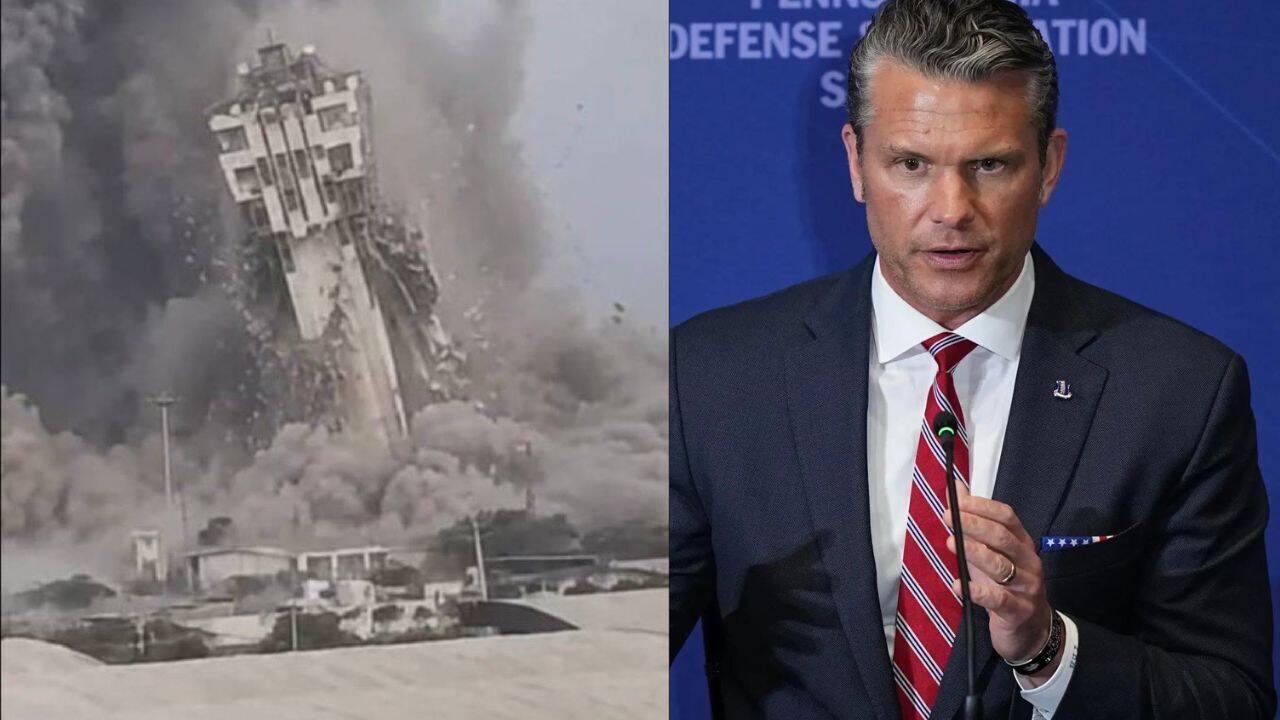
Pete Hegseth shared imagery showing a tower collapsing at Iran's Chabahar port during a series of strikes. Iran has countered these claims, asserting the tower was used exclusively for overseeing commercial traffic.
Analysis of the Reported Infrastructure Collapse at Chabahar Port
Introduction to the Incident
Recent reports and social media activity have brought attention to a significant structural failure at the Chabahar port in Iran. Pete Hegseth shared a photograph depicting a tower collapsing, an event that reportedly occurred amid a broader context of strikes within Iran. This incident highlights the ongoing volatility of the region and the intersection of military action, infrastructure vulnerability, and the rapid dissemination of visual evidence through public figures.
Conflicting Narratives on Infrastructure Purpose
A central point of contention in this event is the intended function of the collapsed tower. While the imagery suggests a targeted strike on a strategic asset, the Iranian government has explicitly described the tower as a facility overseeing commercial traffic into the port. This discrepancy is a classic example of the 'narrative war' that accompanies modern geopolitical conflicts, where the same piece of infrastructure is framed as either a legitimate military target or a critical civilian trade asset.
The Strategic Significance of Chabahar Port
To understand why a strike at Chabahar is significant, one must look at the port's geopolitical weight. Chabahar is Iran's only oceanic port, providing it with a direct gateway to the Indian Ocean. This allows Iran to bypass the Strait of Hormuz—a notorious geopolitical chokepoint—and facilitates trade with India and landlocked Afghanistan. Any disruption to this port, whether through the destruction of a control tower or broader strikes, threatens Iran's economic resilience and its ability to project commercial influence in South Asia.
Information Warfare and Visual Evidence
The role of Pete Hegseth in sharing the photograph underscores the power of digital diplomacy and information warfare. By publicizing the collapse of a tower during a period of strikes, such imagery serves as visual confirmation of impact, regardless of the tower's actual utility. The speed with which such photos move from the scene of a strike to a global audience creates immediate pressure on the affected state to provide a counter-explanation, as seen in Iran's rapid classification of the tower as a commercial entity.
Broader Implications of Infrastructure Strikes
Strikes targeting port infrastructure generally signal a strategy of economic attrition. By targeting the mechanisms that oversee traffic—such as the tower in question—an adversary can create bottlenecks in shipping and logistics. Even if the tower was indeed for commercial use, as Iran claims, its destruction disrupts the orderly flow of goods, potentially increasing insurance costs for shipping companies and deterring international commercial partners from utilizing the port.
Conclusion and Future Outlook
The incident at Chabahar port serves as a microcosm of the larger tensions currently defining the Middle East. The collapse of the tower, the subsequent sharing of imagery by Western figures, and the Iranian government's denial of military utility all point to a cycle of escalation and obfuscation. Moving forward, the stability of the Chabahar port will likely remain a key indicator of Iran's economic viability and its ability to maintain strategic trade routes amidst ongoing external pressures.