Amid CJP protests, IIT Roorkee asks students, staff not to partake in political activity
Source Entity
Latest News: Today's Latest News Headlines from India & World | Hindustan Times | Hindustan Times
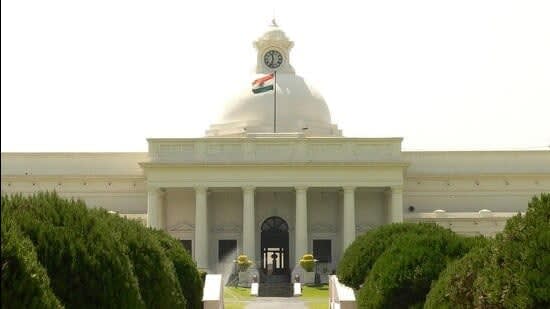
IIT Roorkee has issued a controversial advisory prohibiting students and staff from engaging in political activities or expressing support for movements like the ongoing CJP protests. The institute maintains this is a standard policy to prevent institutional embarrassment, despite widespread public criticism regarding free speech.
Institutional Neutrality vs. Free Expression: The IIT Roorkee Advisory
The Scope of the Directive
On July 20, 2026, the Indian Institute of Technology (IIT) Roorkee issued a formal advisory that has sparked a significant debate regarding the boundaries of student expression. The directive explicitly warns students and staff against utilizing social media platforms, such as Instagram and Facebook, to display affinity toward "political movements" currently dominating public discourse. This mandate was issued by the registrar’s office, emphasizing that participants must refrain from making political statements or expressing opinions through broadcast, print, or electronic media without prior administrative permission.
Contextualizing the CJP Protests
This administrative pivot occurs against the backdrop of large-scale protests organized by the Cockroach Janta Party (CJP) in New Delhi. The CJP has been actively campaigning for the resignation of Union Education Minister Dharmendra Pradhan, citing alleged irregularities. By specifically referencing "the current one" in their advisory, IIT Roorkee has effectively positioned itself in the middle of a national political firestorm, attempting to shield the institution from the fallout of these protests.
The "Gag Order" Controversy
The reaction on social media was swift and critical, with many observers labeling the advisory a "gag order" designed to stifle academic freedom and individual conscience. The core of the criticism lies in the tension between an institution's need for political neutrality and the democratic rights of its students. Detractors argue that by forbidding speech that might "embarrass relations between the institute and government," the administration is prioritizing bureaucratic optics over the fundamental right to engage in civic discourse.
Institutional Justification
In response to the backlash, IIT Roorkee has attempted to temper the narrative, stating that the communication was "misunderstood." The institute maintains that the advisory is not a new policy but rather a restatement of existing institutional rules. According to the administration, these guidelines are intended to maintain a professional environment and ensure that individual actions do not compromise the institute’s standing with the central government. They argue that the directive should not be viewed out of context, framing it as a standard procedural reminder rather than an ideological crackdown.
Implications for Academic Freedom
This event highlights a recurring challenge for premier technical institutes in India: how to balance their status as government-funded entities with the role of universities as hubs for critical thought. When institutions prioritize the avoidance of "embarrassment" to the government, they risk alienating a student body that increasingly uses digital spaces to organize and advocate for change. The incident suggests a future trend where institutions may face increasing pressure to formalize their digital conduct policies to mitigate the risks associated with viral political activism.
Conclusion
The situation at IIT Roorkee serves as a case study in the friction between institutional governance and modern political activism. While the institute insists on the necessity of these rules to preserve its relationship with the state, the public perception of the directive as a restriction on free speech remains a significant point of contention. As these protests continue, the ability of educational institutions to maintain such "neutrality" will likely remain under intense scrutiny.
Multiple Citing Sources
Verification Required?