IIT Roorkee warns students against social media support to 'political movements like current one'
Source Entity
India Latest News: Top National Headlines Today & Breaking News | The Hindu
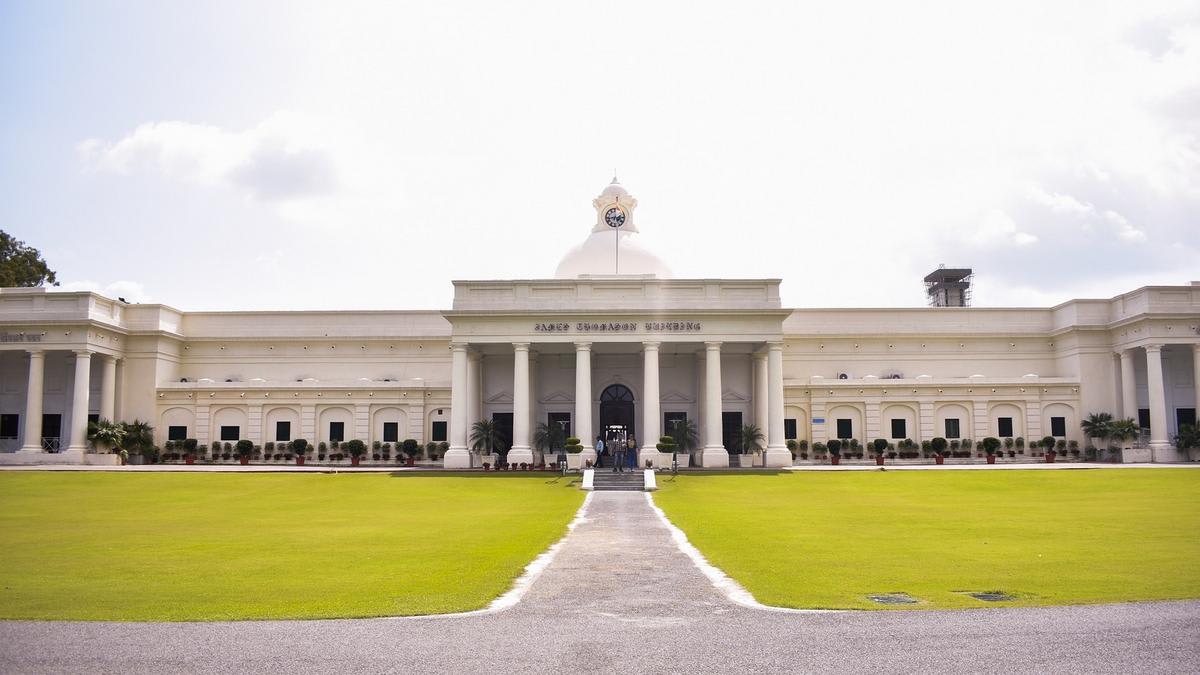
IIT Roorkee has issued an advisory warning students and staff against participating in political movements or social media advocacy. The directive, aimed at avoiding friction with the government, has sparked controversy and claims of censorship.
IIT Roorkee Advisory Sparks Debate on Institutional Neutrality
The Directive and Its Scope
On July 20, 2026, the Indian Institute of Technology (IIT) Roorkee issued a formal advisory prohibiting students and staff from participating in political activities or expressing political opinions via social media, print, or electronic platforms. The directive specifically targets expressions of affinity toward "any political movement like the current one," citing institutional rules that forbid statements capable of embarrassing the relationship between the institute and the central government. This move has placed the prestigious technical institution at the heart of a national debate regarding the boundaries of academic freedom and institutional governance.
Contextualizing the "Current Movement"
The advisory emerges against the backdrop of significant civil unrest in New Delhi, where the Cockroach Janta Party (CJP) has been staging large-scale protests. The CJP is demanding the resignation of Union Education Minister Dharmendra Pradhan, citing alleged irregularities in the education sector. By explicitly referencing the need to avoid "embarrassing" the administration, IIT Roorkee’s leadership has signaled a prioritized alignment with government stability, effectively attempting to insulate the campus from the volatility of national political discourse.
The "Gag Order" Controversy
Public reaction on social media has been swift and largely critical, with many observers labeling the advisory as a "gag order." Critics argue that such directives stifle the critical thinking skills expected of students at an institute of national importance. The tension between maintaining institutional decorum and upholding the fundamental right to free expression remains a central friction point. While the institute maintains that the advisory is merely a reiteration of existing conduct rules, the timing suggests an reactive stance intended to curb student involvement in the ongoing anti-government demonstrations.
Institutional Rationale vs. Academic Freedom
IIT Roorkee’s administration, represented by the registrar’s office, has defended the advisory by characterizing it as a procedural necessity rather than a new policy. The core argument rests on the premise that as a state-funded institution, the university must maintain a neutral public-facing stance to preserve its relationship with the central government. However, this creates an inherent conflict with the university's role as a space for intellectual inquiry, where students are traditionally encouraged to engage with and analyze societal issues.
Future Implications and Clarification
Following the intense backlash, the institute issued a brief clarification stating that the communication had been "misunderstood." Despite this, the incident highlights a growing trend of administrative caution in Indian higher education. As political polarization increases, institutions are increasingly faced with the challenge of balancing their status as government-funded entities with the democratic necessity of student participation in public life. Future trends suggest that IITs will likely continue to face pressure to delineate clear "red lines" regarding political discourse to avoid direct confrontation with the state, potentially leading to increased surveillance of student digital footprints.
Multiple Citing Sources
Verification Required?