Why India's first hydrogen train is special - explained
Source Entity
SMRITI JAIN
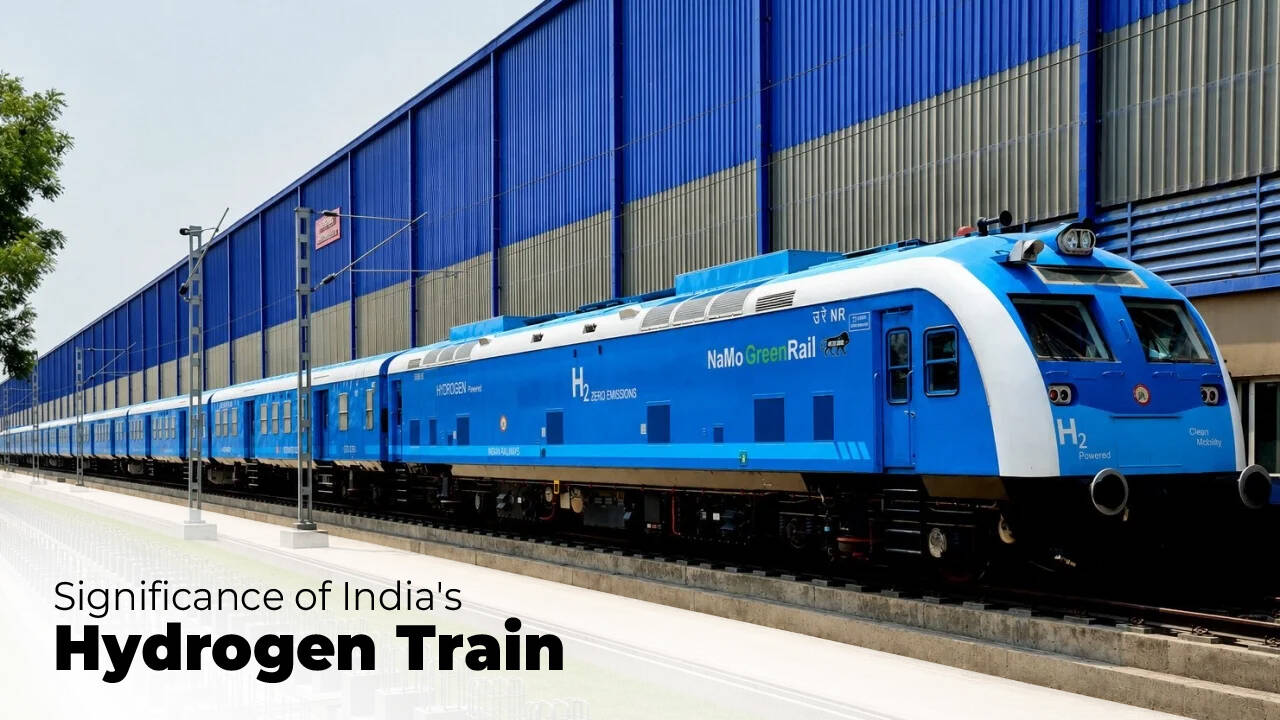
Prime Minister Narendra Modi has flagged off India's first hydrogen-powered train on the Jind-Sonipat route in Haryana. This 10-coach, zero-emission train represents a major 'Make in India' milestone in green transportation.
India's Leap into Green Mobility: The Launch of the First Hydrogen Train
Prime Minister Narendra Modi has officially ushered in a new era of sustainable transit by flagging off India's first hydrogen-powered train at the Jind railway station in Haryana. This initiative represents a strategic pivot toward greener transportation, aiming to decouple the massive scale of Indian rail travel from carbon emissions. By deploying technology that eliminates smoke and direct carbon output, India is positioning itself as a leader in the global transition toward net-zero emissions in the heavy transport sector.
Technical Architecture and Engineering
The train operates on advanced hydrogen fuel cell technology, which generates electricity to power traction motors without the need for traditional combustion. A critical technical highlight is that the only by-product of this process is water vapor, making it an entirely smokeless operation. The train's power system is robust, featuring power cars that produce 1,200 kW each, contributing to a total of 3,200 horsepower. To ensure stability and energy efficiency, the system is supported by high-capacity lithium iron phosphate batteries and specialized hydrogen storage cylinders, creating a hybrid energy ecosystem that ensures reliable performance across its route.
A Global Benchmark in Scale
One of the most significant aspects of this project is its sheer scale. While other nations have experimented with hydrogen rail, most existing models are limited to three or four coaches. India has disrupted this trend by launching a 10-coach configuration capable of transporting up to 2,600 passengers. This leap in capacity suggests that India is not merely testing the technology but is preparing for the high-density passenger demands characteristic of its national rail network, effectively creating what is described as the world's longest hydrogen-powered train.
The 'Make in India' Strategic Milestone
Beyond the environmental benefits, the project serves as a powerful testament to the 'Make in India' initiative. The train was designed by Indian engineers and manufactured by an Indian company, reducing reliance on foreign technology imports for critical infrastructure. This indigenous development is crucial for the long-term sustainability of the project, as it ensures that maintenance, upgrades, and future expansions can be handled locally. By mastering the design and manufacture of fuel cell power cars, India is building a domestic intellectual property base in hydrogen mobility.
Operational Logistics and Route Impact
The inaugural route spans 89 kilometers between Jind and Sonipat, with the journey taking approximately two hours and including stops at 12 intermediate stations. The establishment of a hydrogen facility at Jind is a vital piece of infrastructure, as the viability of hydrogen trains depends entirely on the availability of refueling networks. This specific route serves as a proof-of-concept for how hydrogen mobility can be integrated into regional transit, providing a blueprint for scaling the technology to other corridors across the country.
Conclusion and Future Outlook
The launch of the hydrogen train is more than just a railway upgrade; it is a signal of India's intent to lead in the global hydrogen economy. As the country seeks to balance rapid economic growth with climate commitments, the transition from diesel to hydrogen in the rail sector will be pivotal. If the Jind-Sonipat pilot proves successful, it is likely that India will accelerate the deployment of hydrogen-powered fleets, potentially transforming the railways into a zero-emission backbone for national logistics and passenger movement.
Multiple Citing Sources