'Beacon of hope': Polish PM Tusk hails ties with India, calls PM Modi a 'friend'
Source Entity
YASHASVI VASISTHA
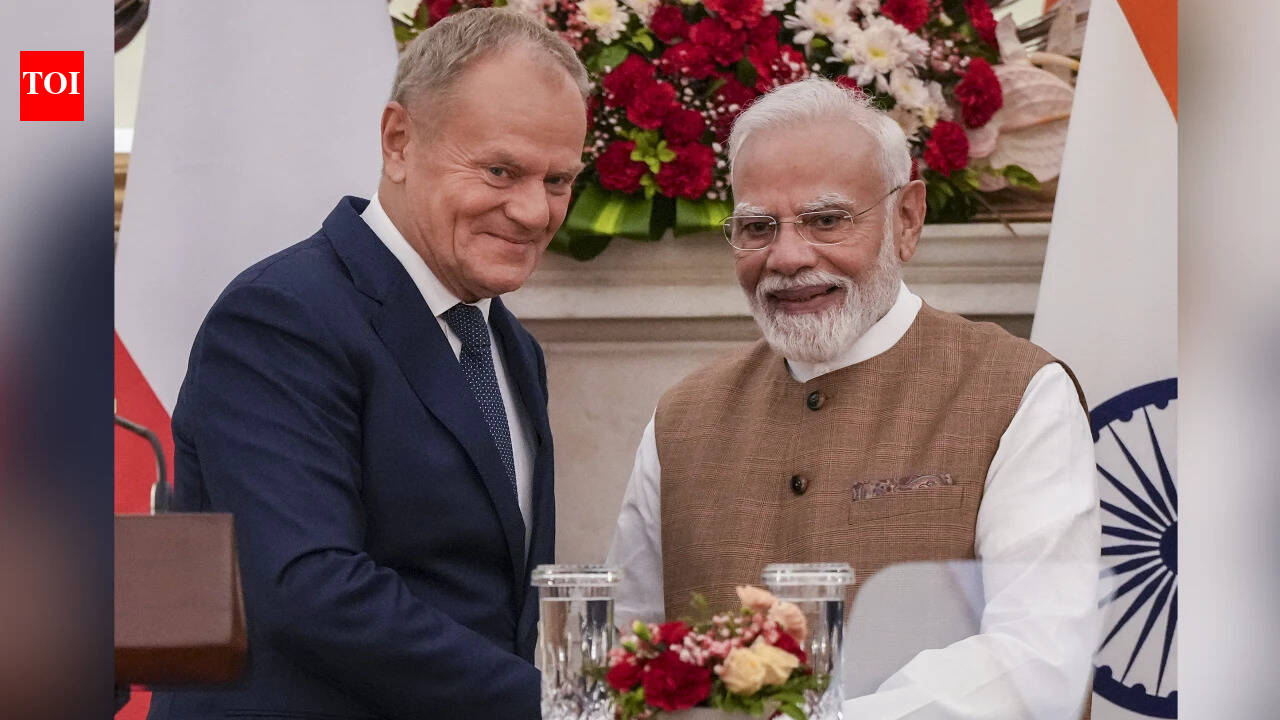
Polish Prime Minister Donald Tusk visited India to elevate the bilateral relationship, focusing on strategic cooperation in defense, space, and technology. The leaders emphasized a shared commitment to non-violence and identified mutual goals to double bilateral trade by 2030.
A New Chapter in Indo-Polish Relations
The recent diplomatic visit of Polish Prime Minister Donald Tusk to India marks a significant milestone in the strategic partnership between New Delhi and Warsaw. By characterizing the relationship as one devoid of 'conflicts of interest,' Prime Minister Tusk has signaled a clear intent to move beyond historical baggage and focus on a future defined by shared values and common geopolitical objectives. This visit, the first by a Polish Prime Minister since 2010, serves to solidify the strategic partnership framework established during Prime Minister Narendra Modi’s visit to Warsaw in August 2024.
Foundations of Trust and Shared Values
At the core of this burgeoning friendship is a mutual respect for democratic ideals and the philosophy of non-violence. Prime Minister Tusk explicitly drew a parallel between the Polish Solidarity movement and India’s long-standing tradition of non-violent resistance. This ideological alignment provides a robust foundation for cooperation, allowing both nations to frame their partnership not just in transactional terms, but as a collaboration between two global actors committed to stability in an era of international uncertainty.
Strategic Cooperation: Defense and Technology
Beyond the diplomatic rhetoric, the talks yielded concrete pathways for industrial and technological integration. The commitment to co-production and co-development in sectors such as defense, space exploration, and nuclear energy represents a shift toward deeper industrial synergy. By establishing a dedicated defense industry dialogue and a counter-terrorism dialogue, both nations are institutionalizing their security cooperation to address modern threats while leveraging their respective strengths in digitalization and satellite technology.
Economic Ambitions and the EU Framework
Economically, the ambition to double bilateral trade by 2030 from its current $6 billion baseline underscores a desire to move toward a more integrated economic relationship. While the trade volume remains modest, the focus on the India-European Union Free Trade Agreement provides a broader institutional context for growth. As Poland continues its trajectory of strong economic development, its role as a gateway for Indian firms into the European market becomes increasingly vital.
Navigating Geopolitical Complexities
Perhaps the most nuanced aspect of the dialogue involved the ongoing Russia-Ukraine conflict. Despite India's complex historical and strategic ties with Moscow, Prime Minister Tusk utilized the platform to engage with India’s 'four-point proposal' aimed at mitigating the war's impacts. This demonstrates that the Indo-Polish partnership is mature enough to handle divergent regional perspectives, prioritizing collaborative solutions to global instability over rigid ideological alignment.
Future Outlook and Conclusion
Looking ahead, the success of this partnership will depend on the implementation of the proposed defense and space dialogues. As both nations move to protect classified information and invite private sector participation in strategic industries, they are setting the stage for a long-term alliance. By positioning themselves as 'friends in difficult times,' India and Poland have effectively signaled to the international community that they are prepared to act as stabilizing forces in an increasingly fragmented global order.
Multiple Citing Sources