Who pays when train passengers steal blankets? An attendant explains
Source Entity
The Indian Express
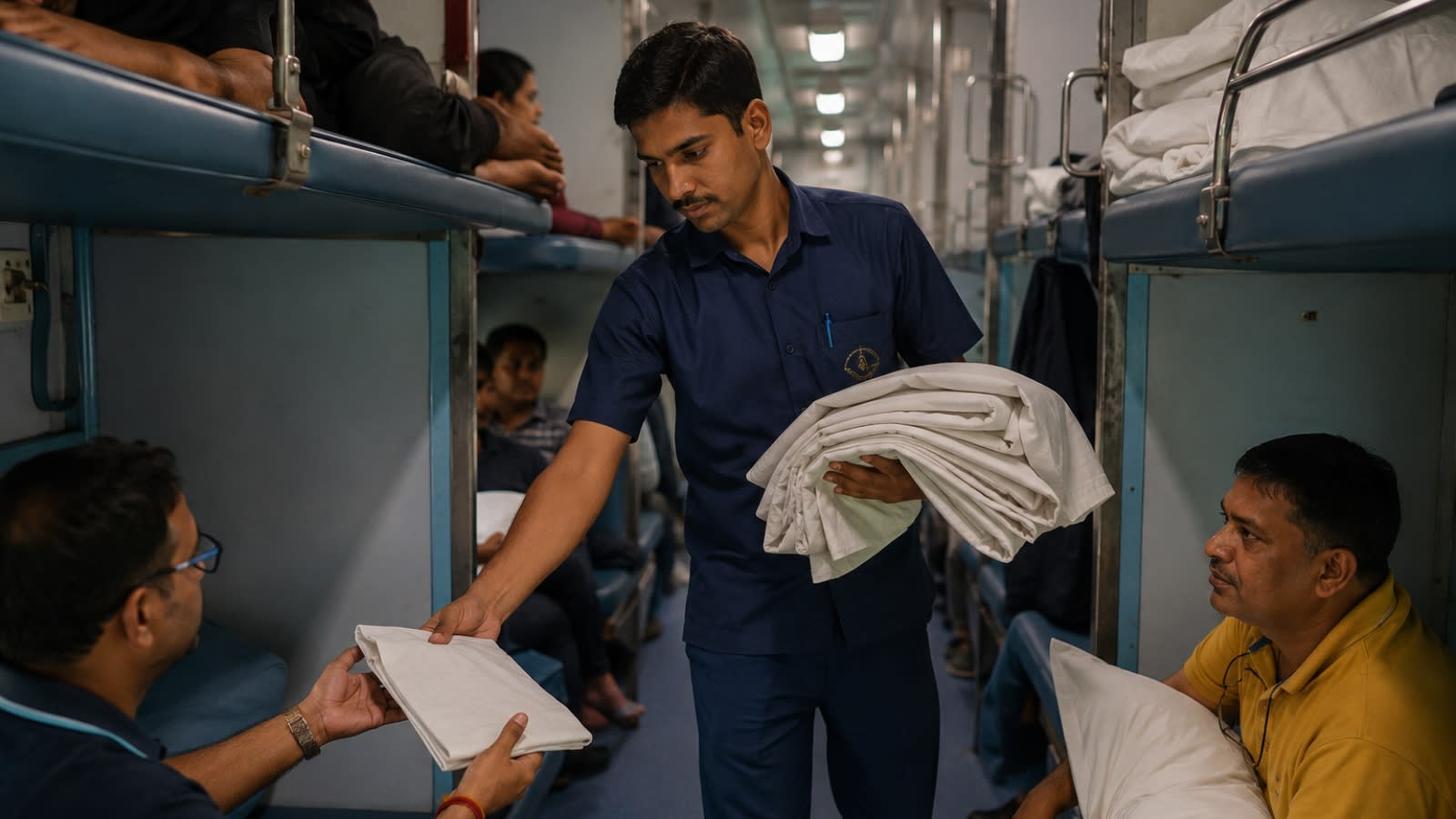
A viral video reveals that Indian Railways attendants face salary deductions when passengers steal linen from AC coaches. Attendant Amit Yadav highlights the severe financial impact of missing blankets and towels on low-wage workers.
The Human Cost of Railway Linen Theft
For millions of travelers using the Indian Railways' AC coaches, the provision of bedsheets, blankets, and towels is viewed as a standard, seamless part of the service. However, a viral video shared by YouTuber Naveen Singh has pulled back the curtain on a distressing reality: the cost of these amenities, when stolen by passengers, is often borne by the lowest-level employees. This revelation shifts the narrative from a simple case of corporate loss to one of individual financial hardship for the railway's ground staff.
The Financial Burden on Low-Wage Workers
The economic impact of these thefts is stark when viewed through the lens of the workers' earnings. Amit Yadav, a railway attendant featured in the video, earns a modest monthly salary of ₹14,000. When passengers steal linen, the cost is deducted directly from his pay. With a towel costing ₹60, a bedsheet ₹250, and a blanket ₹700, even a few missing items can represent a significant percentage of a worker's monthly take-home pay. This system creates a precarious environment where the attendant's livelihood is dependent on the honesty of strangers.
Passenger Entitlement and Behavioral Patterns
There is a clear disconnect between the passenger's perception of the service and the operational reality. Many travelers view these items as free perks of their ticket price, leading to a sense of entitlement that manifests in theft. A poignant example shared by Yadav involves a passenger traveling to Delhi who questioned the absence of a towel in the linen kit. Despite being informed that towels are now provided only upon request specifically to curb theft, the passenger allegedly took the towel home anyway, demonstrating a blatant disregard for the rules and the worker's welfare.
Operational Shifts as a Response to Theft
To combat the rising tide of stolen linen, the Indian Railways has had to implement restrictive measures, such as the "on-request" policy for towels. This shift indicates that the scale of theft is significant enough to disrupt standard operating procedures. While these measures are intended to reduce losses, the example of the Delhi-bound passenger suggests that policy changes alone are insufficient if the underlying culture of entitlement remains unchanged among a segment of the traveling public.
Broader Implications for Labor Rights
This incident raises critical questions about labor practices and the fairness of deducting inventory losses from employee salaries. In many professional settings, shrinkage or loss is considered a cost of doing business. However, in this instance, the financial risk is transferred from the organization to the individual worker. This dynamic places an unfair burden on staff who have no control over the behavior of the passengers they serve, effectively penalizing them for the dishonesty of others.
The Role of Social Media in Advocacy
The dissemination of this story via YouTuber Naveen Singh highlights the power of social media in bringing visibility to "invisible" workers. By urging the public to "think about them too," the video attempts to humanize the service staff and foster empathy. Such viral content can serve as a catalyst for behavioral change, prompting passengers to consider the real-world consequences of their actions beyond the immediate convenience of taking a blanket or towel home.
Conclusion and Future Outlook
In summary, the theft of railway linen in India is not a victimless crime; it is a direct financial blow to workers like Amit Yadav. To resolve this, a combination of systemic changes—such as moving away from salary-based deductions—and increased passenger awareness is necessary. Until the responsibility for loss is shifted away from the attendants, the psychological and financial stress on these workers will continue, undermining the dignity of their labor.