‘Eyes in the sky, SHAKTI on the ground’: How Indian Railways is exploring new ways to improve security
Source Entity
Anish Mondal
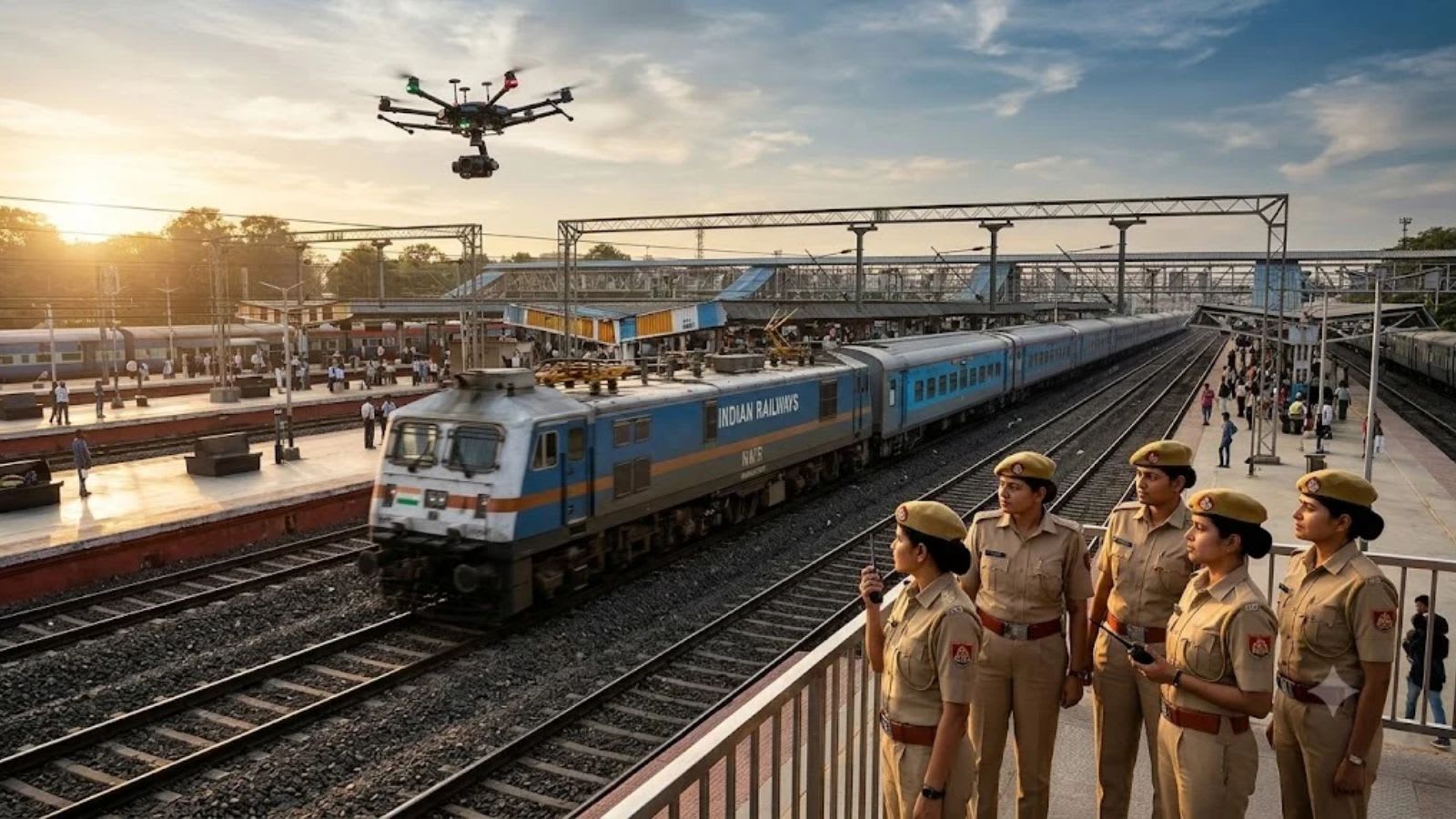
Indian Railways is integrating drone-assisted 'Pink Patrol' units and enhanced multi-agency coordination to bolster passenger safety. These initiatives were formalized during the 8th All India Conference of Government Railway Police Chiefs in New Delhi.
Enhancing Rail Security: A Paradigm Shift in Surveillance
Indian Railways, the lifeline of the nation’s transport infrastructure, is undergoing a significant transformation in its security apparatus. During the 8th All India Conference of Government Railway Police (GRP) Chiefs held in New Delhi on October 23, top officials—including RPF Director General Sonali Mishra and Railway Board Chairman Satish Kumar—converged to outline a modernized security framework. The focus has shifted from reactive policing to a proactive, technology-driven model designed to safeguard millions of daily passengers.
The Rise of 'Eyes in the Sky'
A cornerstone of these new safety measures is the deployment of drone technology. By integrating aerial surveillance, the railway security apparatus can monitor vast stretches of tracks and station premises that were previously difficult to patrol manually. This 'Eyes in the Sky' approach allows for real-time monitoring and rapid response capabilities, effectively minimizing the latency between a security incident and intervention.
The SHAKTI Initiative and Pink Patrols
Central to this technological evolution is the 'Pink Patrol' initiative, particularly spearheaded by the South Central Railway. By combining drone surveillance with ground-level 'SHAKTI' teams, the railways are creating a multi-layered security net. This specific initiative is designed to provide targeted protection, particularly enhancing the sense of security for women and vulnerable passengers across the rail network.
Multi-Agency Coordination and Strategic Planning
The 8th All India Conference served as a critical platform for synchronizing the efforts of the Railway Protection Force (RPF) and the state-level Government Railway Police (GRP). Because railway security is a concurrent subject requiring cooperation between central and state authorities, the conference emphasized better intelligence sharing and operational coordination to close gaps that criminals might exploit.
Future Trends and Community Engagement
Looking ahead, the integration of community engagement into the security narrative represents a shift toward a more holistic safety culture. By involving the public and ensuring that ground-level personnel are equipped with high-tech assets like drones, Indian Railways is setting a precedent for smart infrastructure management. These efforts suggest a future where AI-driven surveillance and human-centric patrolling will work in tandem to eliminate security threats before they manifest.
Conclusion
The recent deliberations in New Delhi underscore a commitment to leveraging innovation to meet the complex challenges of modern rail travel. Through the synergy of the SHAKTI program, Pink Patrols, and inter-agency cooperation, Indian Railways is building a more resilient, technology-forward security ecosystem. These strategic investments are essential for maintaining public trust and ensuring the seamless operation of the world's largest rail networks.