Society that accepts unverified claims and fears questions is vulnerable to authoritarianism: Justice Bhuyan
Source Entity
India Latest News: Top National Headlines Today & Breaking News | The Hindu
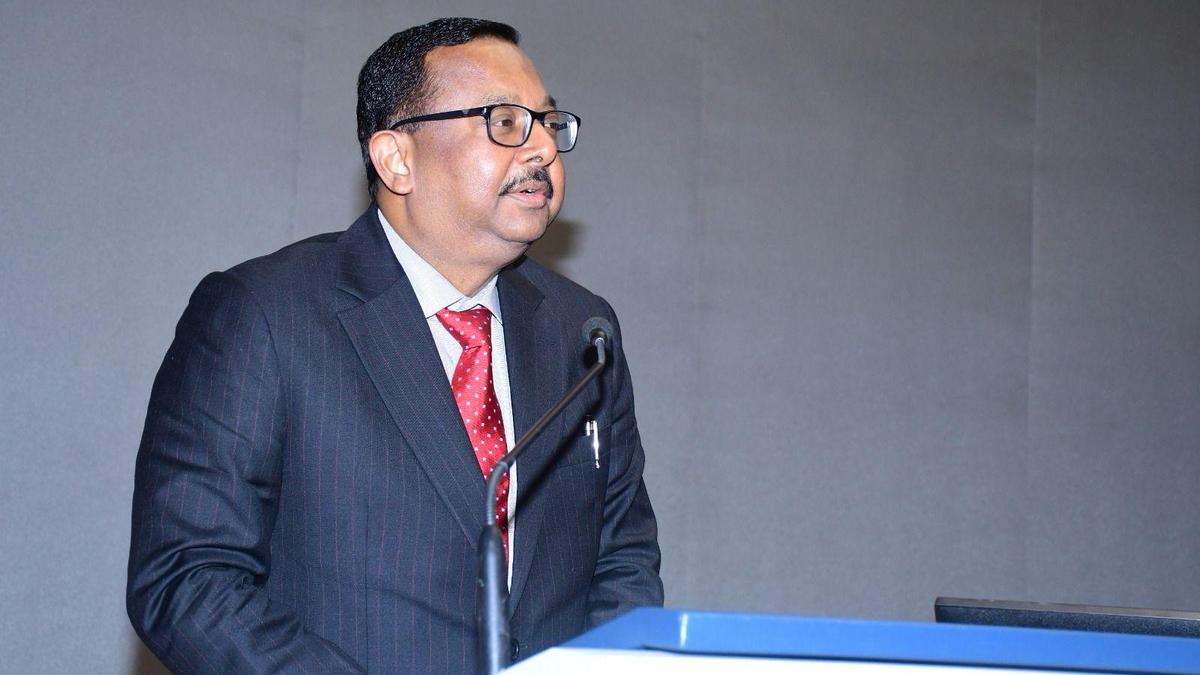
Supreme Court Justice Ujjal Bhuyan has warned that a society which discourages questioning and accepts unverified claims is increasingly susceptible to authoritarianism. He advocated for a scientific temper rooted in rational inquiry and a shift toward national unity, as defined by the Constitution's preamble.
The Imperative of Rational Inquiry in Modern Democracy
Supreme Court Justice Ujjal Bhuyan recently delivered a poignant address at the University of Science and Technology, Meghalaya, highlighting a critical tension in contemporary governance: the relationship between intellectual inquiry and the health of a democracy. Justice Bhuyan argued that when a society begins to prioritize unverified claims over evidence and develops a systemic fear of questioning authority, it inadvertently creates an environment where authoritarianism can take root. This observation serves as a stark reminder that the strength of a nation’s democratic framework relies not just on legal institutions, but on the intellectual habits of its citizenry.
Scientific Temper as a Constitutional Duty
Central to Justice Bhuyan’s argument is the concept of 'scientific temper,' which he frames as a constitutional obligation under Article 51A. He emphasizes that this is not a concept limited to the sterile environments of laboratories or academic research; rather, it is a fundamental attitude of inquiry that every citizen must cultivate. By urging students and youths to view rational thought as a civic duty, the Justice is advocating for a societal shift where questioning—and the subsequent demand for evidence—is seen as a virtue rather than a threat to stability.
Deconstructing the 'Us vs. Them' Binary
One of the most significant aspects of Justice Bhuyan's address was his critique of the pervasive 'us' and 'they' binary that currently dominates much of the political discourse. In a climate where the opposition has frequently characterized the current NDA government as authoritarian, the Justice’s call to adopt the Preamble’s 'we' is a deliberate appeal to national cohesion. By moving beyond divisive rhetoric, he suggests that society can reclaim a shared identity that respects diversity while maintaining a unified front against the erosion of democratic norms.
The Vulnerability of Unquestioning Societies
Justice Bhuyan warned that a society that treats tradition as beyond question or accepts claims without scrutiny becomes defenseless. This vulnerability is not merely a philosophical concern but a practical one; when the capacity for rational thought is stifled, the ability to address or reform unjust practices is paralyzed. Without the mechanism of inquiry, a society loses its feedback loop, allowing misinformation and systemic errors to flourish unchecked, which historical precedent suggests is a hallmark of authoritarian consolidation.
Cultivating Rationality in Higher Education
Concluding his address, Justice Bhuyan placed the responsibility for this cultural shift squarely on the shoulders of universities. He noted that the 'germination' of a scientific temper must occur within the academic ecosystem, where students are trained to be open to examination and rigorous debate. By fostering these habits early, educational institutions act as the primary defense against the encroachment of authoritarianism, ensuring that the next generation remains equipped to challenge injustice and uphold the core values of a vibrant, questioning democracy.
Verification Required?