Are coronary stents necessary?
Source Entity
India Latest News: Top National Headlines Today & Breaking News | The Hindu
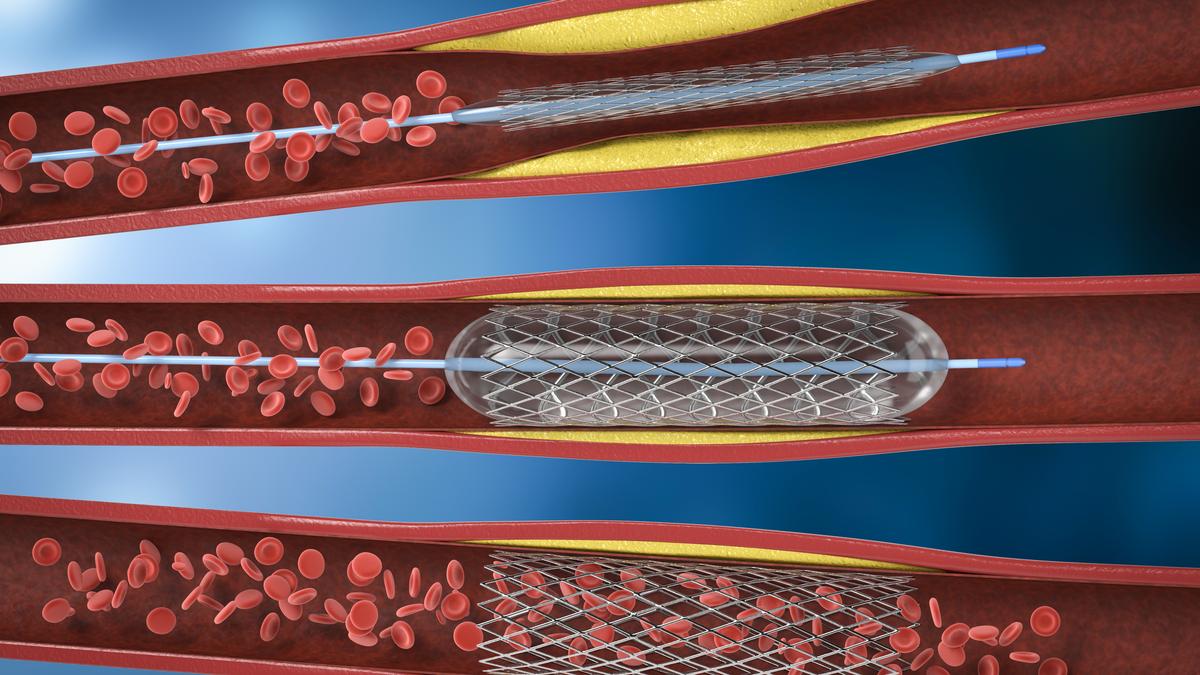
Kerala CM V.D. Satheesan's critique of potentially unnecessary angioplasties has sparked a debate on medical ethics. While stenting is life-saving during acute heart attacks, medical professionals argue that clinical necessity must guide procedures for stable conditions.
The Debate Over Stenting: Balancing Clinical Necessity and Public Trust
Kerala Chief Minister V. D. Satheesan has ignited a significant public discourse by questioning the prevalence of "unnecessary" angioplasty procedures. His remarks, which have drawn sharp objections from medical organizations, highlight a growing tension between clinical practice and public accountability. At the heart of this issue is the distinction between life-saving emergency interventions and elective procedures performed based on angiogram findings.
The Life-Saving Role of PCI
Percutaneous Coronary Intervention (PCI), primarily involving balloon angioplasty and stent placement, remains a cornerstone of modern cardiovascular care. In the event of an acute myocardial infarction—a heart attack—where a coronary artery is suddenly blocked, time is unequivocally of the essence. In these critical scenarios, prompt intervention is universally accepted as the gold standard to restore blood flow, preserve heart muscle, and significantly improve patient survival rates. In such emergencies, the medical consensus is clear: there is no room for debate or second-guessing.
Distinguishing Stability from Emergency
The controversy arises not from emergency care, but from the management of stable coronary artery disease. A crucial distinction exists between procedures performed during an acute crisis and those initiated solely because a narrowing of blood vessels is observed on an angiogram. The medical community acknowledges that while an angiogram may show a narrowing, the mere presence of a blockage does not automatically necessitate a stent. The CM’s call for a more nuanced approach suggests that patient outcomes should be prioritized over procedural volume.
The Challenge to Medical Institutions
Medical organizations have expressed concern that the Chief Minister’s rhetoric could undermine public confidence in the medical profession. However, this friction highlights an urgent need for transparency. Rather than a defensive posture, the medical fraternity is being challenged to provide a thoughtful, honest response grounded in up-to-date clinical evidence and rigorous research studies. This reflects a broader trend in global healthcare: a shift toward evidence-based medicine where patient autonomy and informed consent are paramount.
Future Trends in Cardiovascular Care
As cardiovascular technology advances, the criteria for "necessity" will likely become more stringent. Future trends suggest a greater reliance on physiological assessment tools—such as Fractional Flow Reserve (FFR)—which help determine whether a narrowing is truly restricting blood flow enough to warrant a stent. By integrating these objective metrics, the medical field can move away from "angiogram-driven" procedures toward "symptom-and-function-driven" care.
Conclusion: A Path Toward Transparency
Ultimately, the dialogue sparked by V. D. Satheesan serves as a catalyst for institutional self-reflection. While the life-saving potential of stents is beyond dispute, the path forward requires a commitment to clinical precision. By fostering an environment where doctors can openly discuss the risks and benefits of elective stenting, the healthcare system can restore public trust and ensure that every procedure performed is medically justified and in the patient's best interest.
Verification Required?