Mekedatu row: Vijay writes to PM; challenges Centre's 'no consent needed' reply
Source Entity
TOI NEWS DESK
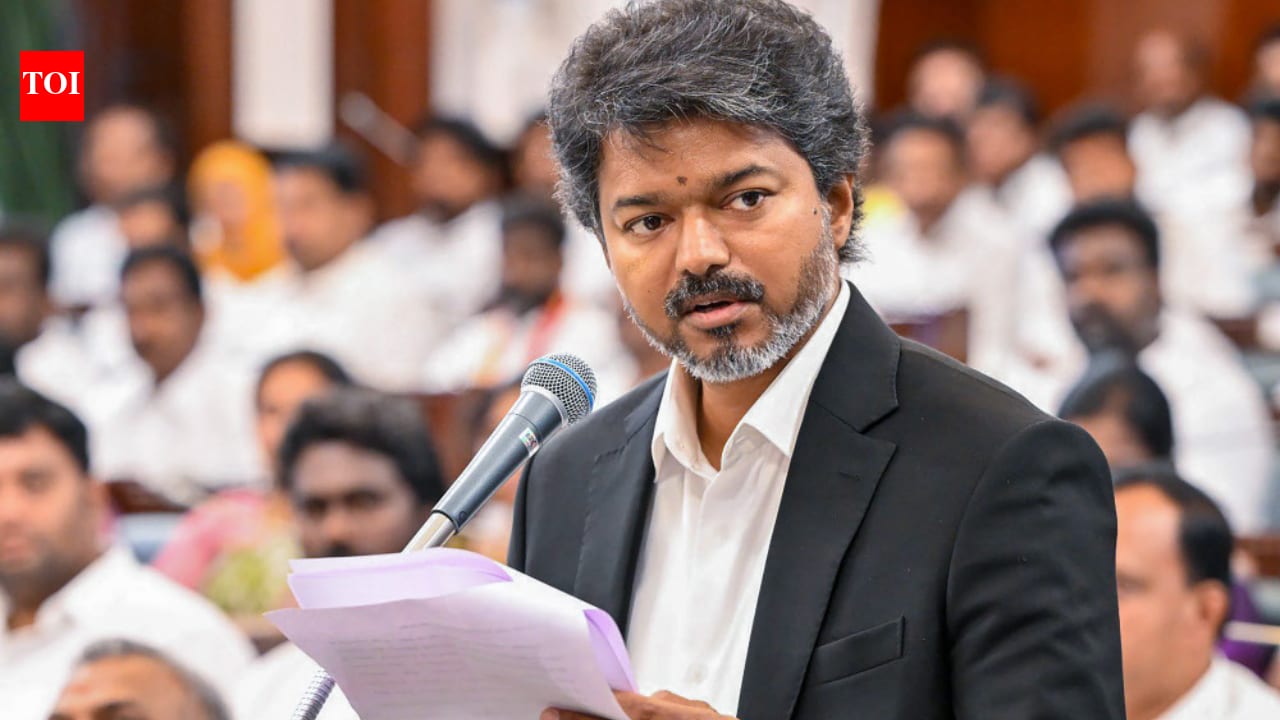
Tamil Nadu CM Vijay has urged PM Modi to intervene in the Mekedatu project dispute, challenging the Centre's stance on riparian consent. Meanwhile, technical reports suggest Karnataka may need to release significantly more water than the mandated 3,500 cusecs to account for transit losses.
The Mekedatu Dispute: A Complex Inter-State Water Crisis
The ongoing conflict over the Cauvery River has reached a critical juncture as Tamil Nadu Chief Minister C. Joseph Vijay officially requested Prime Minister Narendra Modi’s intervention regarding the proposed Mekedatu project. This move highlights the deep-seated friction between Tamil Nadu and Karnataka, centering on whether Karnataka requires the consent of lower riparian states before proceeding with construction on the river.
Challenging the Union Government’s Stance
At the heart of the political escalation is a recent reply provided by Union Minister of State for Jal Shakti, Raj Bhushan Choudhary, in the Rajya Sabha. The Minister asserted that the Supreme Court’s February 2018 judgment did not explicitly mandate that Karnataka must obtain consent from downstream states for such infrastructure. CM Vijay has formally demanded the withdrawal of this statement, arguing that any administrative approval for Mekedatu must be strictly aligned with the Cauvery Water Disputes Tribunal (CWDT) Award and established Supreme Court directives.
The Technical Challenge of Water Release
Beyond the political rhetoric, the Cauvery Water Regulation Committee (CWRC) has mandated that Karnataka release 3,500 cusecs of water daily to Tamil Nadu for a 15-day period. However, technical experts warn that this figure is likely insufficient. Because the riverbed and banks leading to the Biligundlu measuring gauge are currently dry, a significant portion of the water released from the KRS or Kabini reservoirs will be absorbed through channel losses and groundwater depletion before reaching the border.
Implications of Transit Losses
This geographical reality suggests that Karnataka may be required to release one-and-a-half to two times the stipulated amount to guarantee that 3,500 cusecs actually arrive at the Biligundlu gauge. This technical necessity creates an additional layer of contention, as the burden of 'channel losses' becomes a central point of negotiation, exacerbating the logistical challenges of water sharing during periods of low storage.
Broader Political Context
CM Vijay’s proactive engagement with the Prime Minister, despite his political positioning, underscores the gravity of the water security issue for Tamil Nadu. By elevating this dispute to the Prime Minister’s Office, the Chief Minister is attempting to force a national-level reconciliation of the conflicting interpretations of the Supreme Court's 2018 ruling. The outcome of this intervention will likely set a precedent for how inter-state water infrastructure projects are governed moving forward.
Conclusion
The Mekedatu row serves as a poignant reminder of the fragility of resource management in the Cauvery basin. With both political pressures and severe technical constraints—such as dry riverbeds necessitating higher release volumes—the situation remains volatile. Future trends suggest that without a more robust, scientifically-backed framework for inter-state water distribution that accounts for real-time transit losses, such disputes will continue to strain federal relations in India.
Multiple Citing Sources