Microsoft recorded $10 billion in revenue from OpenAI
Source Entity
Rebecca Bellan
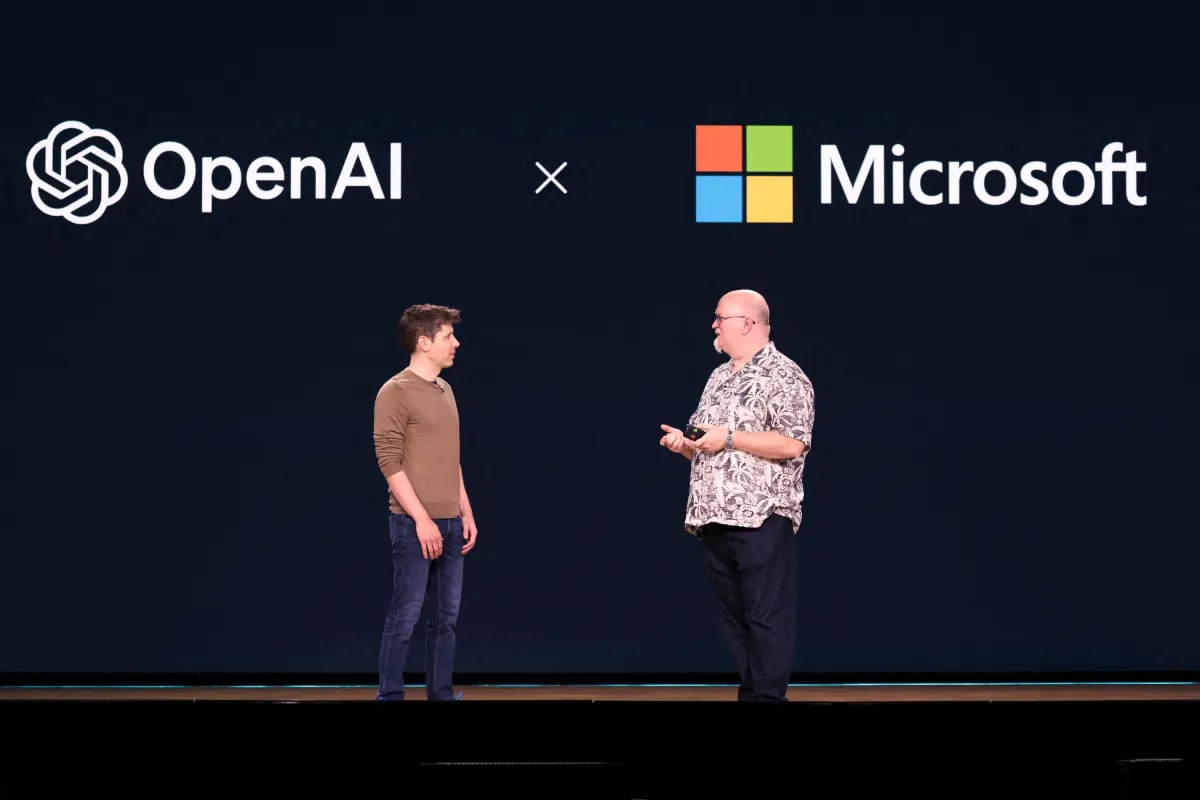
Microsoft reported $10 billion in quarterly revenue from its partnership with OpenAI, signaling a massive financial integration between the two firms. This figure underscores a deep economic dependency even as both companies increasingly compete for the same market share.
The Financial Magnitude of the Microsoft-OpenAI Alliance
Microsoft’s recent regulatory filing has shed light on the staggering financial interplay between the software giant and its partner, OpenAI. For the quarter ending September 30, 2026—the first quarter of Microsoft’s fiscal year 2027—the company reported $10 billion in revenue derived directly from commercial arrangements with OpenAI. This figure is not merely a line item; it accounts for nearly 11% of Microsoft’s total quarterly revenue of $92.3 billion, illustrating a level of fiscal entanglement that is rare between an investor and an independent entity.
Scaling Revenue and Strategic Growth
The trajectory of this partnership is clearly accelerating. With $24.1 billion in revenue generated from OpenAI throughout the 2026 fiscal year, the current quarterly performance suggests an annualized run rate of approximately $40 billion. This rapid growth trajectory indicates that the commercialization of generative AI services is moving from a speculative investment phase into a core revenue driver for Microsoft’s enterprise and cloud ecosystems. The $7.2 billion in outstanding receivables further confirms that the capital flows between the two organizations remain substantial and ongoing.
The Paradox of Competition and Dependency
Despite this deep financial synergy, a complex paradox persists. While Microsoft reaps significant rewards from its partnership, the two companies are increasingly competing for the same customer base. As OpenAI develops its own enterprise-facing tools and Microsoft integrates advanced models directly into its Azure and Copilot services, the lines between 'partner' and 'competitor' have blurred. This dynamic forces Microsoft to balance the need for OpenAI’s innovation with the desire to maintain its own market dominance in the cloud and AI application space.
Broader Economic Implications
This financial report highlights the broader trend of 'AI-native' revenue models taking hold in the technology sector. By institutionalizing revenue-sharing payments and commercial arrangements, Microsoft has effectively turned its massive investment in OpenAI into a high-yield asset. The scale of these numbers suggests that the foundational cost of training and deploying large language models is being successfully offset by robust adoption rates among enterprise customers who rely on Microsoft’s infrastructure to host and utilize these technologies.
Future Outlook and Sustainability
Looking ahead, the sustainability of this $40 billion annual run rate will depend on the continued demand for high-compute AI services. As Microsoft continues to report these figures, investors will be watching closely to see if the growth in OpenAI-related revenue can outpace the massive capital expenditures required to build the data centers and GPU clusters necessary to sustain such operations. The partnership remains a cornerstone of Microsoft's long-term strategy, yet the sheer size of these financial ties makes the relationship a critical factor in the company’s future valuation and competitive resilience.