Boats 'set for people smugglers' seized at airport
Source Entity
BBC News
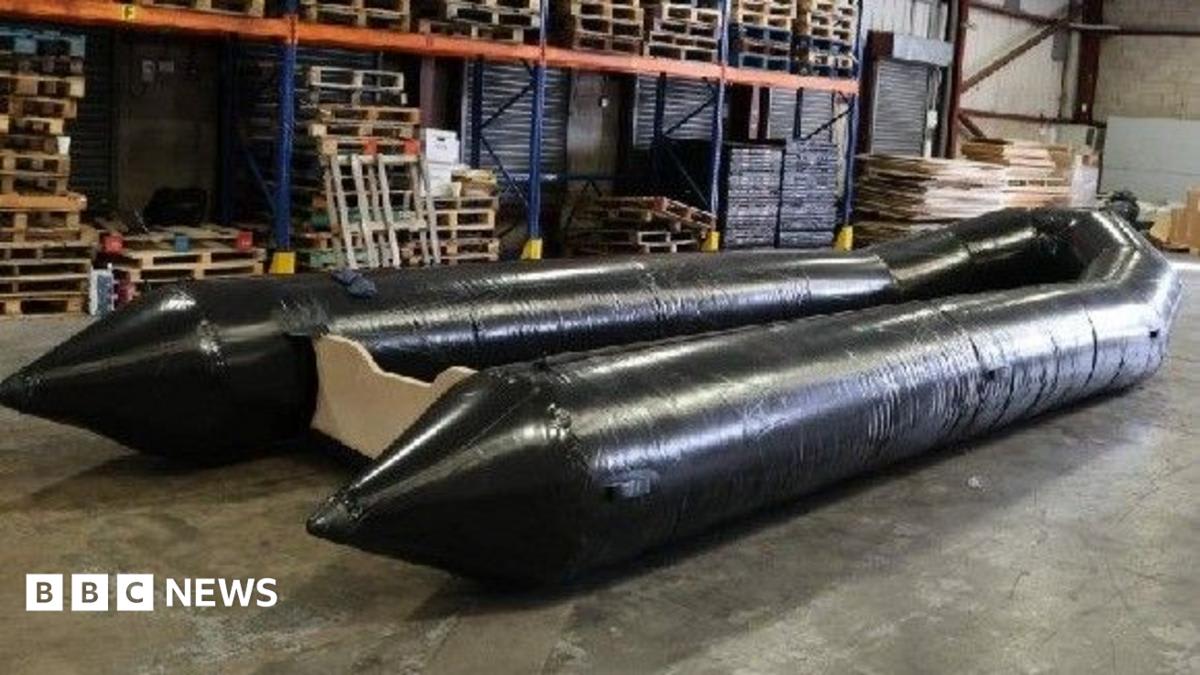
The National Crime Agency has seized a shipment of 25 boats and 25 engines at an airport, marking the first time such equipment was detected in air freight. This intervention follows a broader strategy to disrupt criminal supply chains used for illegal Channel crossings.
Disruption of Illicit Supply Chains
The recent seizure of 25 boats and 25 engines at an airport marks a significant, albeit concerning, shift in the logistics used by human smuggling networks. According to the National Crime Agency (NCA), this is the first recorded instance of small boat equipment being detected within air freight, suggesting that criminal syndicates are attempting to diversify their supply routes to bypass traditional maritime surveillance. By moving equipment via air, these groups likely intended to evade the scrutiny typically applied to sea-based cargo, highlighting an evolving and increasingly sophisticated approach to illegal logistical operations.
Expanding the Tactical Horizon
This incident follows a prior, larger seizure in July at the Port of Felixstowe in Suffolk, where a maritime consignment containing an identical number of boats and engines was intercepted while in transit to Germany. These seizures are not isolated events but are part of a broader, sustained effort by UK authorities to dismantle the infrastructure supporting illegal Channel crossings. The NCA’s ability to track these shipments from the maritime sector to air freight demonstrates a growing intelligence capability focused on the supply side of the smuggling trade rather than solely focusing on the crossings themselves.
The Human and Operational Impact
According to the NCA, each of the seized boats has the capacity to transport approximately 70 people. By preventing these vessels from reaching their intended destination, the agency has effectively neutralized the potential for thousands of individuals to be placed in life-threatening conditions. Deputy Director of Investigations Craig Turner emphasized that these efforts are designed to deny criminal networks the tools of their trade, thereby creating significant operational friction for those organizing the crossings.
International Cooperation and Strategic Pressure
The effectiveness of this intervention relies heavily on international partnerships. The NCA is actively working with overseas authorities to disrupt supply chains at the source, recognizing that the market for small boats and engines is global. By targeting the procurement and transit stages of these goods, the UK government is attempting to make the business of human smuggling less profitable and more logistically difficult for the organized crime groups involved.
Future Trends and Market Dynamics
As law enforcement continues to seize equipment—with the total count of confiscated boats and engines now exceeding 1,600—the economic impact on smuggling syndicates is becoming evident. The NCA reports that this pressure is driving up the costs for smugglers, which in turn alters the economics of the entire enterprise. Future trends suggest that as long as there is high demand for Channel crossings, criminal networks will continue to test new methods of transport and supply, requiring constant vigilance and adaptive intelligence strategies from border agencies.
Conclusion
The interception of air-freighted smuggling equipment represents a critical milestone in the ongoing effort to secure the UK border. By aggressively targeting the supply chain, the NCA is demonstrating that combatting human smuggling requires a multi-faceted approach that spans international borders and various logistics sectors. While the challenge remains persistent, the systematic removal of these assets is a vital component in reducing the capacity of criminal networks to operate with impunity.