Visa Rejected, Bengal Woman Returns Home. Her Group Goes Missing In Nepal
Source Entity
NDTV News Search Records Found 1000
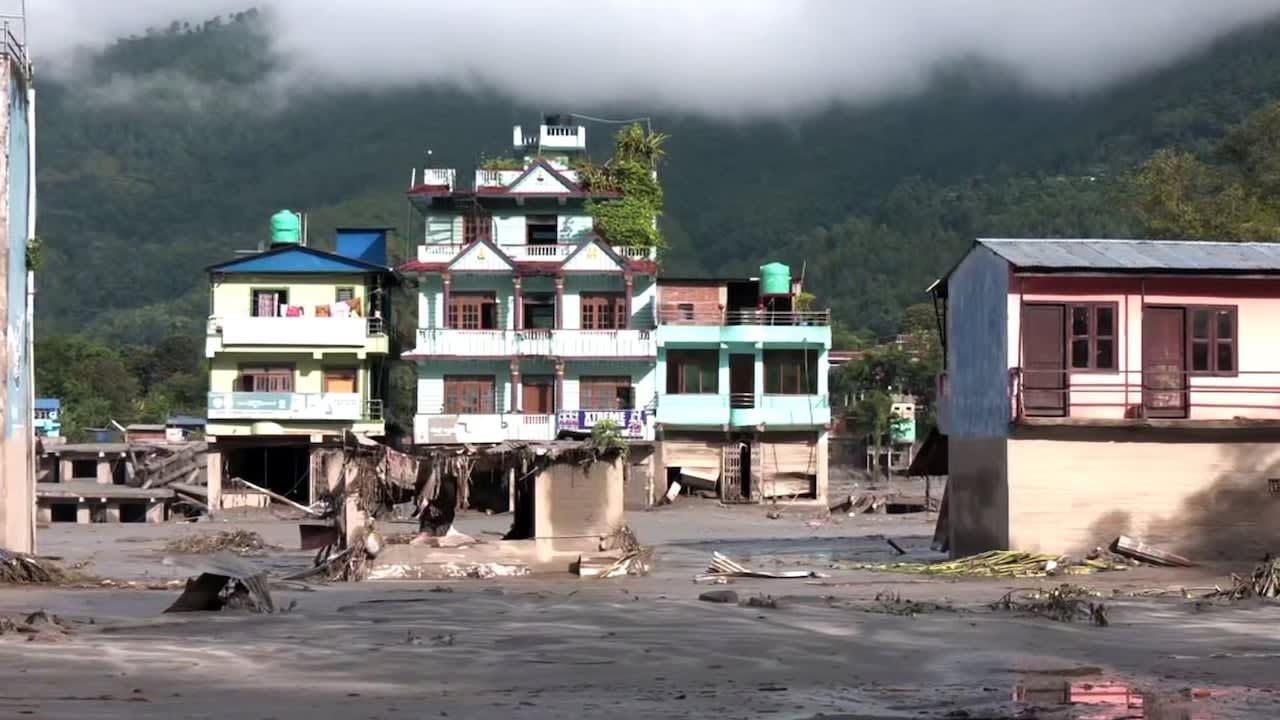
A massive flash flood triggered by a likely ice-rock avalanche has devastated Nepal's northern border regions. Scientists are investigating the role of climate-driven glacial instability in this disaster, as rescue operations continue.
The Catastrophic Flash Floods in Nepal: An Analysis
On Wednesday, August 26, 2026, a devastating series of flash floods and mudslides struck the Rasuwa and Nuwakot districts of Nepal. The disaster, which sent torrents of water, sediment, and massive boulders through the Bhote Koshi and Trishuli rivers, has resulted in a dire humanitarian situation, with hundreds feared dead. As rescue workers utilize earthmovers to reach submerged homes, the international community is looking toward experts to understand the mechanics behind this sudden catastrophe.
Investigating the Trigger: Glacial Collapse vs. Seismic Activity
Initial uncertainty surrounded the cause of the disaster, with early reports questioning potential seismic activity. However, the United States Geological Survey (USGS) clarified on Thursday that no earthquake occurred. Instead, analysis of seismic waves and satellite imagery points to a massive glacial collapse and subsequent debris flow. Scientists from the International Centre for Integrated Mountain Development (ICIMOD) are currently collaborating with institutions in China to confirm if an ice-rock avalanche from a high-altitude region served as the primary catalyst for the surge.
The Fragility of the Hindu Kush Himalaya
The Hindu Kush Himalaya (HKH) region is notoriously volatile, characterized by shifting topography and high-altitude glacial lakes. The region's vulnerability is exacerbated by its constant geological movement and the extreme nature of its mountain terrain. ICIMOD, a key intergovernmental body based in Nepal, has long warned that these regions are prone to sudden, violent environmental shifts. The event on the Nepal-Tibet border highlights the extreme risk posed to downstream communities living in the shadow of these massive, unstable ice formations.
The Climate Change Connection
While investigations are ongoing, there is a growing scientific consensus regarding the role of climate change in such disasters. Higher temperatures are accelerating glacier melt across the Himalayas, destabilizing permafrost and weakening the structural integrity of mountain slopes. Experts like Simon Cook from the University of Dundee have emphasized that climate-induced instability is a significant factor in increasing the frequency of such events, as the warming environment fundamentally alters the cryosphere.
Humanitarian Implications and Future Outlook
As the search for survivors continues, the disaster underscores the urgent need for improved early warning systems and infrastructure resilience in high-altitude regions. The destruction of homes and the blockage of vital river arteries like the Trishuli demonstrate how quickly mountain communities can become isolated. Moving forward, the integration of satellite monitoring and real-time seismic analysis will be critical for predicting similar glacial instabilities before they reach a breaking point.
Conclusion
The tragedy at the Nepal-Tibet border is a stark reminder of the intersection between climate change and geological vulnerability. As the world watches the rescue efforts, the scientific community must continue to piece together the exact sequence of this ice-rock avalanche to better protect populations residing in the path of the world's most dynamic mountain range.
Multiple Citing Sources
Verification Required?