Two teenagers, 13 and 14, among 33 UK nationals missing
Source Entity
BBC News
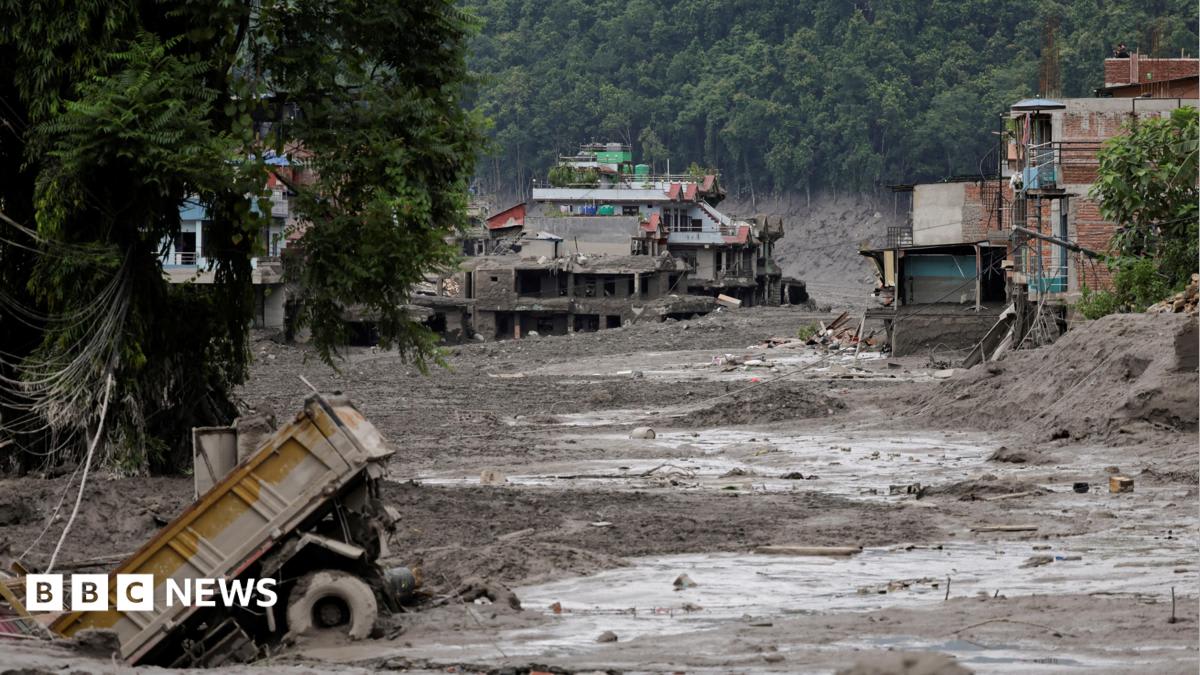
A catastrophic flash flood on the Nepal-Tibet border, potentially triggered by an ice-rock avalanche, has left hundreds missing, including dozens of foreign nationals. Rescue operations are underway as experts from ICIMOD investigate the geological causes of the disaster.
The Nepal-Tibet Flash Flood Crisis: A Geological and Humanitarian Emergency
On Wednesday, August 26, 2026, a devastating flash flood and mudslide struck the Rasuwa district of Nepal, sending torrents of water, sediment, and massive boulders surging through the Bhote Koshi and Trishuli river systems. The scale of the destruction is profound, with reports indicating that 826 people remain missing, a figure that includes over 529 tourists and 33 UK nationals. The event has turned the serene Himalayan landscape into a site of urgent search-and-rescue operations, as teams utilize heavy earthmoving equipment to reach submerged communities and trapped individuals.
Investigating the Catalyst: Ice-Rock Avalanches
Scientists from the International Centre for Integrated Mountain Development (ICIMOD), working alongside partner institutions in Nepal and China, are currently investigating the origins of the disaster. The primary hypothesis suggests that an ice-rock avalanche from a high-altitude area may have triggered the sudden release of water and debris. This phenomenon, where warming temperatures or tectonic shifts cause massive sections of glacial ice and rock to collapse, poses an increasing threat to the Hindu Kush Himalaya (HKH) region, where the interplay of melting permafrost and unstable mountain slopes creates a volatile environment.
The Vulnerability of the Himalayan Terrain
Nepal’s geography makes it uniquely susceptible to these types of disasters. The region is characterized by steep, rapidly rising topography and a complex network of glacial lakes that can burst if their natural dams are compromised by landslides or avalanches. The fact that the flood originated upstream in Tibet and traveled through the border regions highlights the transboundary nature of Himalayan climate risks. As the mountains continue to move and evolve, the infrastructure built within these river valleys faces an existential threat from sudden, high-energy hydrological events.
Humanitarian Impact and International Concern
The human cost of this disaster is staggering. Tour companies, such as those employing the missing Nepali guides, are struggling to communicate with the families of the victims. Kumar Adhikari, a manager for one such firm, noted that communication was severed shortly after guides were expected to reach the Tibet immigration office. The confirmation from Chinese government footage that even the Tibetan side of the border was severely impacted underscores the widespread reach of the floodwaters. Consular services, including the British consulate, are now coordinating with local authorities to track the missing and manage the unfolding crisis.
Future Trends and Resilience
As climate change continues to alter the cryosphere, the frequency of such events may increase. The role of organizations like ICIMOD is critical in monitoring the stability of glacial lakes and high-altitude slopes. Moving forward, the disaster necessitates a more robust international cooperation framework between Nepal and China to share real-time geological data. Without enhanced early warning systems and a better understanding of the geological instability in the Himalaya, communities and tourists alike remain at the mercy of a landscape that is in a constant state of flux.
Conclusion
The tragedy along the Bhote Koshi and Trishuli rivers is a somber reminder of the raw power of the Himalayan environment. With hundreds still missing and rescue efforts hampered by debris and difficult terrain, the immediate focus remains on the humanitarian response. However, the long-term challenge lies in addressing the underlying geological vulnerabilities that turned a mountain event into a cross-border catastrophe.
Multiple Citing Sources