Nvidia locks down memory supply from SK Hynix as part of $500 billion AI deal
Source Entity
US Top News and Analysis
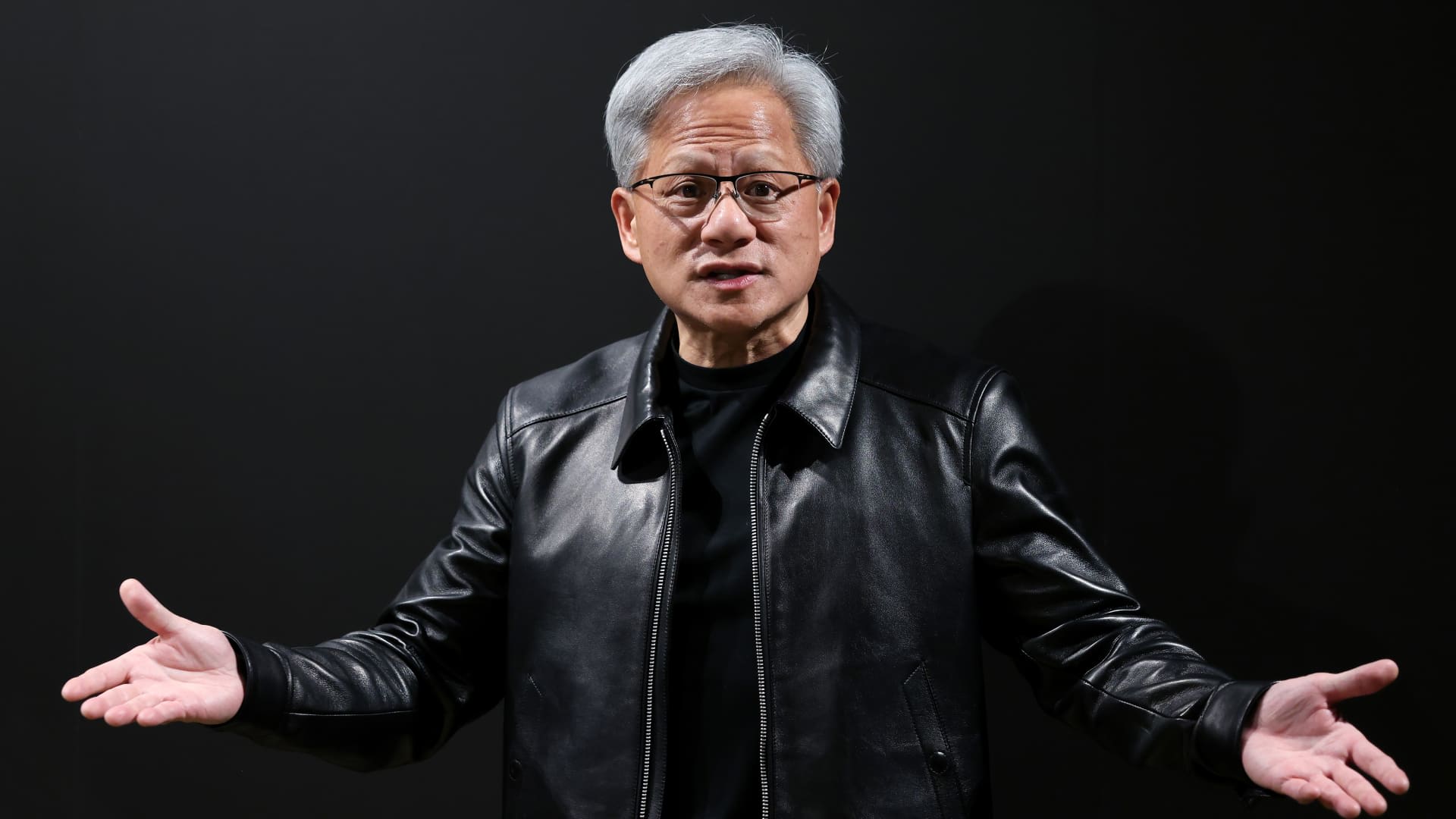
Nvidia has entered a massive $500 billion multi-year agreement with SK Hynix to secure high-bandwidth memory for its next-generation AI processors. This strategic partnership includes the development of large-scale data centers utilizing Nvidia's Vera Rubin systems, marking a significant expansion in global AI infrastructure.
Nvidia’s Strategic Pivot: Securing the AI Supply Chain
Nvidia has officially cemented a monumental $500 billion agreement with South Korean semiconductor giant SK Hynix to secure a consistent supply of high-bandwidth memory (HBM). This move, announced in San Francisco, represents one of the most significant supply chain consolidations in the history of the semiconductor industry. As the primary architect of modern AI hardware, Nvidia’s reliance on specialized memory is absolute, as HBM is a critical bottleneck in the performance of its advanced GPUs and integrated AI systems.
The Critical Role of High-Bandwidth Memory
High-bandwidth memory is the lifeblood of modern artificial intelligence processing. Unlike standard memory, HBM provides the extreme data transfer speeds required to keep Nvidia’s high-performance processors fed with information. By locking in this supply, Nvidia is effectively insulating itself against the cyclical volatility of the memory market. This partnership ensures that as Nvidia scales its production of next-generation AI hardware, it will not be hampered by the component shortages that have historically plagued the electronics industry.
Infrastructure Expansion and the Vera Rubin Architecture
Beyond mere component procurement, this deal encompasses a profound expansion of global infrastructure. The agreement includes plans for the construction of large-scale data centers, slated to come online by 2027. A key component of this initiative is the integration of Nvidia’s Vera Rubin systems. By partnering with SK Hynix affiliate SK Telecom to build a cloud business around these systems, Nvidia is moving beyond being a hardware vendor to becoming a foundational layer of the global AI cloud ecosystem.
Power Requirements and Scaling Challenges
The scale of this ambition is best illustrated by the projected energy requirements. Nvidia anticipates needing 2 gigawatts of power to sustain the capacity of these new data centers. This magnitude of energy consumption highlights the sheer scale of the "massive buildout" described by the company, which involves deploying hundreds of thousands of graphics processing units. This transition underscores how AI development is shifting from software-centric innovation to massive, power-intensive physical infrastructure projects.
Market Implications and Future Trends
This $500 billion, multi-year commitment signals a long-term confidence in the trajectory of artificial intelligence. By aligning so closely with SK Hynix, Nvidia is setting a standard for how "AI Ecosystems" will be constructed in the coming decade. As the company continues to host global summits, such as the recent reception in Tokyo led by CEO Jensen Huang, it is clear that Nvidia is actively shaping the geopolitical and technological landscape of the AI era. The future of the industry will likely be defined by these deep, vertical integrations between chip designers and memory manufacturers, ensuring that hardware capability keeps pace with the ballooning demands of generative AI models.