The oldest ice disappears and the Stone Age emerges from it
Source Entity
Hacker News
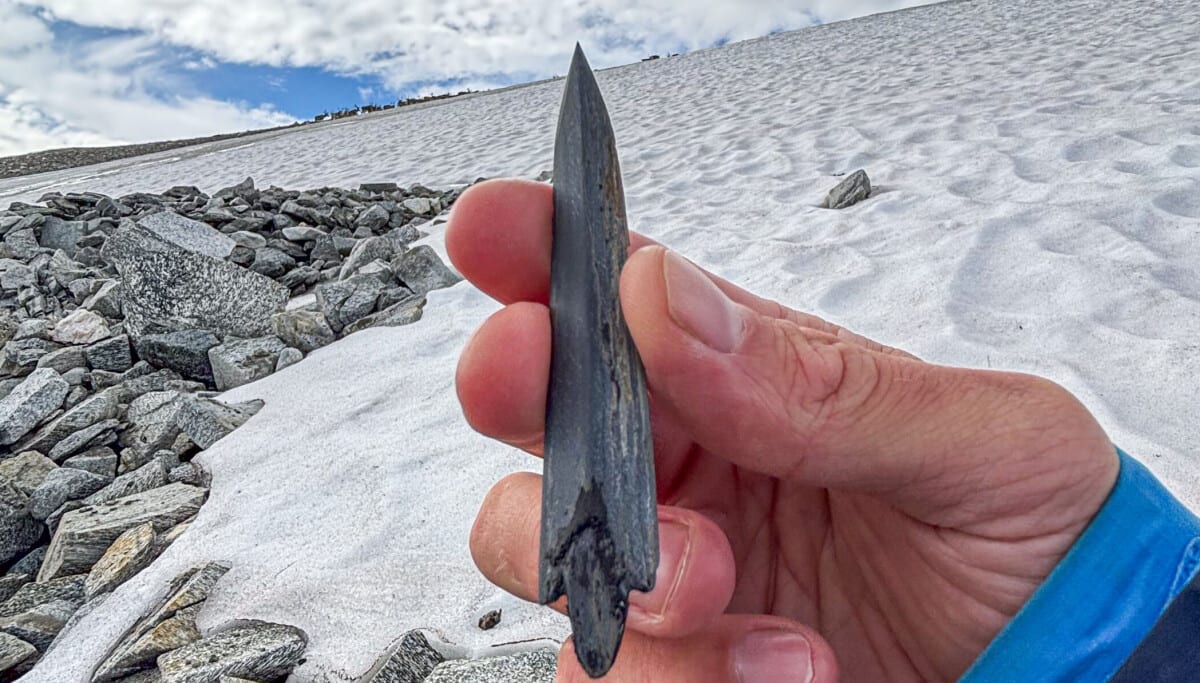
Melting ice patches in Norway's Innlandet mountains are revealing ancient artifacts, including 5,000-year-old stone arrowheads. This phenomenon signals a shift in archaeological discoveries as climate change accelerates the exposure of relics from the Stone Age.
The Melting Frontiers: Uncovering the Stone Age
For two decades, the dedicated team at Secrets of the Ice has been working in the high mountains of Innlandet, eastern Norway, to recover history preserved by sub-zero temperatures. Recently, the receding ice has unveiled a remarkable 5,000-year-old arrowhead, complete with its shaft, marking a significant transition in the types of artifacts being discovered. As the ice retreats, the archaeological record is literally shifting, moving from the previously common Viking-age finds to much older relics from the Stone Age.
A Changing Archaeological Landscape
The discovery of a slate arrowhead at the ice's edge serves as a tangible marker of the environmental crisis currently unfolding. Researchers report that as the ice patch disappears, the items emerging from it are growing older, effectively 'unwinding' the timeline of human activity in the region. While researchers once focused on objects from the last 2,000 years, the current reality of rapid melting is exposing items dating back 6,000 years, forcing archaeologists to adapt their research focus to accommodate this deeper history.
The Intersection of Climate and History
This phenomenon is not merely an archaeological event; it is a clear indicator of a rapidly changing climate. The presence of domesticated reindeer in the background of these discovery sites highlights that these high-altitude regions were once vital corridors for human and animal activity. The melting ice acts as a time capsule, and its premature opening provides a rare, albeit alarming, look at the ancient past while simultaneously threatening the preservation of these delicate organic materials once they are exposed to the elements.
Challenges in Preservation and Recovery
Archaeologists are effectively in a race against time. Once these artifacts are exposed to air and fluctuating temperatures, they begin to degrade rapidly. The recovery of a 5,000-year-old shaft is a testament to the team's expertise, but it also underscores the fragility of these finds. The shift toward older artifacts suggests that the ice patch may have been stable for millennia until very recently, and its sudden disappearance is exposing layers of human history that have remained untouched since the dawn of the Neolithic period.
Future Implications and Scientific Outlook
As the climate continues to warm, the scientific community expects that more ancient treasures will emerge from the Innlandet mountains. However, this also poses a risk: once the ice is gone, the cooling environment that protected these artifacts for thousands of years will vanish, potentially leading to the loss of future historical data. The work of Secrets of the Ice is now more critical than ever, as they act as the final guardians of this vanishing frozen archive, documenting a history that was never meant to be seen by the modern world.