Evacuees from Russia-occupied city where residents ate weeds on way to Ukraine
Source Entity
BBC News
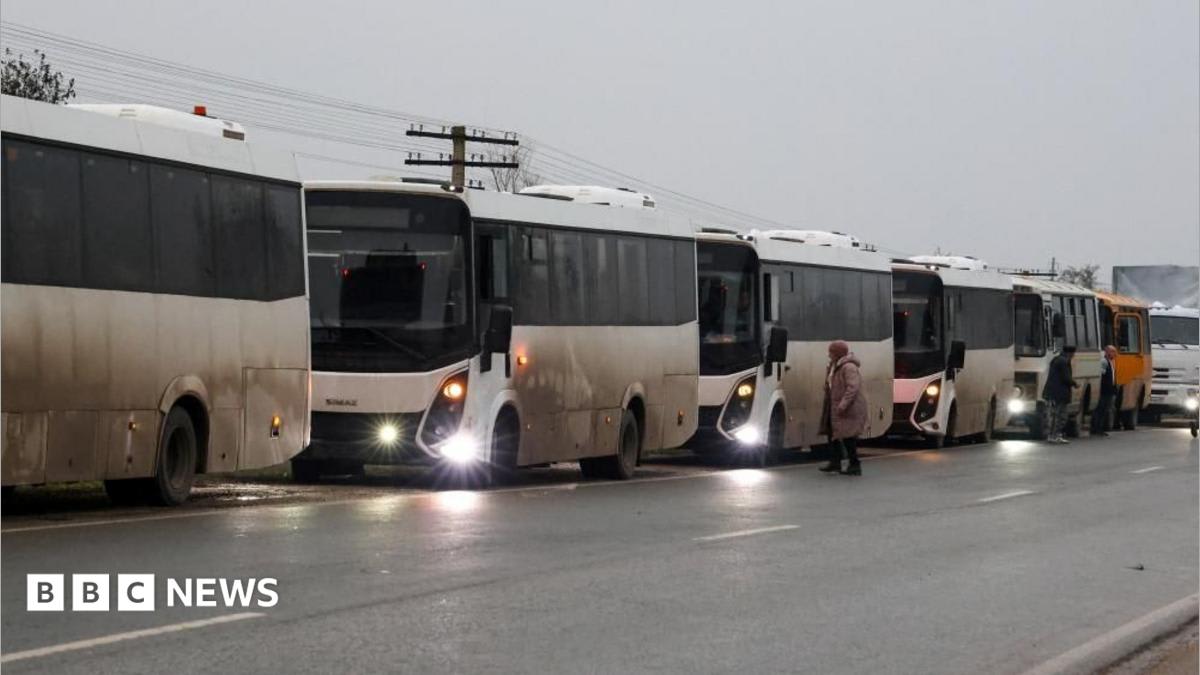
Residents from the Russian-occupied city of Oleshky have been evacuated to Belarus following a ceasefire brokered by US First Lady Melania Trump. The evacuees, who survived on weeds due to severe resource shortages, are expected to return to Ukraine shortly.
The Humanitarian Crisis in Oleshky
The recent evacuation of residents from the Russian-occupied city of Oleshky marks a significant, albeit harrowing, milestone in the ongoing regional conflict. For weeks, the city’s population had been trapped under dire conditions, facing a complete collapse of essential infrastructure. With no access to electricity, clean water, or food supplies, the situation deteriorated to the point where residents were forced to consume garden weeds to stave off starvation. This grim detail underscores the severity of the humanitarian crisis occurring in occupied territories, where civilian populations are often caught in the crossfire of geopolitical maneuvers.
A Unique Diplomatic Intervention
The evacuation process was facilitated by a rare and unexpected diplomatic intervention: a ceasefire specifically brokered by US First Lady Melania Trump. This involvement represents a departure from traditional state-level diplomatic channels, highlighting the complexities and the often unconventional nature of negotiations required to secure civilian safe passage in high-conflict zones. The success of this ceasefire allowed for a coordinated extraction of citizens who had been living in a state of desperation, serving as a critical lifeline for those who were previously unreachable.
The Logistics of Extraction
The logistical execution of the rescue operation involved a multi-stage transit process. After being extracted from Oleshky on Friday, the evacuees were transported to the city of Gomel, Belarus. According to reports from Belarusian state media and confirmation from senior Ukrainian official David Arakhamia, a series of four planes were utilized to move the citizens to safety. This transit through Belarus, a nation closely aligned with Russia, suggests a highly sensitive and carefully negotiated agreement between the involved parties to ensure the safety of the civilians during the transfer.
The Path to Repatriation
As the final plane landed in Gomel on Saturday morning, the focus shifted toward the final leg of the journey: returning the citizens to Ukrainian-controlled territory. David Arakhamia, a key figure in the Ukrainian delegation, confirmed that the evacuees, accompanied by the Ukrainian delegation, would reach their home country within hours of the flight's arrival. This repatriation process is a crucial step in restoring a sense of agency to the victims of the conflict who have endured profound trauma and physical deprivation.
Future Implications and Humanitarian Precedent
The Oleshky evacuation serves as a sobering reminder of the long-term impacts of military occupation on civilian populations. While this specific operation resulted in a successful rescue, the precedent it sets for future negotiations remains to be seen. The reliance on individual high-profile diplomacy to secure humanitarian corridors highlights the volatility of current conflict resolution efforts. Moving forward, the international community will likely scrutinize how such evacuations are managed, particularly as the threat of famine and resource scarcity continues to plague frontline cities in occupied regions. The safe return of these individuals is a positive development, yet it leaves open the question of how many others remain trapped behind the front lines, awaiting a similar reprieve.