Statehood imperative for restoring J&K's special status: Chief Minister
Source Entity
India Latest News: Top National Headlines Today & Breaking News | The Hindu
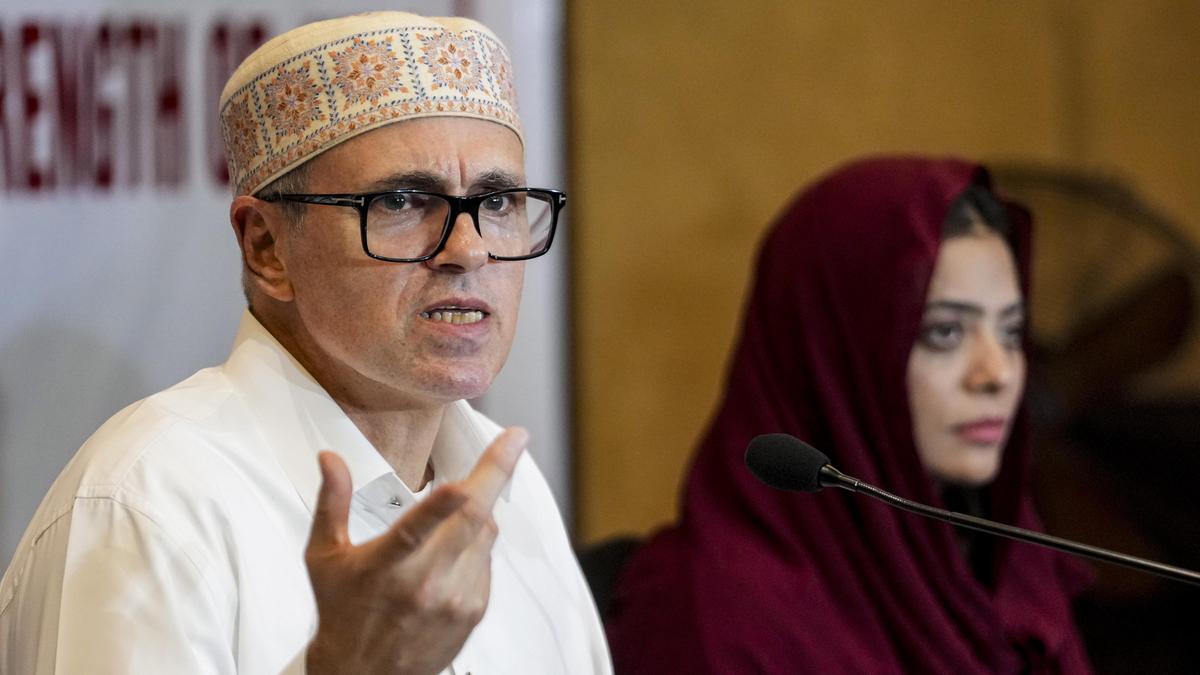
Jammu and Kashmir Chief Minister Omar Abdullah is intensifying his campaign for the restoration of statehood, arguing it is a prerequisite for any special status. Despite recent protests in New Delhi, the National Conference faces political challenges in gaining traction with allies and the central government.
The Strategic Pivot: Statehood as a Prerequisite
Jammu and Kashmir Chief Minister Omar Abdullah has formally articulated a shift in his administration's political strategy, positioning the restoration of statehood as the essential foundation for any future discourse regarding the region's special status. In recent statements, Abdullah challenged critics who demand an immediate focus on the restoration of Article 370, arguing that the constitutional nuances of such provisions are rendered moot within the current framework of a Union Territory. Without the inherent power-sharing mechanisms guaranteed to a state, he contends, neither Article 370 nor Article 371 can effectively function to protect regional interests.
The Mechanics of Power in a Union Territory
At the heart of the Chief Minister's argument is the structural limitation imposed on Union Territories. Under the current administrative arrangement, Jammu and Kashmir lacks the autonomy inherent in a state, specifically regarding the State List and Concurrent List, which facilitate the balance of power between regional governments and the Centre. Abdullah’s assertion highlights a critical legal reality: the Centre does not share power with a Union Territory in the same capacity as it does with a state. Consequently, the restoration of statehood is not merely a symbolic political goal but a functional necessity for the exercise of governance and the protection of constitutional guarantees.
Challenges in the National Capital
Despite the gravity of the demand, the National Conference’s (NC) recent efforts in New Delhi have encountered significant hurdles. A protest staged at Jantar Mantar on July 20, led by Abdullah, struggled to capture the desired political momentum. The demonstration was reportedly overshadowed by concurrent student protests and suffered from a lack of visible support from partners within the INDIA bloc. This lack of broad-based political backing underscores the isolating nature of the current campaign and highlights the difficulties the NC faces in elevating the J&K issue to a national priority.
Internal and External Pressures
Beyond the logistical challenges in Delhi, the Omar Abdullah-led government is navigating a complex domestic landscape. The party is under mounting pressure within the Kashmir valley, where segments of the populace have expressed dissatisfaction with what they perceive as a scaling down of the NC’s demands—shifting from the absolute restoration of special status to the more moderate goal of statehood. This internal pressure, combined with the limited political traction achieved thus far, leaves the administration with a narrowing window of strategic options as it seeks to hold the Centre accountable to its previous commitments.
Future Outlook and Political Trajectory
As the NC continues to remind the central government of its promise to restore statehood, the party has framed the recent Delhi protest as merely the beginning of a larger, sustained campaign. The success of this endeavor will likely depend on the Chief Minister's ability to reconcile local expectations for special status with the pragmatic necessity of first securing statehood. Moving forward, the political survival of the NC administration will be defined by its efficacy in navigating these constitutional hurdles while maintaining the coalition support necessary to exert pressure on the central leadership.
Verification Required?