‘Good boy behaviour’ didn’t work. What next for Omar Abdullah, his J&K statehood demand
Source Entity
Bashaarat Masood
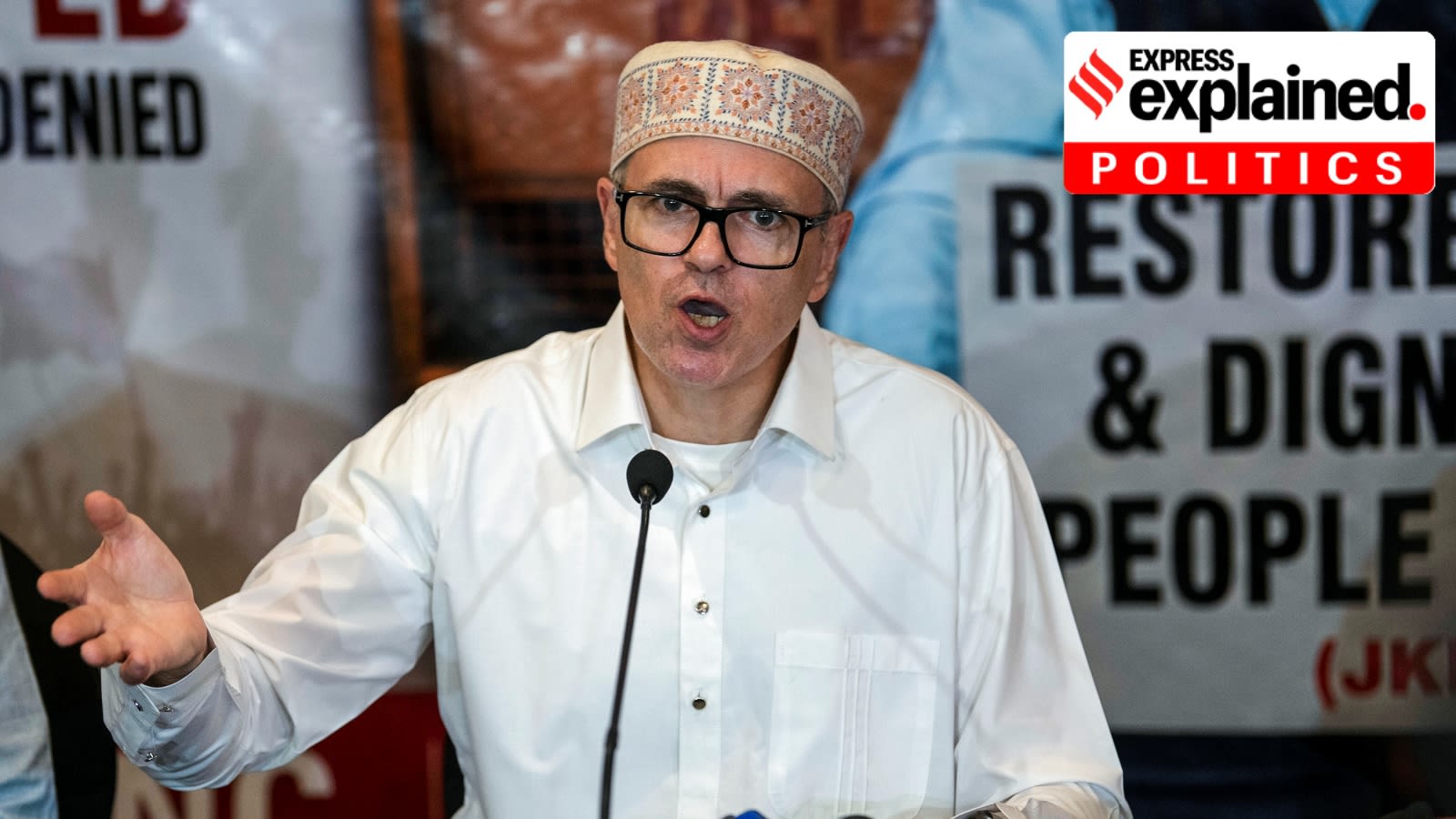
Jammu and Kashmir Chief Minister Omar Abdullah is intensifying his campaign for the restoration of statehood, arguing it is a prerequisite for any constitutional guarantees. Despite a recent low-traction protest in Delhi, Abdullah maintains that statehood remains the foundational issue for the region's governance.
The Struggle for J&K Statehood: Omar Abdullah’s Political Dilemma
A Diminished Presence in the Capital
Recent political events in New Delhi have highlighted the mounting challenges facing the National Conference (NC) and Chief Minister Omar Abdullah. On July 20, a protest organized by the NC at Jantar Mantar to demand the restoration of statehood for Jammu and Kashmir was largely overshadowed by concurrent student protests. The event, which aimed to signal a unified front, faced additional setbacks as it received minimal visible support from INDIA bloc allies, casting doubt on the national political traction of the NC’s primary agenda.
The Strategic Pivot: From Article 370 to Statehood
The NC finds itself navigating a complex political landscape. Within Jammu and Kashmir, specifically the Kashmir valley, the party faces mounting pressure for its perceived shift in strategy—moving from the restoration of special status (Article 370) to a more focused demand for statehood alone. Critics argue that this represents a dilution of the party’s long-standing ideological commitments, yet Abdullah defends this as a pragmatic necessity for effective regional governance.
Statehood as a Constitutional Foundation
In a subsequent press conference, Chief Minister Abdullah provided a cogent defense of this tactical shift. He emphasized that the demand for statehood is not an abandonment of special status, but a foundational requirement for any such status to be meaningful. Abdullah argued that under the current Union Territory structure, the local administration lacks the necessary powers—specifically regarding the State and Concurrent lists—to exercise meaningful authority, rendering constitutional guarantees ineffective without the return of statehood.
The Limits of Union Territory Governance
The core of Abdullah’s argument lies in the administrative reality that the Centre does not share power with a Union Territory in the same manner as it does with a state. By positioning statehood as a precursor to any future constitutional debate, the NC is attempting to frame the issue not as a retreat, but as a mandatory structural reform. This logic suggests that without statehood, any discussion regarding Article 370 or 371 remains purely theoretical and unenforceable in practice.
Future Implications and Political Outlook
Despite the lackluster start to his protest campaign in New Delhi, Chief Minister Abdullah has asserted that the Jantar Mantar demonstration was merely the beginning of a broader, sustained effort. The NC continues to remind the Union government of its previous promises to restore statehood, signaling that the party intends to keep this issue at the forefront of the national agenda. The success of this campaign will ultimately depend on whether the NC can successfully reconcile the expectations of its grassroots base in the valley with the limitations of the current federal political environment.
Multiple Citing Sources