Did Putin’s own missiles kill his 'invisible' Su‑57 stealth fighter over Moscow’s skies?
Source Entity
Latest News: Todays Latest News Headlines from India & World | Hindustan Times | Hindustan Times
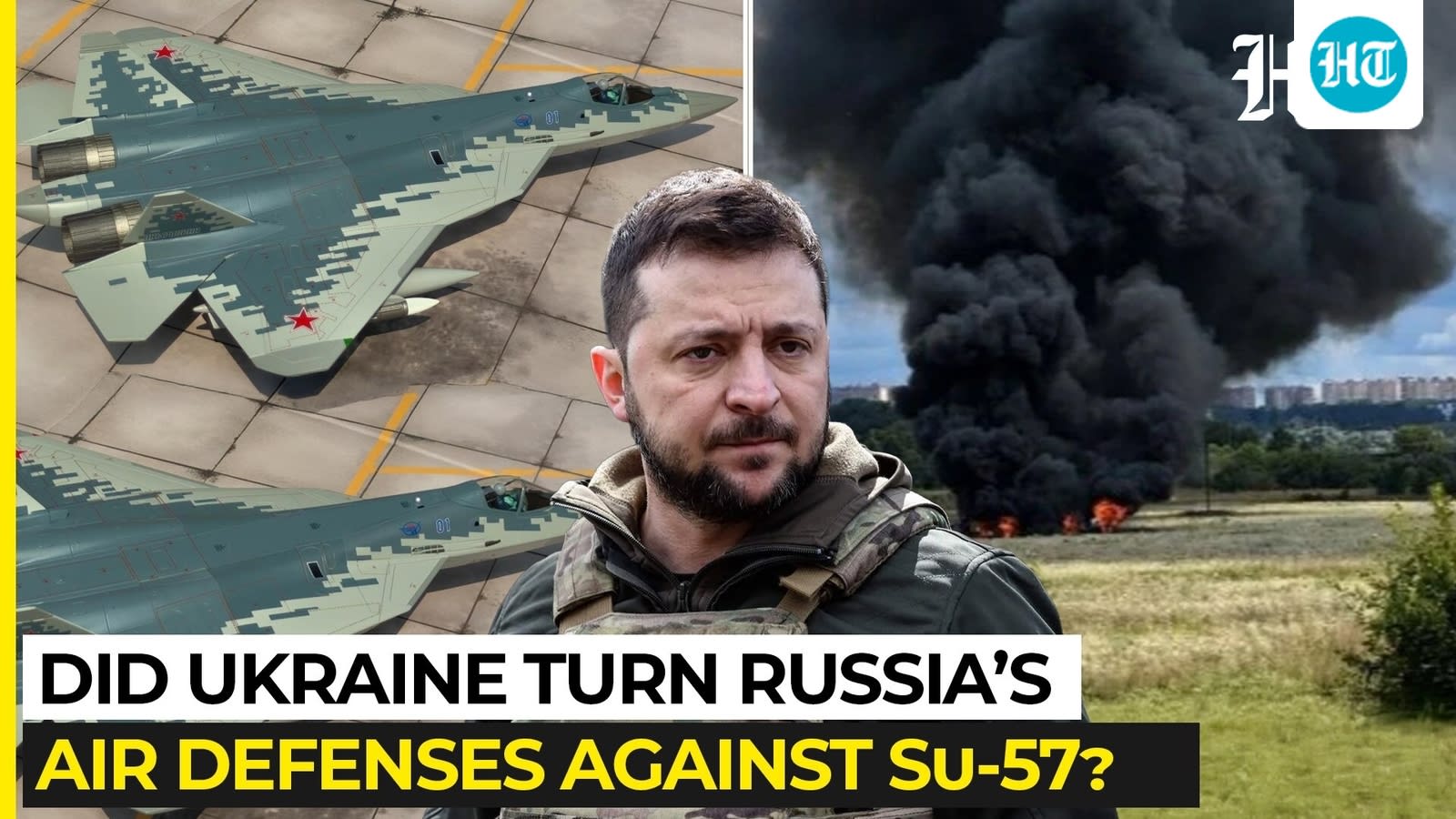
A Russian Su-57 stealth fighter has reportedly crashed near Moscow, with claims suggesting it was downed by friendly fire or cyber-interfered air defenses. The incident has sparked debate over the reliability of Russia's advanced military technology and internal security protocols.
The Mystery of the Downed Su-57: Friendly Fire or Technical Failure?
The reported crash of Russia’s Su-57 stealth fighter—the crown jewel of its fifth-generation aviation fleet—has sent shockwaves through the global defense community. While Russian state media has characterized the incident as a routine technical malfunction, Ukrainian intelligence sources have put forward a more alarming theory: that the aircraft was accidentally targeted by Moscow’s own air defense systems. This discrepancy highlights the growing friction between official state narratives and the realities of modern, high-stakes electronic warfare.
The Fragile Nature of 'Invisible' Assets
The Su-57 is marketed as Russia's premier 'invisible' stealth fighter, designed to evade radar detection and operate in contested airspace. However, the suggestion that it may have been brought down by the 'Bars' Moscow air defense network raises profound questions about the integration of Russian aerospace and ground-based defense systems. If the aircraft was indeed misidentified as a threat by its own side, it points to a catastrophic failure in Identification Friend or Foe (IFF) protocols, an essential component of modern military coordination.
Cyber Warfare and the 'Bars' Network
Central to the controversy is the role of the Bars Moscow air defense system. Ukrainian intelligence has hinted at the possibility of cyber interference, suggesting that the digital architecture protecting the Russian capital may have been compromised or manipulated. If external actors were able to spoof or disrupt the data streams feeding the Bars network, it would represent a significant vulnerability in Russia’s internal security, potentially rendering even its most advanced defensive layers susceptible to 'ghost' targets or systemic confusion.
Sabotage and Internal Security Concerns
Beyond technical failure and cyber-incursion, the narrative of potential sabotage remains a persistent thread. In the context of the ongoing Russia-Ukraine conflict, the loss of such a high-value asset, especially if occurring over Russian territory, invites speculation about internal instability. Whether it was the result of a deliberate act of sabotage or a catastrophic software glitch, the incident suggests that the complexity of modern warfare has created a 'fog of war' that even domestic defense networks struggle to penetrate.
Broader Strategic Implications
This incident serves as a stark reminder of the risks associated with fielding highly complex, software-dependent military hardware. As nations race to integrate AI and automated defense grids, the reliance on digital connectivity creates new attack vectors that traditional armor and stealth cannot mitigate. If Russia’s own air defense systems are turning on its most advanced assets, the broader implications for the conflict in Ukraine—and for global military doctrine—are severe, suggesting that cyber-resilience is now as critical as stealth capabilities.
Conclusion: Assessing the Future of Stealth
Ultimately, the crash of the Su-57 remains a subject of intense debate. While the Kremlin maintains a facade of technical failure, the international community continues to monitor the situation for evidence of cyber-interference or internal vulnerability. As the dust settles, this event will likely force a re-evaluation of how Russia manages its integrated air defense networks and whether its 'stealth' technology is truly ready for the realities of a digitized, hyper-connected battlefield.
Verification Required?