‘Product which failed every time’: Shivraj mocks Rahul for 'expiry date' remark
Source Entity
YASHASVI VASISTHA
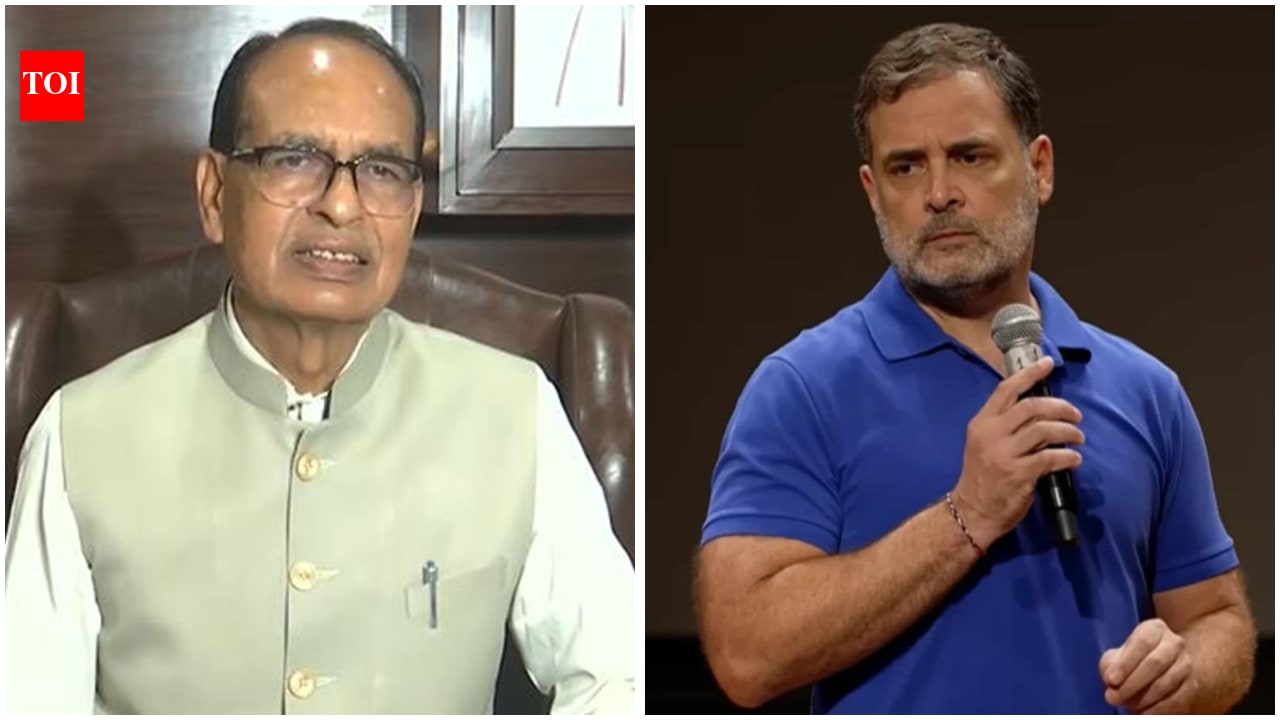
Union Minister Shivraj Singh Chouhan has dismissed Rahul Gandhi's predictions of a BJP decline, labeling the Congress leader a 'failed product.' The exchange highlights the intensifying political rhetoric ahead of upcoming elections in Goa.
The War of Words: Chouhan vs. Gandhi
The political discourse in India has reached a new intensity as Union Minister Shivraj Singh Chouhan directly challenged Congress leader Rahul Gandhi following the latter's recent assertions regarding the Bharatiya Janata Party (BJP). During a public address, Gandhi had predicted a decline for the ruling party, framing his argument around the concept of an 'expiry date' for the current administration. Chouhan, known for his sharp rebuttals, responded by dismissing these claims as laughable, characterizing Gandhi himself as a 'product which failed every time.'
Analyzing the 'Failed Product' Narrative
Chouhan’s choice of language—labeling a political opponent a 'failed product'—is a deliberate rhetorical strategy aimed at undermining the credibility of the opposition's leadership. By positioning Gandhi as a recurring failure in the electoral arena, the BJP seeks to reinforce its narrative of stability and governance versus what it characterizes as the inconsistent leadership of the Congress party. This rhetoric serves to solidify the BJP's base while attempting to neutralize the impact of Gandhi’s critiques on the national stage.
The Goa Context: 'Goy Rakhon Yatra'
Rahul Gandhi’s remarks were delivered during the Congress party’s ‘Goy Rakhon Yatra’ in Goa, an event specifically designed to mobilize voters ahead of upcoming regional elections. By choosing the platform of a 'yatra'—a traditional Indian method of grassroots political outreach—Gandhi aimed to connect directly with the electorate. His accusations of corruption and electoral malpractice against the BJP are central to his campaign strategy, as he attempts to frame the regional political landscape as one defined by systemic governance failures under the current leadership.
Broader Political Implications
This exchange is emblematic of the broader ideological battle currently shaping Indian politics. While the Congress party is striving to rebrand itself as a viable alternative by highlighting alleged ethical lapses within the ruling party, the BJP continues to leverage its incumbency and organizational strength to frame opposition efforts as disconnected or ineffective. The focus on 'expiry dates' versus 'failed products' shows a shift toward highly personalized and aggressive political branding as both parties vie for control over the narrative of progress and accountability.
Historical Context and Future Trends
Historically, electoral cycles in India have frequently seen such intense personal exchanges between national leaders, serving to polarize the electorate and drive voter turnout. As the political calendar advances toward upcoming elections, observers can expect this trend of sharp, confrontational rhetoric to accelerate. Both parties are currently engaged in a high-stakes effort to define the 'brand' of their leadership, suggesting that the coming months will be defined by an escalation in both grassroots outreach and digital-first political attacks.
Conclusion
The clash between Shivraj Singh Chouhan and Rahul Gandhi underscores the volatile nature of current political campaigning in India. While Gandhi focuses on issues of corruption and electoral integrity to sway voters in states like Goa, the BJP remains committed to portraying the opposition as a stagnant political force. Ultimately, the effectiveness of these competing narratives will be determined at the ballot box, as the electorate weighs these accusations and counter-accusations in the context of their daily governance experiences.