Supreme Court seeks Centre's reply on Kapil Sibal's plea on interpretation of anti-defection law
Source Entity
India Latest News: Top National Headlines Today & Breaking News | The Hindu
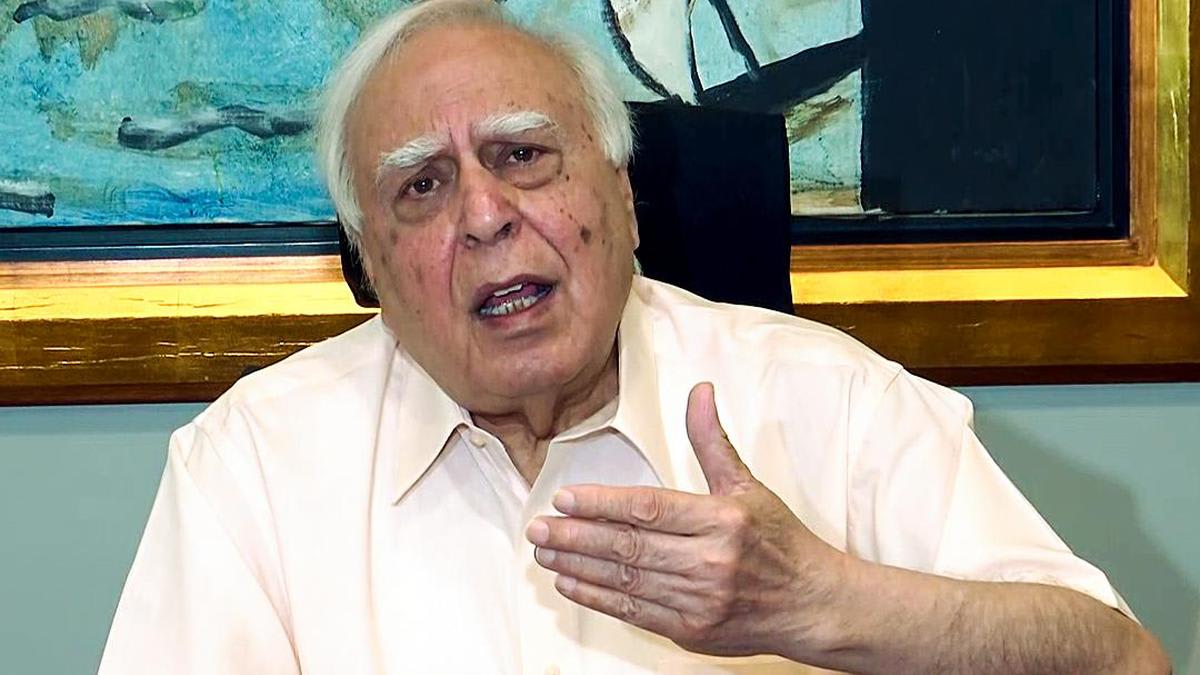
The Supreme Court has issued a notice to the Centre regarding Kapil Sibal's plea to re-examine the Tenth Schedule of the Constitution. The petition challenges provisions that allow lawmakers to bypass anti-defection disqualification through party mergers.
Judicial Review of the Tenth Schedule
The Supreme Court of India, led by a Bench of Justices P.S. Narasimha and Alok Aradhe, has formally intervened in the ongoing debate surrounding the Tenth Schedule of the Indian Constitution. By issuing a notice to the Central government, the Court has signaled its intent to examine the legal loopholes that allow legislators to circumvent anti-defection laws. This move follows a petition filed by senior advocate and Rajya Sabha MP Kapil Sibal, who argues that current interpretations of the law are fundamentally undermining the stability of India's democratic framework.
The Mechanics of Political Instability
At the heart of the issue is the 'merger' provision within the Tenth Schedule. Currently, MLAs and MPs can potentially avoid disqualification if they claim that their faction has merged with another political party. Kapil Sibal has highlighted the severe repercussions of this legal ambiguity, noting that it allows for the artificial manipulation of legislative majorities. By exploiting this loophole, a minority party can effectively seize power, while a sitting majority can be reduced to a minority, essentially rendering the mandate of the electorate volatile and prone to manipulation.
The Role of Parliament vs. The Judiciary
While the Supreme Court has acknowledged the gravity of the petitioner's concerns, the Bench also emphasized that several aspects of this issue fall squarely within the domain of the legislature. The Tenth Schedule was originally enacted by Parliament to curb the 'Aaya Ram Gaya Ram' culture of frequent floor-crossing that plagued Indian politics in previous decades. The current judicial observation suggests that while the Court can interpret the law, the structural integrity of the anti-defection framework may require substantive legislative amendments to address modern political realities.
Historical Context and Legislative Intent
The Tenth Schedule was designed to ensure that the mandate given by the voters is respected and that legislators remain loyal to the party platform on which they were elected. However, as political alliances have become more fluid and coalition politics more complex, the definition of a 'merger' has become a point of significant contention. The Court’s decision to hear this plea reflects a growing concern that the original intent of the law—to provide stability—is being subverted by legal technicalities that facilitate the very instability it was meant to prevent.
Broader Implications for Indian Polity
The outcome of this legal challenge could have far-reaching consequences for the future of Indian governance. If the Supreme Court provides a stricter interpretation of the anti-defection law, it could severely limit the ability of political factions to switch sides without facing disqualification. Conversely, if the Court determines that legislative changes are necessary, it will put the onus back on Parliament to define the limits of political mergers, potentially leading to a significant overhaul of how political parties operate and consolidate power within the legislative houses.
Conclusion
As the Supreme Court moves forward with this case, the legal and political community will be watching closely to see if the judiciary will force a re-evaluation of the Tenth Schedule. The interplay between maintaining legislative independence and ensuring political accountability remains a cornerstone of the Indian constitutional experience. Whether through judicial interpretation or legislative reform, the final resolution of this plea will likely set a new precedent for the standards of political conduct in India for years to come.
Verification Required?