‘Doubts on integrity’: Supreme Court judge on Rajasthan High Court Acting Chief Justice
Source Entity
Ananthakrishnan G
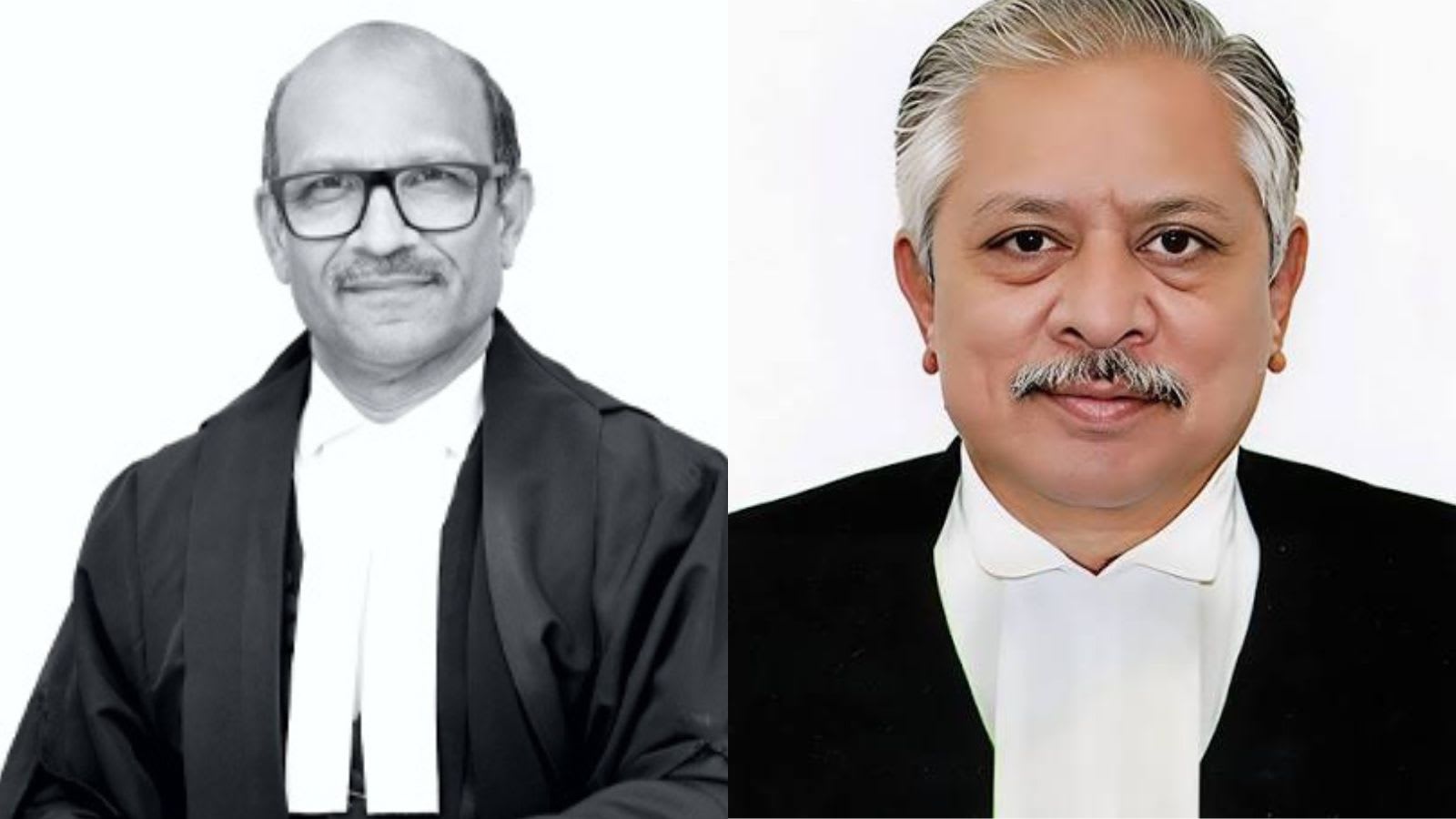
Supreme Court Judge Justice Sandeep Mehta has formally requested the transfer of Rajasthan High Court Acting Chief Justice S.P. Sharma, citing concerns over integrity and favoritism. Meanwhile, the Himachal Pradesh High Court has initiated contempt proceedings against a teacher for making unsubstantiated corruption allegations against a judge.
Internal Judicial Tensions: The Rajasthan High Court Controversy
In a significant development reflecting internal friction within the Indian judiciary, Supreme Court Judge Justice Sandeep Mehta has authored a series of three letters to Chief Justice of India (CJI) Surya Kant. These communications explicitly call for the immediate transfer of Rajasthan High Court Acting Chief Justice (ACJ) Sanjeev Prakash Sharma. Justice Mehta, who identifies Rajasthan as his parent High Court, has leveled serious accusations against ACJ Sharma, alleging a "grim and disturbing scenario" characterized by a lack of leadership and conduct unbecoming of a judicial leader.
Allegations of Favoritism and Misconduct
The core of the dispute lies in Justice Mehta’s claims that ACJ Sharma has engaged in the "misuse of powers" and exhibited clear evidence of favoritism. The gravity of these letters is underscored by the fact that they were marked to other members of the Supreme Court Collegium. Justice Mehta asserts that he has received multiple complaints that cast significant doubt on the integrity of the Acting Chief Justice, arguing that the failure to address these concerns immediately is "wholly against the interest of the institution."
The Urgency of Administrative Reform
Justice Mehta’s correspondence highlights a broader frustration regarding the administrative delays in appointing a regular Chief Justice for the Rajasthan High Court. With ACJ Sharma slated for retirement on September 26, the timing of these letters suggests an urgent push for accountability before the end of his tenure. Justice Mehta has expressed dismay that his "fervent appeals" to the Collegium have been largely ignored, raising questions about the internal mechanisms for oversight and the speed at which the judiciary addresses internal misconduct.
Parallel Concerns: The Sanctity of the Judiciary
While the Rajasthan situation highlights internal accountability, the judiciary remains protective of its external reputation. In a separate, albeit related, context, the Himachal Pradesh High Court recently authorized contempt proceedings against a school teacher. Justice Rakesh Kainthla observed that the teacher’s unsubstantiated allegations of corruption against a judicial officer constituted an attempt to "scandalise the judiciary."
The Balance Between Accountability and Contempt
These two events, while distinct, underscore the delicate balance the Indian legal system must maintain. On one hand, the judiciary faces intense scrutiny regarding the conduct of its high-ranking members, as seen in the Rajasthan case, where a fellow judge is demanding transparency. On the other hand, the Himachal Pradesh case illustrates the court's rigid stance against public allegations of corruption that lack foundational evidence, framing them as criminal contempt.
Broader Implications for Judicial Integrity
Ultimately, these developments point to an evolving discourse on judicial accountability. The ability of the Supreme Court to address internal complaints regarding the integrity of High Court leadership is paramount to maintaining public trust. As the judiciary navigates these challenges, the tension between internal reform and the preservation of institutional dignity remains a critical focal point for the legal community and the public at large.