How did the SC read the OBC creamy layer test? | Explained
Source Entity
India Latest News: Top National Headlines Today & Breaking News | The Hindu
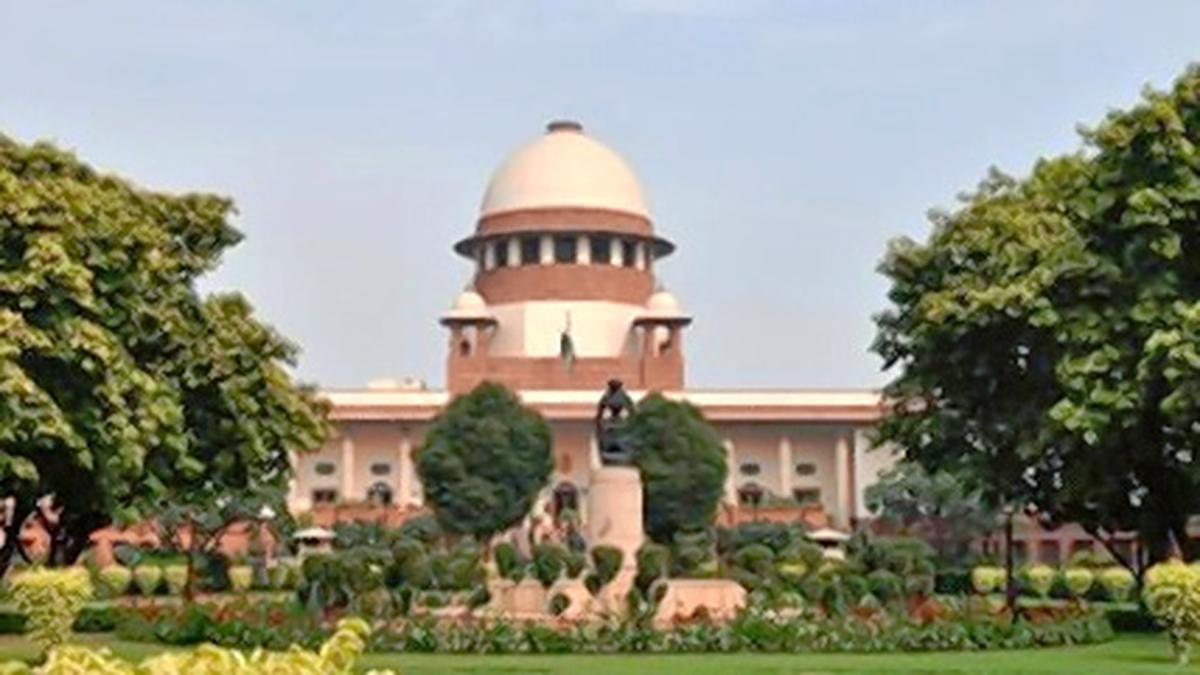
The Centre has petitioned the Supreme Court for clarification on its March 11 judgment regarding OBC creamy layer criteria. The government seeks to apply previous standards to 958 CSE-2025 candidates while addressing the status of roughly 100 candidates previously rejected.
The Legal Challenge to OBC Creamy Layer Implementation
The Union Government has recently petitioned the Supreme Court of India, seeking urgent clarifications regarding the implementation of the Court’s March 11, 2026, judgment. This landmark ruling fundamentally altered the interpretation of the 'creamy layer' criteria—a mechanism designed to exclude affluent members of the Other Backward Classes (OBC) from reservation benefits. At the heart of the dispute is the judicial insistence that parental income cannot serve as the sole determinant for identifying candidates who fall within the creamy layer, particularly for those whose parents are employed in private sectors or Public Sector Undertakings (PSUs) without clear government equivalence.
The Conflict Between Judicial Mandate and Administrative Practice
For years, the Department of Personnel and Training (DoPT) relied on a 2004 circular to determine creamy layer status. The Supreme Court, however, found this approach problematic and restrictive. The March 11 verdict effectively invalidated the rigid application of these older guidelines. The current legal friction arises because the government was already in the process of verifying documents for approximately 100 candidates who had been previously rejected under the old criteria. The Centre is now caught between complying with the new judicial standard and managing the logistical integrity of the Civil Services Examination (CSE) process.
Impact on the CSE-2025 Cycle
The urgency of this plea is underscored by the impending commencement of the Foundation Course at the Lal Bahadur Shastri National Academy of Administration. The DoPT is specifically seeking directions from the Court to allow the service allocation of 958 candidates recommended by the Union Public Service Commission (UPSC) for the CSE-2025 batch. The government argues that applying the March 11 judgment retrospectively to this cohort could create significant administrative hurdles, and it wishes to proceed using the creamy layer criteria that were in place prior to the verdict.
Judicial Response and Future Implications
The Supreme Court has acknowledged the complexity of the situation by agreeing to establish a special Bench to hear the Centre’s plea. This move highlights the judiciary's recognition that the transition between legal standards requires careful calibration to avoid disenfranchising candidates or causing systemic administrative paralysis. The Court must now balance the principle of equitable representation for OBC candidates against the practical necessity of a functional, predictable selection process for the civil services.
Broader Significance for Reservation Policy
This case serves as a critical junction in Indian administrative law. By challenging the reliance on income alone, the Supreme Court is pushing for a more nuanced definition of 'creamy layer' that accounts for social and professional status rather than simple financial thresholds. As the special Bench deliberates, the outcome will likely set a long-term precedent for how public sector employment policies are aligned with constitutional mandates regarding social justice and equality of opportunity in government services.
Multiple Citing Sources
Verification Required?