‘Merciless, ruthless, insensitive’: SC slams doctor for failure to urgently treat four-year-old rape victim
Source Entity
India Latest News: Top National Headlines Today & Breaking News | The Hindu
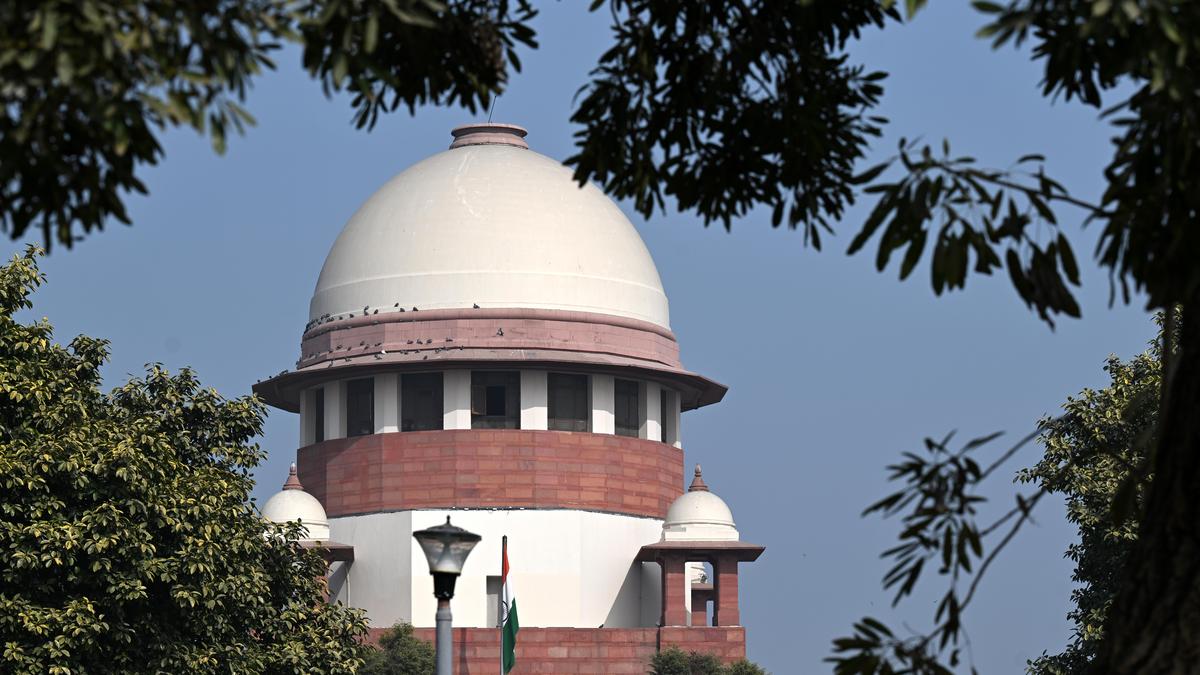
The Supreme Court of India severely reprimanded a private hospital and doctor for denying emergency care to a four-year-old rape victim in Ghaziabad. The court questioned the medical ethics of the professionals and directed them to consider compensation for the bereaved family.
Judicial Condemnation of Medical Negligence in Ghaziabad
In a stark display of judicial indignation, the Supreme Court of India has delivered a scathing reprimand to a private hospital and a medical practitioner for their failure to provide critical emergency treatment to a four-year-old rape victim. The case, originating from Ghaziabad, highlights a catastrophic failure in the duty of care, as the child ultimately succumbed to her injuries after being denied timely medical intervention. The Bench, led by Chief Justice of India (CJI) Surya Kant and comprising Justices Joymalya Bagchi and V Mohana, characterized the conduct of the medical professionals as "merciless, ruthless, and insensitive."
Questioning Medical Ethics and Professional Identity
The Court's critique extended beyond the specific failure to treat, striking at the very core of the medical profession's identity. CJI Surya Kant explicitly questioned the doctor's right to use the title of "doctor" if the basic tenets of the profession—saving lives and performing one's duty—were ignored. The judiciary emphasized that the title is not merely a professional designation but a commitment to humanitarian service. By failing to act in an emergency, the court suggested that the practitioner had abdicated the ethical responsibilities inherent to the medical vocation.
Socio-Economic Bias and the Denial of Care
A particularly harrowing aspect of the proceedings was the Court's inquiry into whether the victim's socio-economic status played a role in the denial of care. The Bench pointedly asked if the child was ignored because she was poor or unable to afford the hospital's fees. This line of questioning underscores a systemic concern regarding the accessibility of emergency healthcare for marginalized populations in India, suggesting that financial barriers may have superseded the urgent need for life-saving treatment in this tragic instance.
The Duty of Facilitation in Emergency Medicine
The Supreme Court further analyzed the specific failures of the hospital's response. The Bench noted that even if the facility lacked the specific equipment or specialization required to treat the child, the ethical and professional obligation did not end with a refusal. The Court argued that a sensitive and responsible medical professional would have facilitated the child's transfer to another hospital capable of providing the necessary care. The failure to coordinate this transfer was viewed as a critical lapse in judgment and empathy.
Legal Consequences and the 'Chilling Effect'
Regarding the repercussions of this negligence, the Court directed the hospital and the doctor to consider paying compensation to the bereaved family. Interestingly, the Bench also cautioned against the nature of monetary penalties, warning that if the hospital were to impose a penalty for its own conduct in a way that creates a "chilling effect," it would be counterproductive. This suggests a complex judicial balancing act: ensuring accountability and restitution for the victims while maintaining a system where medical professionals do not become overly paralyzed by fear, though in this case, the primary focus remained on the "ruthless" abandonment of a patient.
Conclusion: A Call for Humanitarianism in Healthcare
This ruling serves as a severe warning to private healthcare providers about the primacy of human life over administrative or financial considerations. By lambasting the doctor and hospital for their lack of empathy, the Supreme Court has reaffirmed that emergency medical care is a non-negotiable duty. The case stands as a grim reminder of the consequences of medical apathy and a demand for a healthcare system where the vulnerability of a patient—especially a child—is met with urgency and compassion rather than indifference.
Verification Required?