Crops wait as monsoon plays truant in Telangana
Source Entity
SRIBALA VADLAPATLA
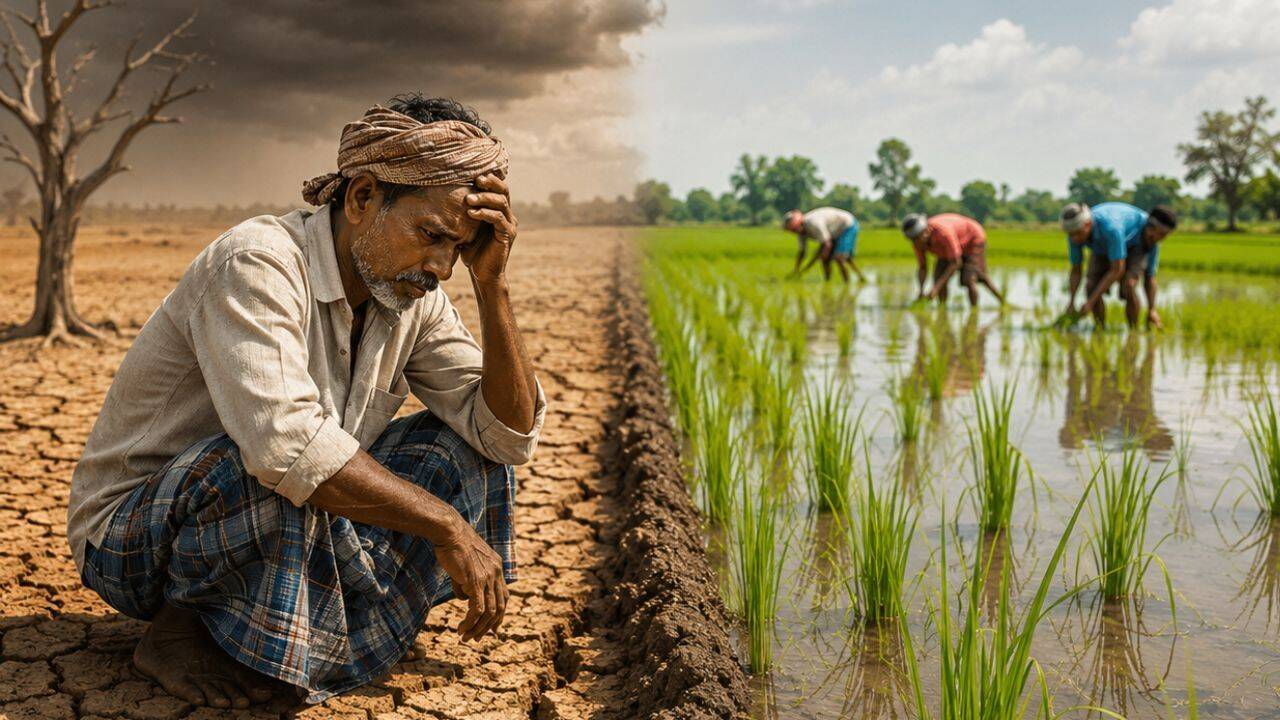
Telangana is facing a severe agricultural crisis as a 30% monsoon deficit has stalled sowing to just 45.4% of normal levels. The state government is convening an emergency Cabinet meeting to address plummeting groundwater and critical reservoir levels.
Crisis in the Fields: Analyzing Telangana's 2026 Monsoon Deficit
Telangana is currently grappling with a significant meteorological challenge as the 2026 Vanakalam (Kharif) season faces a severe onset delay. With a rainfall deficit of 30%—receiving only 158.4 mm against a normal of 228 mm—the state's agricultural machinery has slowed to one of its lowest levels in recent years. This shortfall has created a precarious environment for farmers who are hesitant to commit to transplanting crops without the assurance of sustained showers, leading to a stagnation in farm activity that threatens the state's food security and rural economy.
The Paddy Paradox and Sowing Stagnation
Paddy cultivation has emerged as the primary casualty of this uneven rainfall pattern. As of July 14, sowing was completed in only 60.2 lakh acres, which represents a mere 45.4% of the normal cultivated area of 1.3 crore acres. The hesitation among farmers to proceed with transplanting is a calculated risk-management strategy; without consistent moisture, the high-water-demand paddy crop is prone to failure. While some crops like red gram are showing more resilience, the overall lag in the kharif season suggests a looming productivity gap that could impact market prices and farmer livelihoods for the remainder of the year.
Water Security: Reservoirs and Groundwater Depletion
The crisis extends beyond surface rainfall to the state's critical water reserves. A worrying trend is evident in the irrigation reservoirs, the majority of which are currently operating at or near their Minimum Draw Down Level (MDDL). This lack of surface water is forcing a heavier reliance on groundwater, which is already under stress. In June 2026, the average groundwater level was 9.46 metres below ground level (mbgl), and projections indicate a sharp decline to 11.01 mbgl by August. This plummeting water table underscores the urgency of shifting toward sustainable practices, prompting officials to aggressively pitch micro-irrigation systems, such as drip and sprinkler irrigation, to conserve the dwindling supply.
Meteorological Outlook and Future Risks
The situation is further complicated by grim predictions for the coming months. Meteorological forecasts suggest that below-normal rainfall is likely to persist across many parts of the state in August, specifically impacting northern, central, and eastern Telangana. This trend is expected to extend into September, covering most of the state. This prolonged dry spell suggests that the current 30% deficit is not a temporary glitch but a sustained weather pattern that could lead to a widespread crop failure if contingency plans are not effectively implemented.
Governance and Administrative Response
In response to this unfolding crisis, the Telangana Cabinet is scheduled to meet on July 17, 2026. This meeting is particularly significant as it marks the first session chaired following the appointment of Sanjay Jaju as the State’s new Chief Secretary. The agenda is heavily weighted toward the agricultural crisis, with a focus on irrigation, drinking water supply, and specific support measures for farmers. The government's ability to provide immediate relief and strategic guidance will be critical in mitigating the economic fallout of the failed monsoon.
Intersection of Agriculture and Infrastructure
While the monsoon crisis dominates the immediate landscape, the Cabinet meeting also highlights the state's broader administrative struggles. Alongside the agricultural emergency, the government is navigating delays in Union Government approvals for major infrastructure projects, most notably the Hyderabad Metro Rail expansion. This juxtaposition reveals a state balancing an immediate rural survival crisis with long-term urban development goals, illustrating the complex socio-economic pressures facing the current administration.
Summary of Impact
In conclusion, Telangana is facing a multi-dimensional water crisis where a rainfall deficit has triggered a domino effect: from stalled paddy sowing and depleted reservoirs to plummeting groundwater levels. With below-normal rainfall predicted through September, the state's reliance on micro-irrigation and the outcomes of the July 17 Cabinet meeting will be the deciding factors in whether the 2026 Vanakalam season ends in a total collapse or a managed recovery.