Women Safety Wing trains educators to lead ‘Stand with Her’ campaign across Telangana
Source Entity
India Latest News: Top National Headlines Today & Breaking News | The Hindu
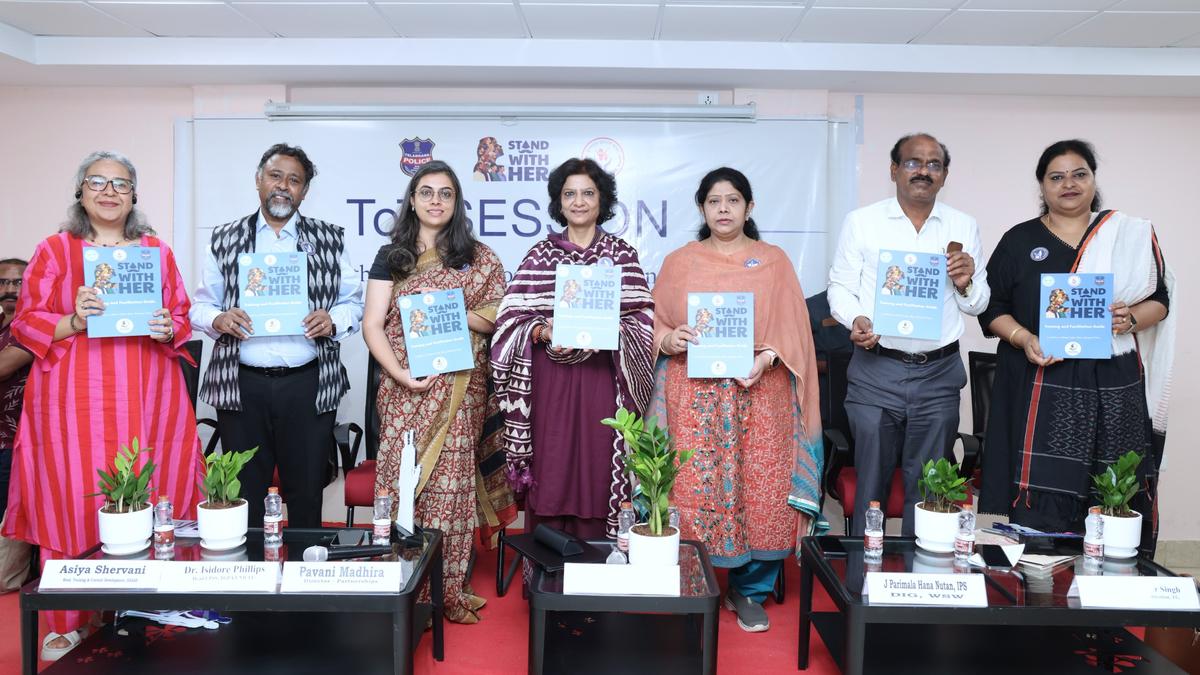
The Telangana Police's Women Safety Wing has trained government college educators as Master Trainers for the 'Stand with Her' campaign. The initiative focuses on engaging men and boys to prevent gender-based violence and foster inclusive campus environments.
Empowering Educators to Combat Gender-Based Violence: An Analysis of the ‘Stand with Her’ Campaign
In a strategic move to enhance campus safety and social equity, the Women Safety Wing (WSW) of the Telangana Police has launched a critical training phase for its flagship ‘Stand with Her’ campaign. By targeting Lecturers and Assistant Professors from government degree colleges and universities, the police department is transitioning from a traditional enforcement-led approach to a community-led prevention model. This initiative recognizes that educational institutions are pivotal sites for shaping the attitudes of young adults, making them the ideal environment for implementing long-term behavioral change.
The Strategic Role of Master Trainers
The decision to train educators as "Master Trainers" is a sophisticated scalability strategy. Rather than relying solely on police personnel to conduct workshops, the WSW is embedding the campaign's core values directly into the academic faculty. Because professors hold positions of authority and trust, they are uniquely positioned to influence student behavior and identify red flags that may go unnoticed by external authorities. By creating this network of educators, the Telangana Police ensure that the ‘Stand with Her’ campaign is not a one-time event but a sustainable, statewide movement integrated into the daily fabric of higher education.
Deconstructing the Behavioral Change Framework
The curriculum provided to these educators is comprehensive, focusing on several key psychological and social pillars. By emphasizing gender sensitivity and the identification of inappropriate behavior, the program seeks to dismantle the normalized stereotypes that often lead to harassment. Perhaps most critical is the focus on bystander intervention. This shifts the responsibility of safety from the victim to the community, empowering men and boys to actively disrupt harmful dynamics rather than remaining passive observers. The inclusion of facilitation techniques ensures that these educators can lead difficult conversations with students effectively and safely.
Addressing the Root Causes of Gender-Based Violence
The ‘Stand with Her’ campaign represents a paradigm shift in how the state addresses gender-based violence. Instead of focusing exclusively on the protection of women—which is a reactive measure—the program targets the root cause by engaging men and boys. By encouraging them to question gender stereotypes and support inclusive environments, the WSW is tackling the cultural norms that perpetuate violence. This holistic approach acknowledges that creating a safe environment for women requires a fundamental shift in the mindset of the men who share those spaces.
Broader Implications for Public Safety and Governance
This initiative suggests a future trend where law enforcement agencies increasingly collaborate with academic institutions to foster social harmony. The integration of police-led safety campaigns into government colleges signals a move toward "preventative policing," where the goal is to stop the crime before it occurs through education and social engineering. If successful, this model could serve as a blueprint for other Indian states, demonstrating how strategic partnerships between the police and the education sector can create systemic change in public safety.
Conclusion: Toward a Culture of Respect
Ultimately, the ‘Stand with Her’ campaign is more than a safety program; it is an investment in the social architecture of Telangana. By equipping educators with the tools to lead these conversations, the Women Safety Wing is laying the groundwork for a generation of students who view respect and inclusivity as non-negotiable standards. While the immediate goal is the creation of gender-sensitive campuses, the long-term outcome will likely be a more equitable society where the burden of safety is shared by all citizens.
Verification Required?